
The first thing I notice about Tom Hanks in News of the World is how much he has aged.
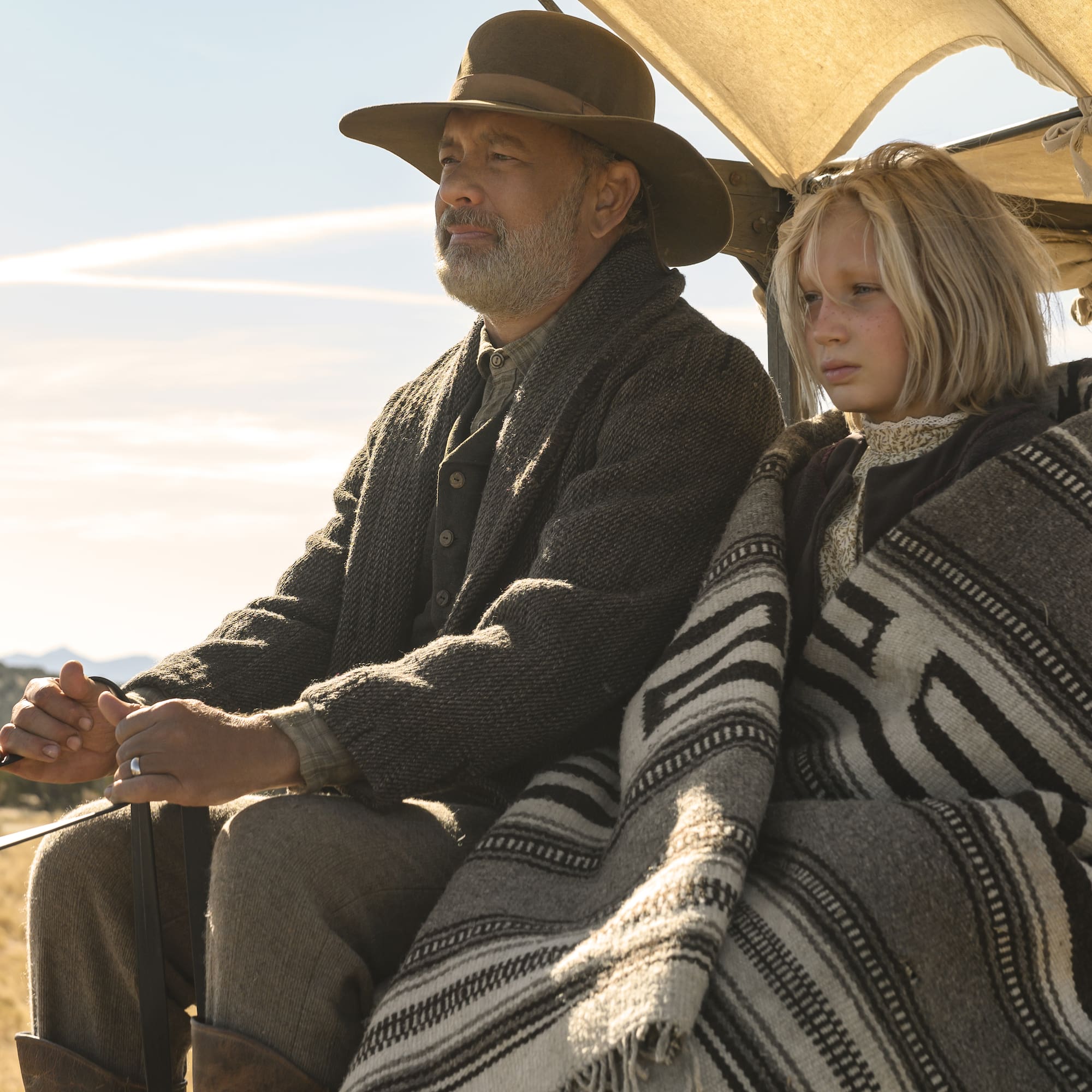
His hair has thinned, his belly has grown a little rounder, and much of his beard has turned grey.
Dressed in a worn coat and a battered hat, he drives a horse-drawn wagon across the vast plains of the American West. The wrinkles on his face, the weariness in his eyes, and that greying beard remind me of the first time I saw him, more than thirty years ago.
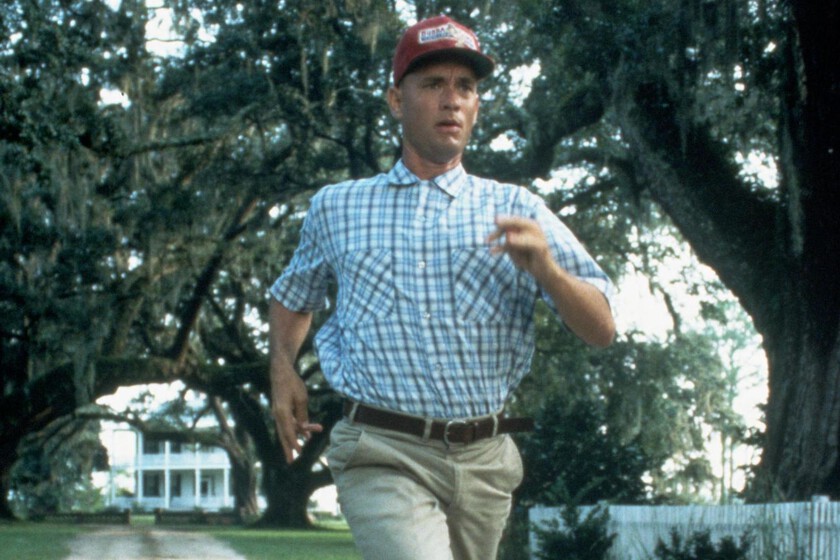
Back then, he was the young man in Forrest Gump, with thick dark hair, a straight back, and seemingly endless energy.
And I was a university student.
There is something unexpectedly sad about seeing him like this. Not because growing old makes him any less appealing, but because his face suddenly makes those thirty years feel very real.
My hero has grown old. So has the young man who once admired him.
I first watched Forrest Gump when China was opening itself more widely to the outside world. For a young student who loved history and was curious about life beyond his own country, the film was extraordinary.
Decades of American history unfolded through the life of one ordinary man.
The civil rights movement, the Vietnam War, anti-war protests, Ping-Pong diplomacy, Watergate—events that had seemed distant in history books suddenly became part of someone's everyday life. Sometimes Forrest did not even realise he was standing in the middle of history.
The world changed around him, yet somehow he remained Forrest.
Tom Hanks became my hero.
His Forrest was not particularly handsome. He was hopeless at charming women, a little foolish, a little naïve. Yet somehow, he became a legend in my mind. And no other character has ever quite taken his place.
I have to admit, though, that my admiration came with a little envy. Perhaps even a touch of jealousy.
Forrest was unbelievably lucky.
A boy who once struggled to walk became a college football star. He went to Vietnam and returned a war hero. He learned to play table tennis and ended up travelling to China. He started a shrimp business and became a millionaire.
Even when he simply decided to go for a run, he somehow ended up crossing America, with crowds of people following him.
How could one man be so lucky?
I really did wonder about that when I was young.
Yet what stayed with me long after the film ended was not his success. It was the extraordinary calm with which he accepted whatever life placed before him.
At the beginning of the film, Forrest sits on a park bench with a box of chocolates. He offers one to the stranger beside him and repeats something his mother used to say:
My mama always said life was like a box of chocolates. You never know what you're gonna get.
He says it as though he were sharing the most ordinary piece of advice in the world.
Forrest has a low IQ. He is not particularly good at predicting the future or understanding complicated relationships. He rarely worries about what kind of person he ought to become, or whether he has chosen the best possible path.
When he runs, he runs. When he plays table tennis, he plays table tennis. When he catches shrimp, he concentrates on catching shrimp.
He seems able to live in the moment without constantly reaching for the next.
Of course, he suffers. Bubba dies. His mother dies. Jenny comes and goes, carrying troubles Forrest cannot always understand or protect her from.
He becomes angry when she is hurt. He cries when he loses someone he loves.
But the days keep coming, and Forrest keeps living them.
After Jenny leaves him, he sets off running. He crosses mountains, deserts, and coastlines. Eventually, strangers begin following him, hoping to discover some great meaning in his journey.
Then one day, Forrest stops.
Everyone waits for him to say something profound.
He tells them he is tired and wants to go home.
And so he goes home.
Even now, I can picture that park bench.
Forrest sits there with his suitcase beside him, telling his life story to one stranger after another. He speaks of war, friendship, love, unlikely coincidences, and people he will never see again.
He does not boast about his achievements or dwell on his misfortunes.
Such a turbulent life, told in such an unhurried voice. He makes it sound almost like something that happened yesterday.
Of all the scenes in that film, it is the calmness of his voice that I have never forgotten.
·
More than thirty years later, I meet Tom Hanks again in News of the World.
This time he is no longer Forrest, the young man who seemed capable of running forever. He is Captain Jefferson Kyle Kidd, an ageing veteran of the American Civil War.
Kidd once owned a printing business and published newspapers. He is an educated man, familiar with books, history, and the complexities of the world.
Now he earns his living travelling from town to town, reading the news aloud to people who have little opportunity to hear what is happening beyond their own communities.
The landscapes are breathtaking.
Endless plains stretch towards distant hills. Dust rises behind the wagon as it moves along a narrow trail. The evening sun washes the land in gold, and sometimes the entire scene seems to contain nothing but a wagon, two horses, and an immense sky.
Kidd travels through this landscape, stopping wherever people will gather to hear his stories.
Wars, politics, disasters, strange events from distant places.
He understands how the world works. He knows how to turn complicated events into stories that ordinary people can follow.
There is just one story he does not seem willing to tell.
His own.
His wife died while he was away at war. He carries a deep sense of guilt for not having been there when she needed him. Somewhere in his mind, her death has become a punishment for everything he did and witnessed during the war.
So he keeps travelling.
One town after another. One road after another. The trail stretches endlessly ahead of his wagon, as though continuing forward might somehow leave certain memories behind.
Watching him, I feel an unexpected sense of recognition.
When I was younger, there always seemed to be somewhere else worth going, something else worth doing. Finish one thing, move on to the next. Live in one place for a while, then begin wondering what might lie farther away.
I have travelled much the same way.
My journey began in China. Then came Dunedin, the city where I bought my first house.
Later, we lived in Christchurch. We were there when the earthquake struck. The aftershocks kept coming, one after another. In the end, they were the reason we decided to leave Christchurch and move to Auckland.
Somewhere along the way, even the seasons had turned upside down. As winter approaches in China, the days here in New Zealand are growing longer, with summer just around the corner.
Places that once seemed impossibly far away became familiar. Streets I walked every day became memories. Some people I once saw regularly are now separated from me by years and oceans.
Looking back, it sometimes seems that I spent most of those years simply moving forward.
I used to envy Forrest, convinced that good fortune followed him wherever he went.
And somehow, as the years passed, I found myself becoming more like the old captain in News of the World.
I have learned a few things, gained some experience, and accumulated far too many things I cannot quite let go of.
·
Then the captain meets Johanna.
She is a young girl who has already lost two families. She speaks little English, but she has her own way of understanding the world.
At first, the two can barely communicate. Kidd teaches her English, while Johanna teaches him words in the Kiowa language. Along the way, they point to birds, trees, and things they see beside the road. The captain struggles with the unfamiliar sounds, while the little girl takes her role as teacher quite seriously.
There is one scene I find particularly memorable.
Johanna tries to explain how she understands the world. The earth, the sky, breath, and spirit are all connected.
She makes a circle with her hands.
Circle.
Kidd, however, tries to explain the world as he understands it.
He traces a straight line with his finger.
Line.
People travel across the plains, he explains, moving forward until they find somewhere to settle. Then they cultivate the land, planting crops in long, straight rows.
Johanna repeats the new English word.
Line.
The captain is pleased.
And the wagon continues on its way.
Later, they pass through a place where Johanna once lived. The people she loved are gone, but she wants to return, if only to see what remains of the home she remembers.
Kidd does not want her to revisit those painful memories. He believes she must leave the past behind.
Move forward.
Keep going. Don't look back.
There is something strangely familiar about those words.
But Johanna refuses to forget.
She wants to remember the people who loved her, who raised her, and who are no longer there.
The old captain and the little girl stand together on that desolate stretch of land.
I find myself thinking about Forrest.
He, too, has lost so many people he loves. Yet when he sits on that park bench and speaks of the past, he never seems to want to erase anyone from his life.
He remembers Bubba, his mother, and Jenny. When a memory makes him happy, he smiles. When it hurts, he cries.
And the captain?
He has read so many books, survived a war, and learned so much about the world. Yet he has spent years avoiding the one journey that might take him back into his own past.
The wagon keeps moving. Along the way, they gradually learn each other's language and come to understand each other's silences.
Sometimes Johanna sings songs in Kiowa.
After a while, the captain begins singing along.
·
At last, Kidd delivers Johanna to her relatives. There is a house, a farm, and people connected to her by blood.
She wants to stay with him, but he tells her this is where she belongs.
Then he leaves alone.
Back in San Antonio, the captain finally visits his wife's grave.
The man who has spent years speaking confidently to crowds of strangers stands before the headstone, removes his hat, and weeps.
When he sets out again, he does not continue along the same road.
He goes back for Johanna.
He finds that she has been tied up in the yard because she repeatedly tried to run away. He apologises to her.
Through her tears, she asks whether she can go with him.
He says yes.
The film gives the captain no grand speech about what he has learned.
He simply goes back.
Near the end, the captain is reading the news again.
He tells a curious story about a man thought to be dead who starts knocking from inside his coffin.
Johanna stands beside him, helping him bring the story to life. The audience gasps, laughs, and applauds.
When the captain introduces the girl, she has a new name.
Johanna Kidd.
·
After News of the World ends, I find myself thinking again about Forrest Gump.
The same actor. Two ordinary men whose lives unfold against the vast American landscape.
One young, the other old.
Forrest seems able to find peace wherever life takes him. The captain has travelled so far and learned so much, yet it takes a little girl to lead him back towards the memories he has spent years avoiding.
I remember the line Kidd traced with his finger, and the circle Johanna made with her hands.
Some memories seem to have disappeared long ago. Then a song, a photograph, or a familiar scene from a film brings them back without warning.
Like Forrest sitting on that park bench, more than thirty years ago.
I live in New Zealand now, and I am well into my fifties.
That university student, so fascinated by history and so eager to discover the wider world, could hardly have imagined that one day he would be sitting on the other side of the globe, watching his old hero again.
The good fortune I once envied, the opportunities I thought I had to seize, the places I was so eager to reach—all of them seem a little different with the passing of time.
It is late at night in New Zealand.
The wide, lonely plains of the American West have long since disappeared from the television screen.
The old captain who finally learns to turn back reminds me of a few lines by T. S. Eliot, from Little Gidding:
And the end of all our exploring
Will be to arrive where we started
And know the place for the first time.
And once again, I think of that park bench.

Forrest sits there with his suitcase by his feet and a box of chocolates in his hands, telling a stranger the story of his life.
Back then, his hair was still black.


