
This SeriesTe Aroha
- 01The Town of Love
- 02The Gift of MistakesCurrent
1. We Couldn’t See the Track
“Cold?”
Katherine asked me.
“No.”
She reached over and touched my hand.
“Don’t pretend you’re not. Your hands are freezing.”
It was completely dark.
My phone had died some time earlier. Katherine’s still had a little battery left, so she switched on the flashlight. A small patch of white light fell across the ground in front of us — just enough to see the next few steps: roots, stones, mud.
Anything beyond that only appeared when we got close.
A few hours earlier, at the foot of the mountain, it had been warm enough that a T-shirt under a thin sun jacket had felt exactly right.
2. It Felt Like a Lucky Day
On the morning of 3 June, our bags were already packed.
The plan sounded simple: climb Mount Te Aroha, come back down around three or four in the afternoon, collect our luggage from The Nunnery, then drive home to Auckland.
We hike fairly often, so I genuinely did not think the day would be difficult.
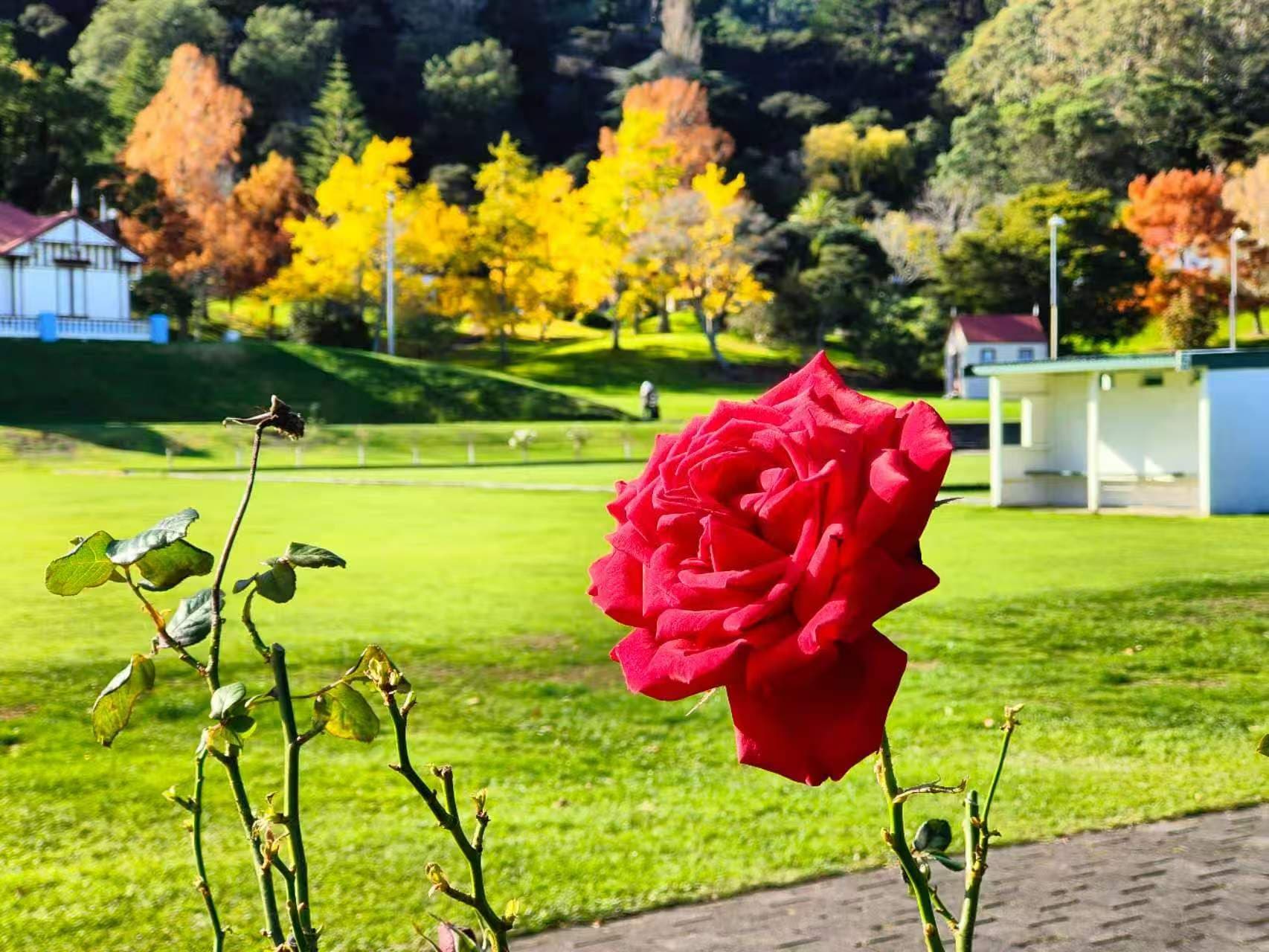
Before starting, we went to Domain Cottage Café near the foot of the mountain. It sits inside Te Aroha Domain, close to the trailhead, with lawn outside and the mountain rising directly behind it.
We were in no hurry. We sat down for a generous brunch and quietly turned breakfast and lunch into one meal.
A short walk away was Mokena Geyser. The day before, at the spa, we had already learned that Te Aroha’s geothermal water was unusual. What we had not expected was to walk past just as the geyser was erupting.
Inside the dark green fence, hot water surged upwards again and again. White steam spread through the sunlight, then drifted back down. A nearby sign warned that the geyser had no fixed schedule, that the water was extremely hot and that visitors needed to stay outside the barrier. When the spray was high enough, it could even reach the path.
We stood there for a while.
It was not something you could simply turn up and demand to see.
Yet there it was.
I felt pleased with our timing.
Today was going well.
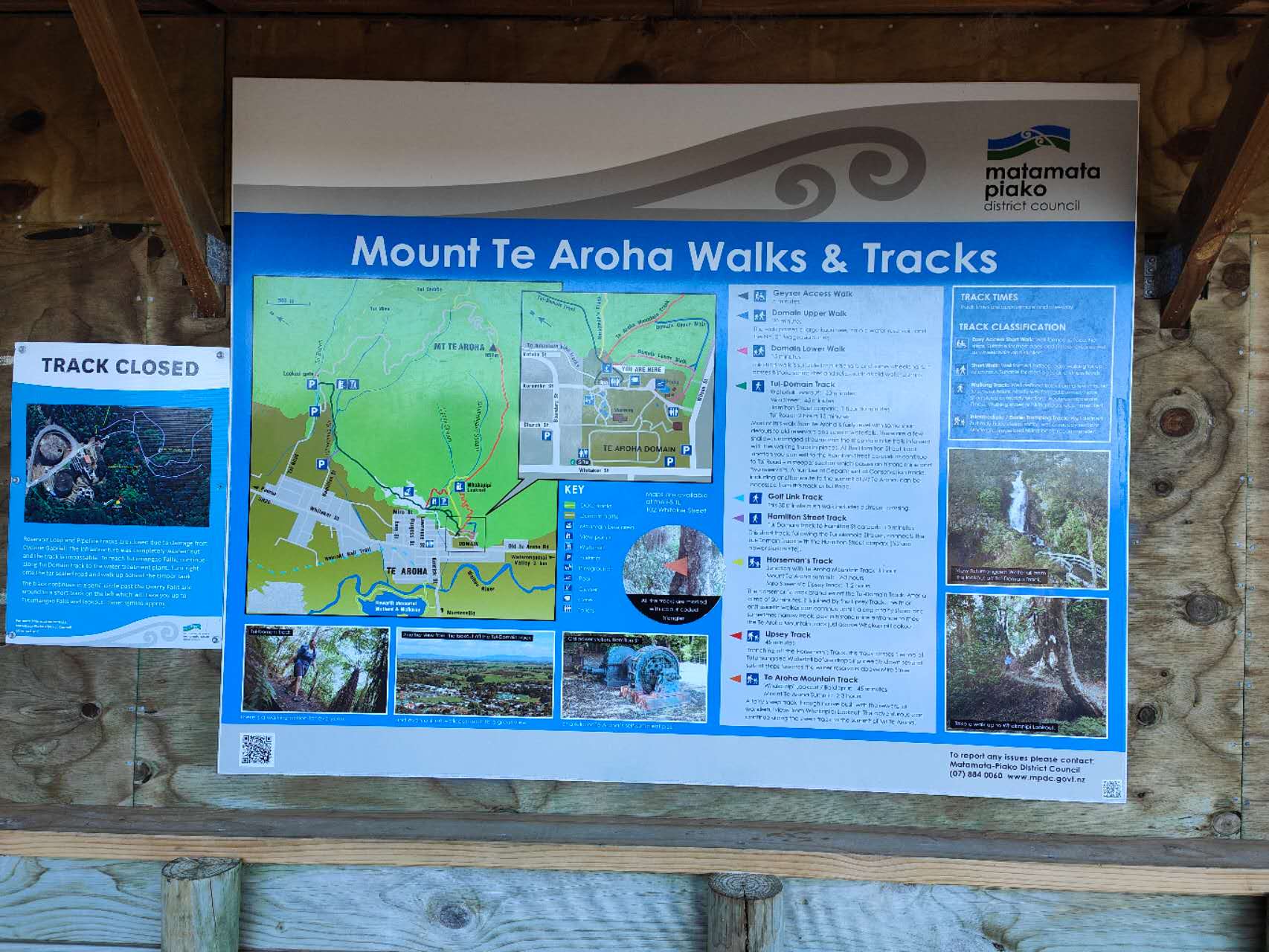
A little farther on stood the large trail map at the start of the climb. Coloured lines ran from the park into the forest and up the mountain.
3.9 kilometres one way.
Mount Te Aroha: 952 metres.
That 3.9-kilometre figure did not worry me at all.
We walked in the hills regularly, after all.
By midday it was warm. I was wearing a T-shirt, a very light quick-dry sun jacket and lightweight hiking trousers. Katherine had brought one extra thing: a puffer jacket.
By the time we finally turned towards the mountain and started climbing, it was close to noon.
3. The Town of Love Below Us
At first, the track seemed ordinary enough. It climbed steadily through the forest. The slope was not gentle, but at least the route was obvious.
As we gained height, I warmed up and felt no cold at all.
At the turn-off for Whakapipi Lookout, we left the main track and followed the short side path.
The view opened all at once.
Te Aroha lay below us: houses, streets and sports grounds, then the wetlands we had walked through the day before, and beyond them broad stretches of farmland. The fields ran towards the horizon under moving cloud shadows, some bright, some dark.
From the streets below, the mountain had always stood behind the town.
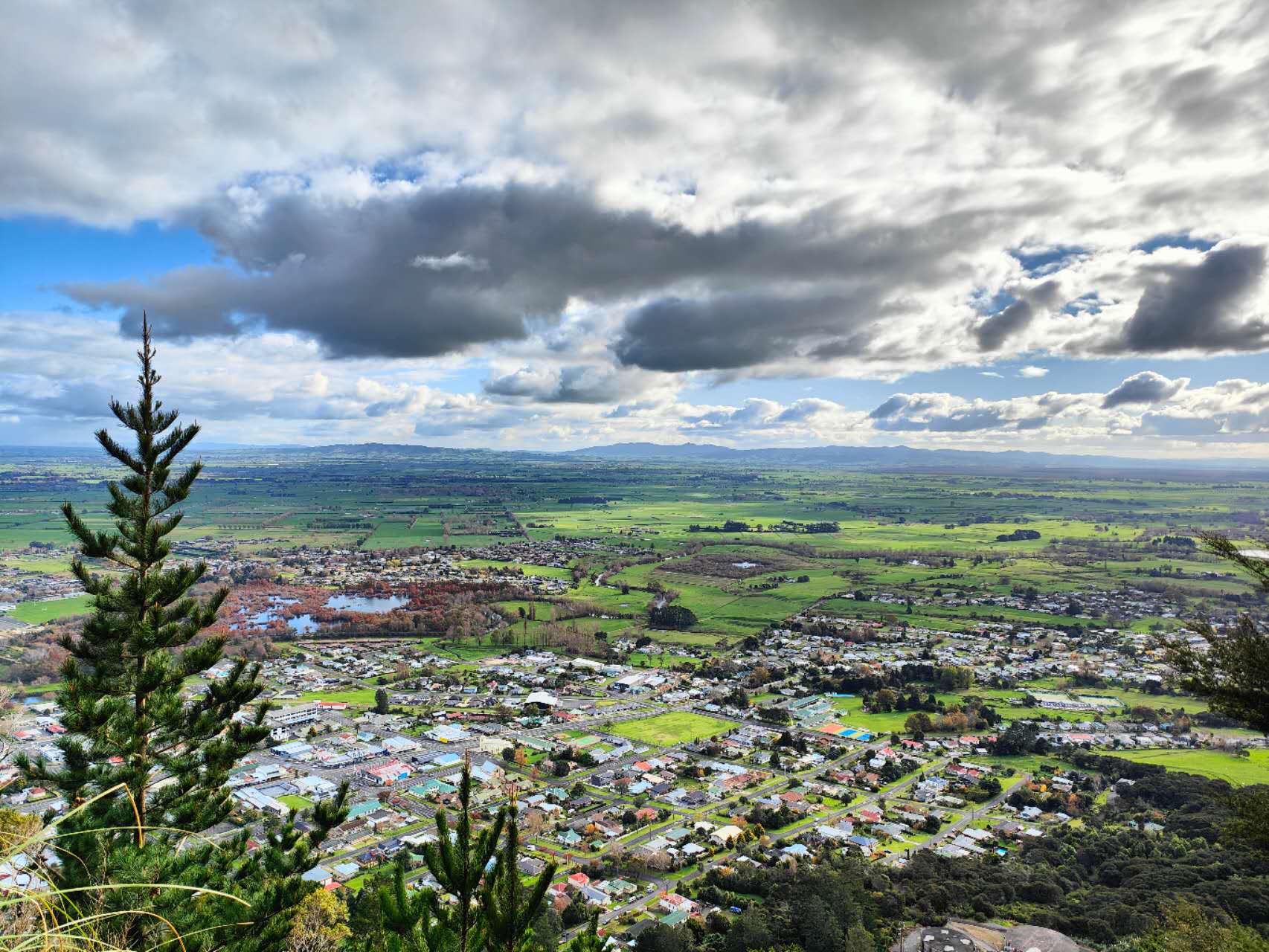
Now the view was reversed.
The town was beneath our feet.
Katherine leaned against the wooden railing and looked out across the plain. The wind lifted her hair.
We stood there for a while.
Then she asked:
“Should we turn back here?”
I looked up towards the mountain.
We had already come this far.
“Since we’re here, let’s go and see the summit.”
She did not argue.
We left the lookout, returned to the main track and kept climbing.
4. The Track Kept Getting Harder
Beyond the lookout, the track began to change.
At first it was still a normal dirt path. Then there were more roots. More stones. Rain in the previous days had left some sections wet and slippery. Thick roots pushed through the ground and crossed over one another, with rocks wedged between them and damp moss on parts of the track.
The slope became steeper too.
Soon we were using our hands as much as our feet. Find somewhere solid for one foot. Grab a root. Pull yourself higher. When a fallen trunk blocked the way, brace with one hand and step over.
In some places the route was obvious, but a proper foothold was not.
We followed roots, rocks and the traces left by other walkers, working upwards a little at a time.
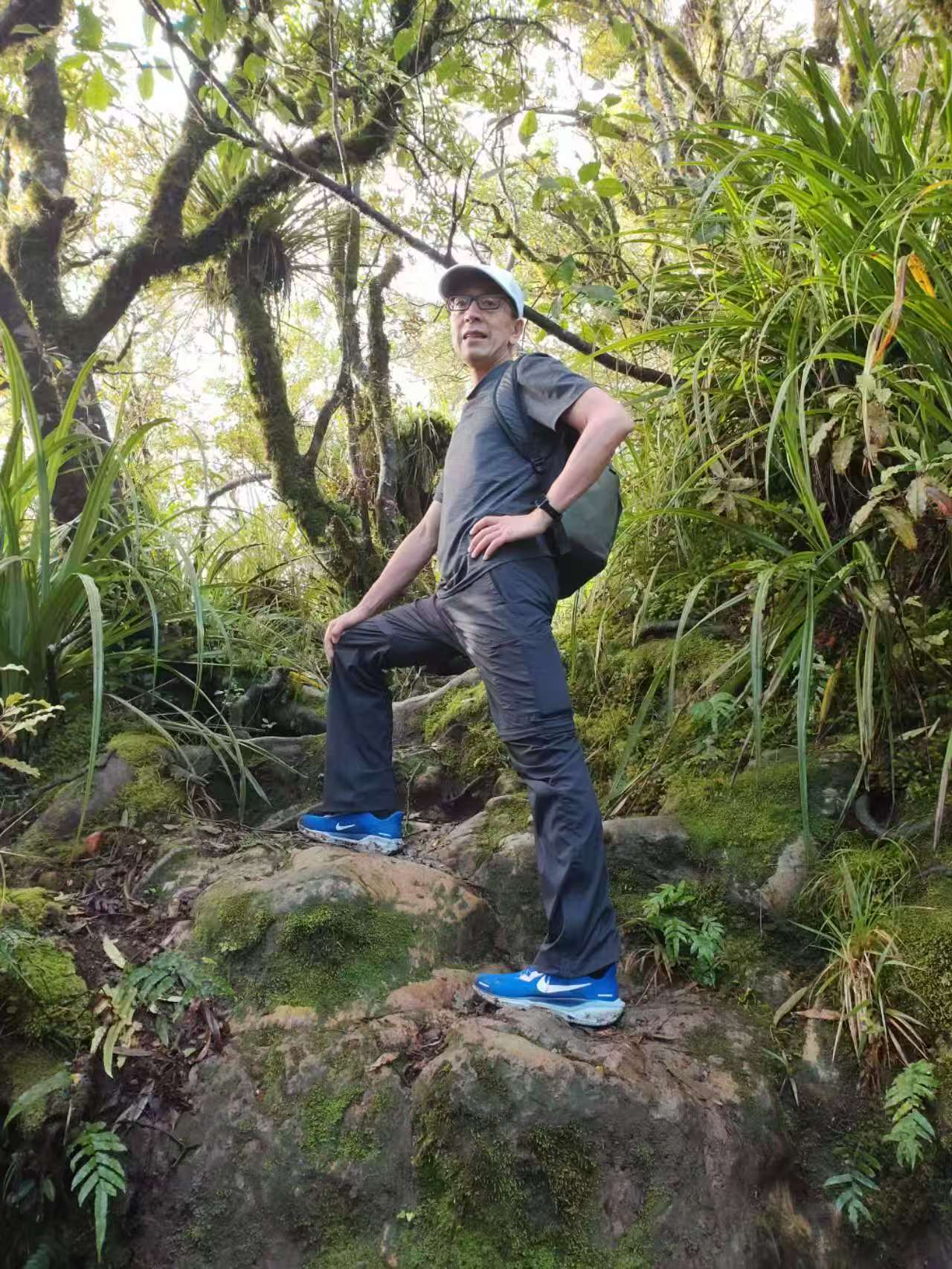
Katherine stopped again.
“Maybe we should stop here?”
Just then, several hikers came down from above.
I looked at them.
“They’ve come down from the top. If they can do it, we can do it.”
I looked uphill again.
“Let’s go and see.”
She said nothing.
She followed me and kept climbing.
At the time, I genuinely believed the logic. If other people could do it, surely we could too.
The higher we went, the colder the wind became. I pulled up the hood on my thin sun jacket, put my hat over it and carried on.
5. The Tower in the Cloud
Near the summit, the weather changed quickly.
The trees grew shorter.
The wind strengthened.
Then the world around us began to turn white.
We had walked into cloud.
The view contracted to almost nothing.
Out of the mist, a huge black steel structure slowly appeared. First an angled support. Then a crossbeam. Then, piece by piece, the transmitter tower emerged.
We had reached the summit.
On a clear day, the view from up there should stretch for miles.
That day, there was no view.
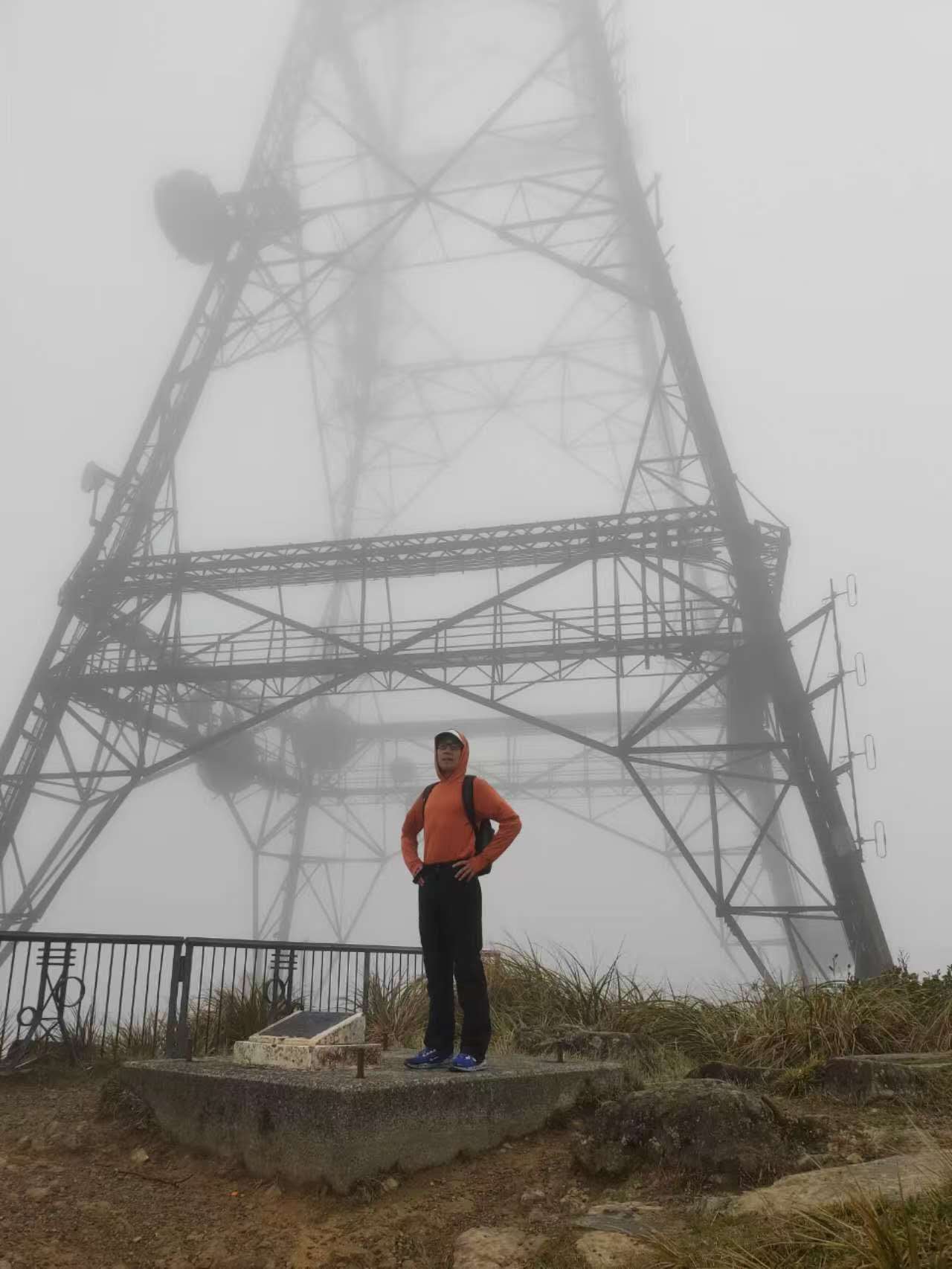
Only cloud.
The black steel framework disappeared upward into the white. Wind pushed mist through it. One moment the higher sections were visible; the next they vanished completely.
By then, the clothes that had felt perfect at midday were completely wrong.
I was still in a T-shirt and a thin quick-dry sun jacket. Comfortable in warm weather. Almost useless against summit wind.
Cold air went straight through it.
Mist clung to us, and my lightweight trousers did little to help. Katherine was better prepared.
At least she had a puffer jacket.
After all the effort of reaching the top, you might expect me to remember some burst of triumph.
What I remember is the wind, the cold and wanting to get down.
6. Down in the Dark
Once we turned downhill, I realised that descending was not simply climbing in reverse.
The roots and stones that had been difficult on the way up were worse going down. On the ascent, you could grab something and pull yourself higher. On the descent, you had to find somewhere for your foot before lowering your weight, often on wet ground where almost nothing was flat.
Then the light began to go.
First the colours disappeared from the forest.
Later, we could see the track only by phone light.
My phone died first.
Katherine’s was the only one left.
She turned on the flashlight. The beam was weak and showed only a short piece of track in front of us.
If there was a root, she warned me.
If a rock looked slippery, I warned her.
Two middle-aged people, helping each other down the mountain one careful step at a time.
After a while, Katherine asked:
“Cold?”
“No.”
She touched my hand.
“Don’t pretend. Your hands are freezing.”
Then she took my hand.
She held the phone in one hand and my hand in the other as we continued down.
After a while she said:
“Other hand.”
I gave her the other one.
She held that too.
There was something I had been thinking about all the way down.
I was worried she would blame me.
At the lookout, she had already asked whether we should turn back.
Later, when the track became harder, she had asked again.
Both times, I was the one who said we should keep going.
Now it was dark, and the phone was nearly dead.
If she had said, “I told you so,” I would not have had much of an answer.
But she said nothing.
She just held my hand.
Before we reached the lookout again, there was still enough battery for one phone call. Katherine rang the owner of The Nunnery.
We had originally expected to leave that afternoon. In our current state, there was obviously no chance we were driving back to Auckland that night.
The owner kept the room for us for another night.
After the call, we kept descending.
By the time we reached the junction for Whakapipi Lookout, Katherine’s phone had died completely.
But the hardest section of the track was now behind us.
From there down, the walking became noticeably easier.
7. We’re Late Anyway
At the lookout junction, all I wanted to do was stay on the main track and get back.
The phone was dead.
We were cold and tired.
At least we had a room for the night, and the track ahead was easier.
I still wanted to hurry.
Katherine stopped.
“We’re already this late.”
She tugged lightly at me and pointed towards the side path.
“Let’s go back to the lookout.”
I stared at her.
At this hour, she still wanted to visit the lookout?
But then I thought about it.
We had a room.
The worst section was behind us.
And we were already late.
Whakapipi Lookout is not directly on the main descent route. At the junction, you have to leave the track and walk a short spur.
We had taken the same turn in daylight and looked down over the whole town.
Now we walked it again.
The trees slowly opened.
The town, roads, farmland and wetlands that had been so clear during the day had disappeared into darkness.
Only scattered lights remained.
House lights.
Streetlights.
An occasional pair of headlights moving in the distance.
Small points spread across the plain below.
I stood there looking down for a moment.
Then Katherine raised her hand and pointed upwards.
“Look.”
I followed her finger.
The sky was full of stars.
Not a few bright ones. Thousands of them, crowded across the darkness. Some were sharp and bright; others were only tiny points, stretching farther than I could follow.
There were no streetlights around us.
We could not hear another person.
Below us were the scattered lights of Te Aroha.
Above us was the whole night sky.
We stood between them.
Somewhere in that moment, I stopped being in a hurry.
8. What Getting It Wrong Gave Us
Eventually, we made it safely off the mountain.
Back at The Nunnery, I reached into my pocket and took out the room key.
It had been with us the whole time.
Our luggage was still exactly where we had left it.
I opened the door.
The light came on.
Under our feet was a flat floor.
At that moment, even a flat floor felt good.
We drove back to Auckland the next day.
If everything had gone according to plan, we would have been off the mountain by three or four, collected the bags and driven home.
We would never have stepped off the main track in the dark and walked those few extra metres back to the lookout.
Years later, I still remember that sky full of stars.
READER NOTES