
STORE OBSERVATIONS · STORY 01
The 111 Call from the Shop
A stranger walked into the shop asking for help. Over the next hour, I began to understand that an emergency call needs more than “she is very weak”. It needs observable facts that help a call handler assess risk.

I was working in the shop that afternoon.
When I turned around, a middle-aged woman was already standing in front of me. She looked weak, could barely speak, and had a very large stomach.
Before handing me her phone, she kept repeating one sentence: I need an ambulance.
She had reached the counter
“Please call 111. I need an ambulance to Middlemore Hospital.”
My first thought was that she might be about to give birth. In that moment, I only wanted to act quickly and avoid losing time.
I handed the phone back to her, assuming she could explain the situation more clearly. She confirmed the shop address and called 111, but she could not answer the call handler’s questions, so she passed the phone to me again.
After I gave the address, the call handler asked why an ambulance was needed, whether there was bleeding, and what was happening now.
I said, “She may be about to give birth. She is very weak.”
The questions continued. At the time I could not understand why: if someone looked this weak, why was more information still needed? Only later did I see that the call handler and I were working with different kinds of information.
None of us knew what was wrong
The woman slowly sank down outside the shop. Two customers inside kept their distance. People passing by glanced over and continued walking.
Looking back, I do not think that was simply indifference. No one knew how far they should step into a stranger’s emergency.
I was not her family and I was not her doctor. I did not even know what had happened, yet I could not walk away. Perhaps some of that came from having once studied medicine and taken a medical oath.
About twenty minutes later, 111 called me back. I thought the ambulance had arrived, but the caller was still trying to confirm the woman’s condition. Only then did they understand that I was the shop owner, not a relative.
I offered water and asked whether she needed anything else. She shook her head and repeated, “I need an ambulance.”
What I saw was not the whole situation
I heard the call handler ask, “Are you in labour?” The woman answered quietly, “No.”
That was when I realised I had never understood what was happening. I had seen a weak woman with a large stomach and interpreted everything as labour.
The person on the phone, however, needed observable information about the patient’s condition rather than an impression of what the situation looked like.
During a third call, I went outside and found that she had disappeared. I searched and eventually found her lying in a patch of sunlit grass nearby.
I was relieved to see her. By then my fear was no longer inconvenience. I was afraid that someone so weak might lose consciousness and disappear into a corner where no one would notice.
My understanding of the call was that an ambulance would not be sent immediately. The woman murmured, “Then I can only go home.” I began to see that the urgency felt by a bystander and the facts required for triage are not always the same thing.
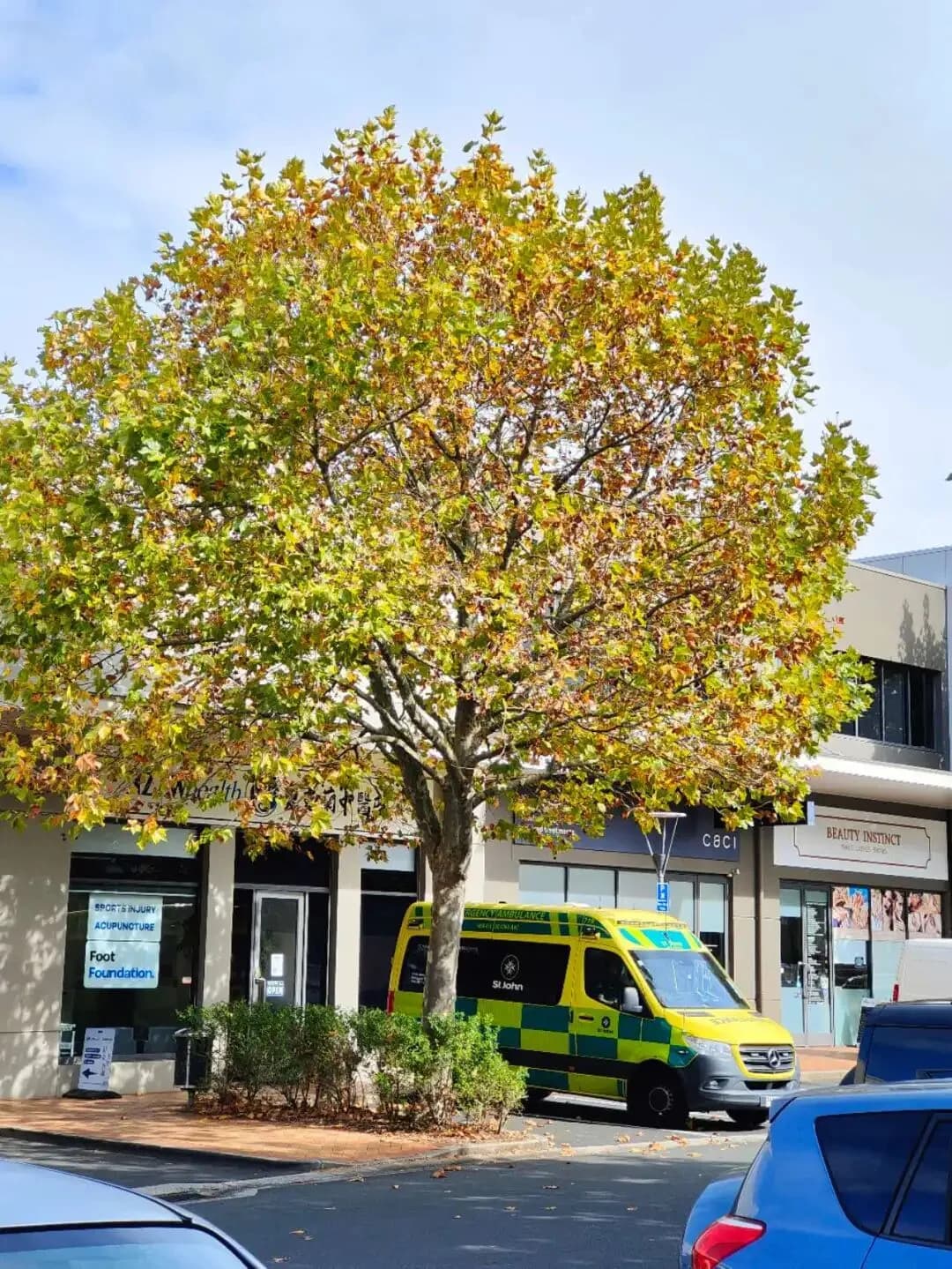
The ambulance came
Questions about bleeding, consciousness, breathing, walking and labour help determine what care is needed and how urgently a response should be made.
The story did not end there. About half an hour later, an ambulance arrived. By then, the woman was gone.
The crew contacted their system and began looking for her. From our brief conversation, it appeared that they did not have all the information I had previously received.
I cannot know where the difference arose. Her condition may have changed, or information may have been understood differently at different stages. Without a complete record, it would be wrong to draw a conclusion about any individual decision.
I thought about that afternoon for a long time. The difficulty many people face in an emergency is not only English. It is knowing how to turn what they see into clear information that another person can assess.
Sometimes the barrier is not only language.
It is not knowing what information the system needs at that moment.
Sources and notes
Practical information was checked on 7 August 2026. The events described come from the author’s memory and cannot replace call or dispatch records.



READER NOTES