NORTHLAND · NEW ZEALAND · 2026
Hokianga
A Good Place to Grow Old Alone
It was the Matariki holiday of 2026 when we drove north. The fewer people we met, the slower time became.
PROLOGUE 00 · NORTHBOUND
Some places make you want to stay. Hokianga suggests another, more permanent kind of staying.
CHAPTER 01 · DEPARTURE
The road begins with lunch
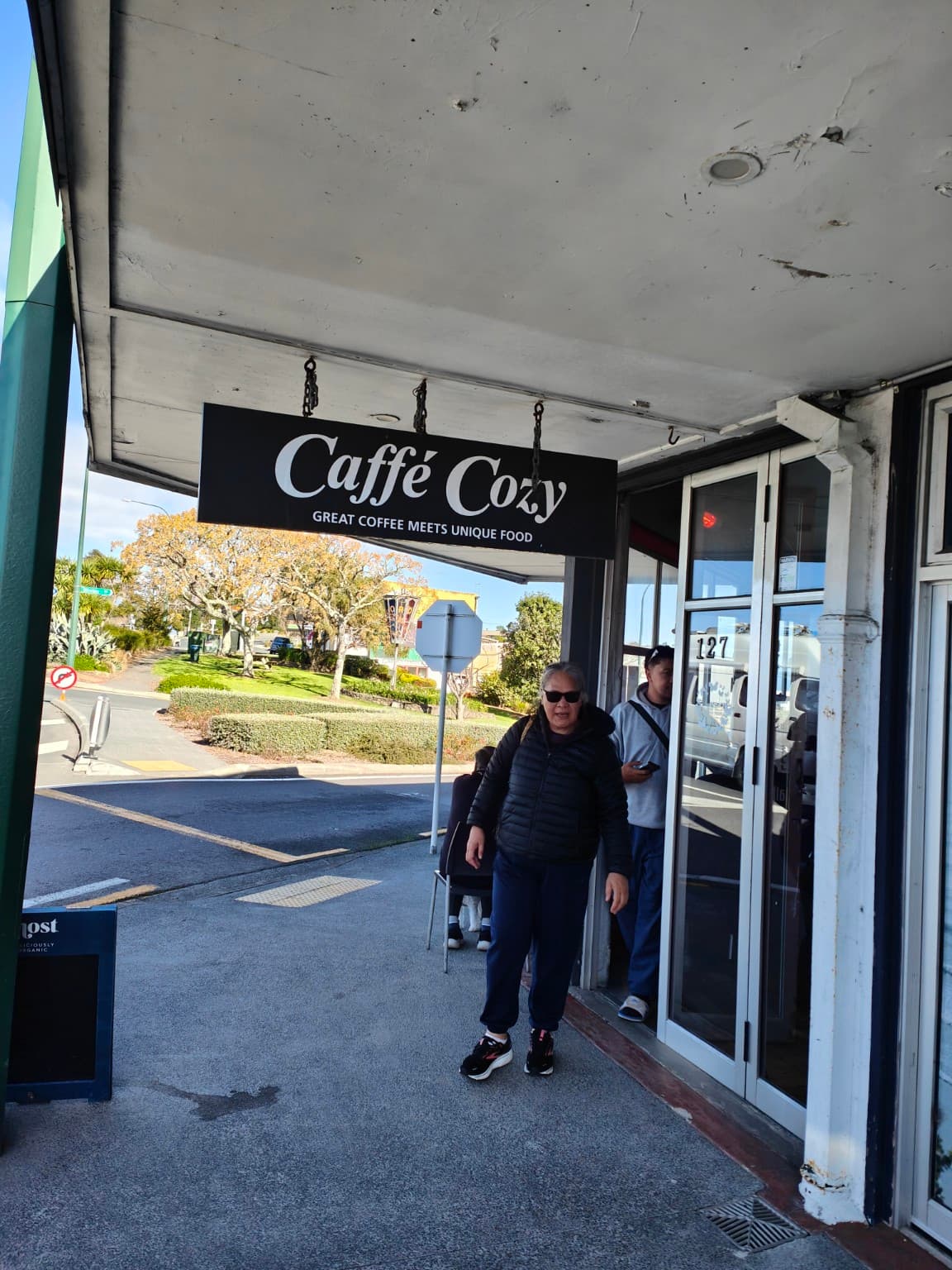
A journey north seems to begin with the first meal after the city releases its hold. Wellsford has long been a stopping place on the road north, a small service town surrounded by farms, with daily life gathered along its main street.
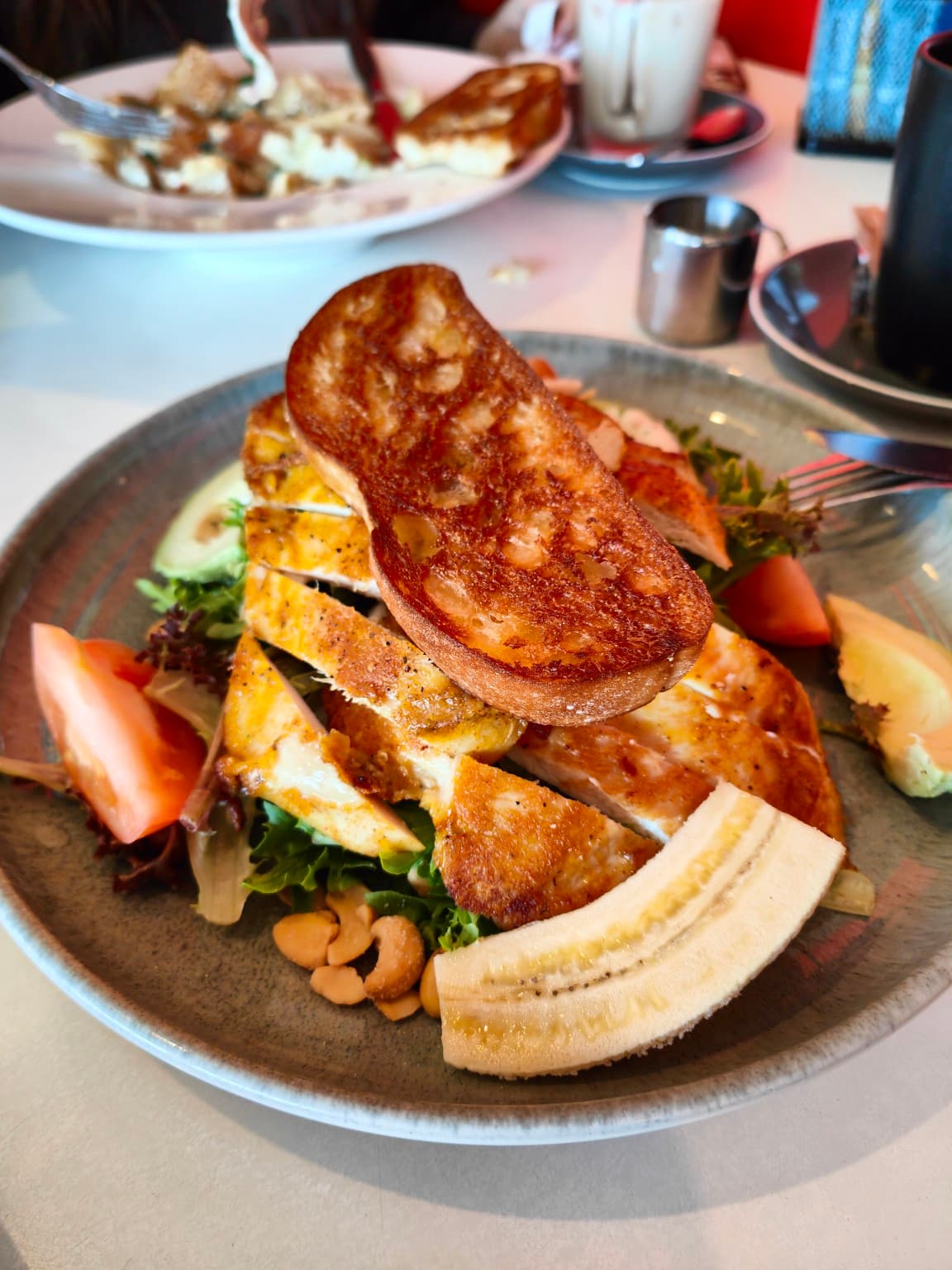
Caffé Cozy made no attempt to feel like a destination: handwritten menus, familiar faces and a generous lunch. Farther north, even this modest bustle would begin to thin. Hokianga was still hours away.
CHAPTER 02 · DEEP TIME
A tree older than a nation's history
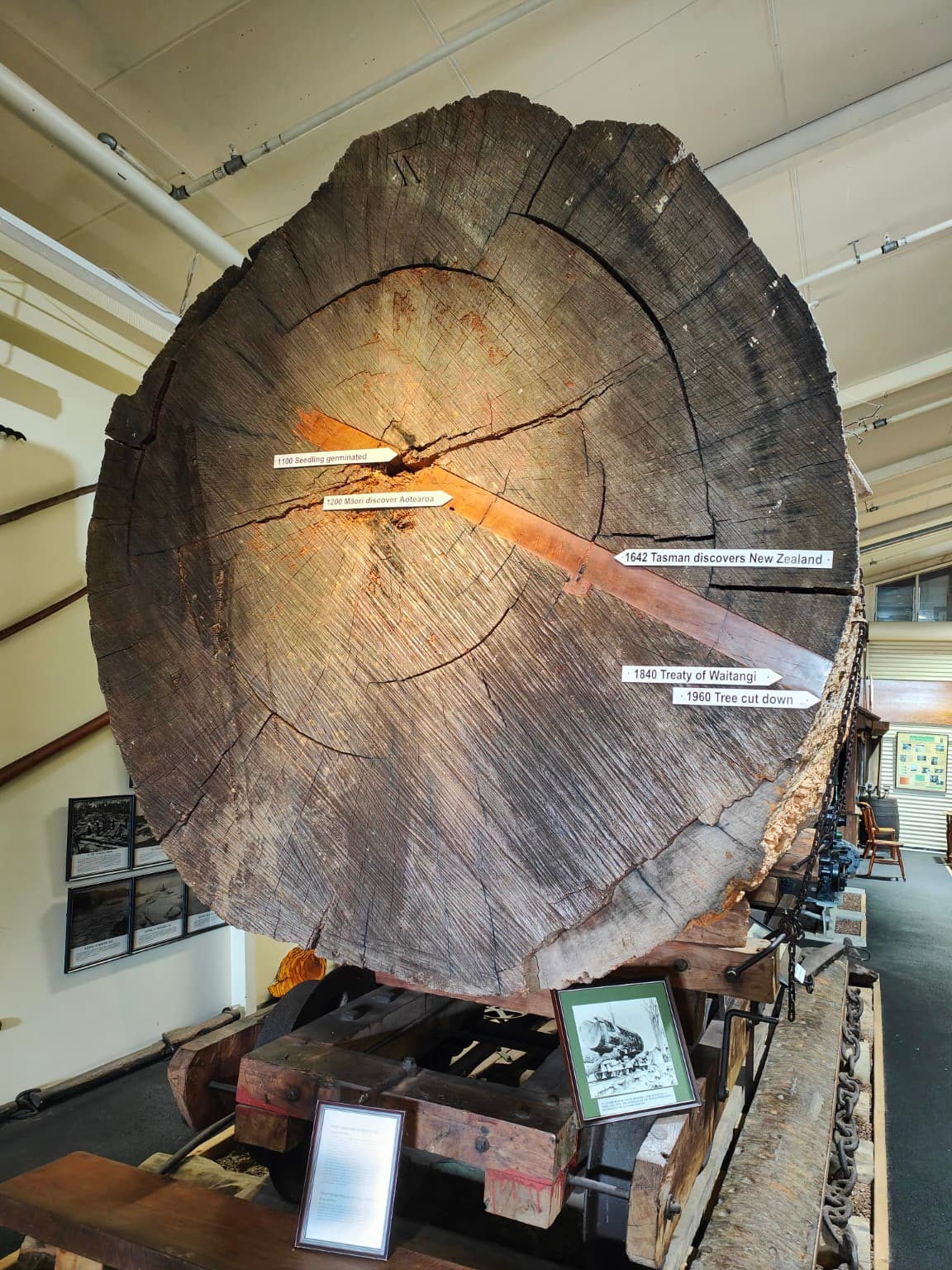
At the Kauri Museum in Matakohe, kauri time became visible. This tree began growing around 1100. Māori arrived in Aotearoa, Tasman sighted New Zealand and the Treaty of Waitangi was signed—each event occupying only a narrow band within its rings.
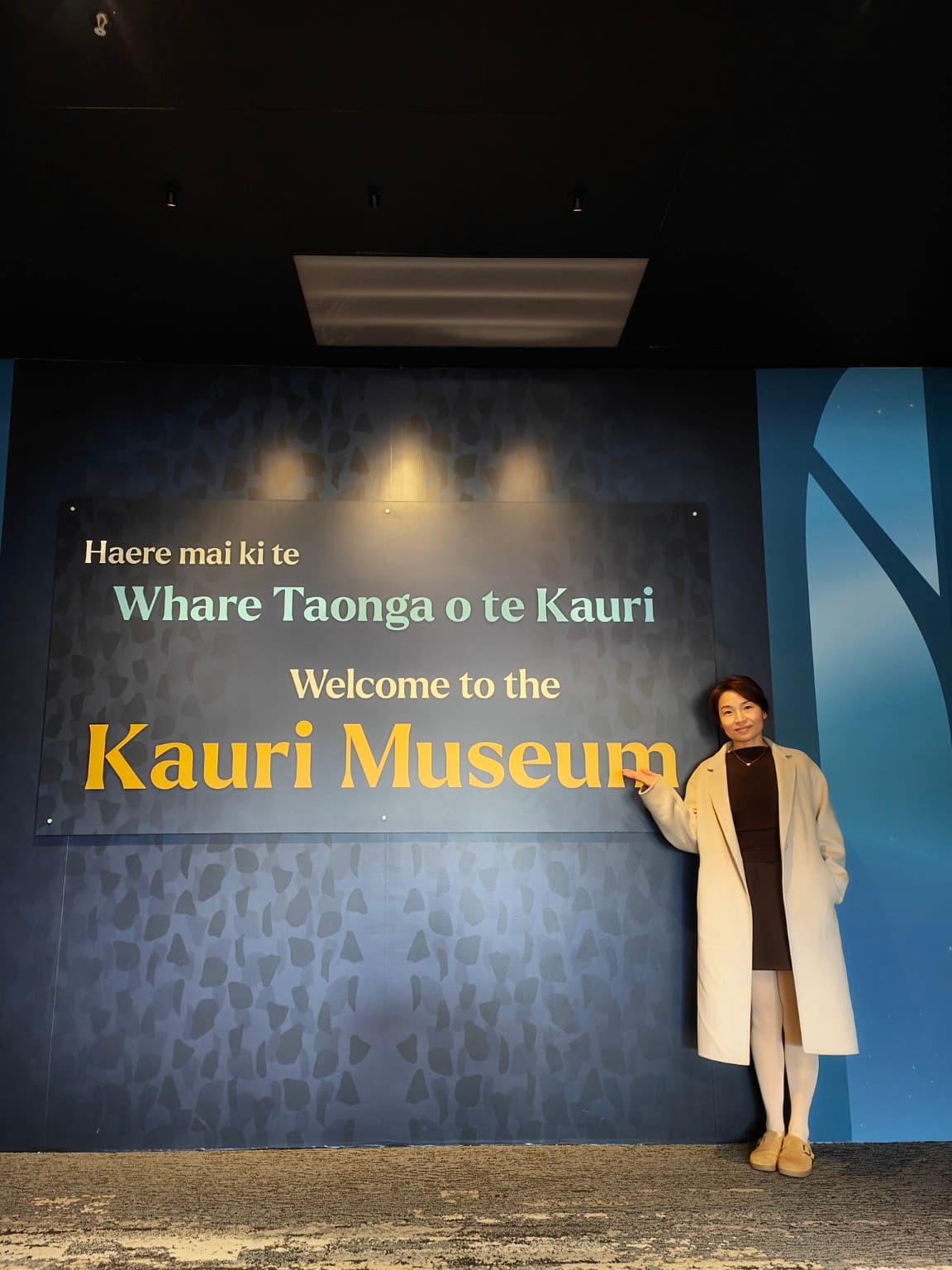
From the nineteenth century, kauri timber and gum sustained many northern settlements. Trees were felled and moved along rivers and harbours to become homes, vessels and furniture. The machinery is impressive, yet the great cross-section leaves a harder thought behind: a tree may take close to a millennium to grow and only a day to bring down. This one was felled in 1960.
TRACE THE RINGS
CHAPTER 03 · THE LONG VIEW
Donkeys by the road, a river turning below
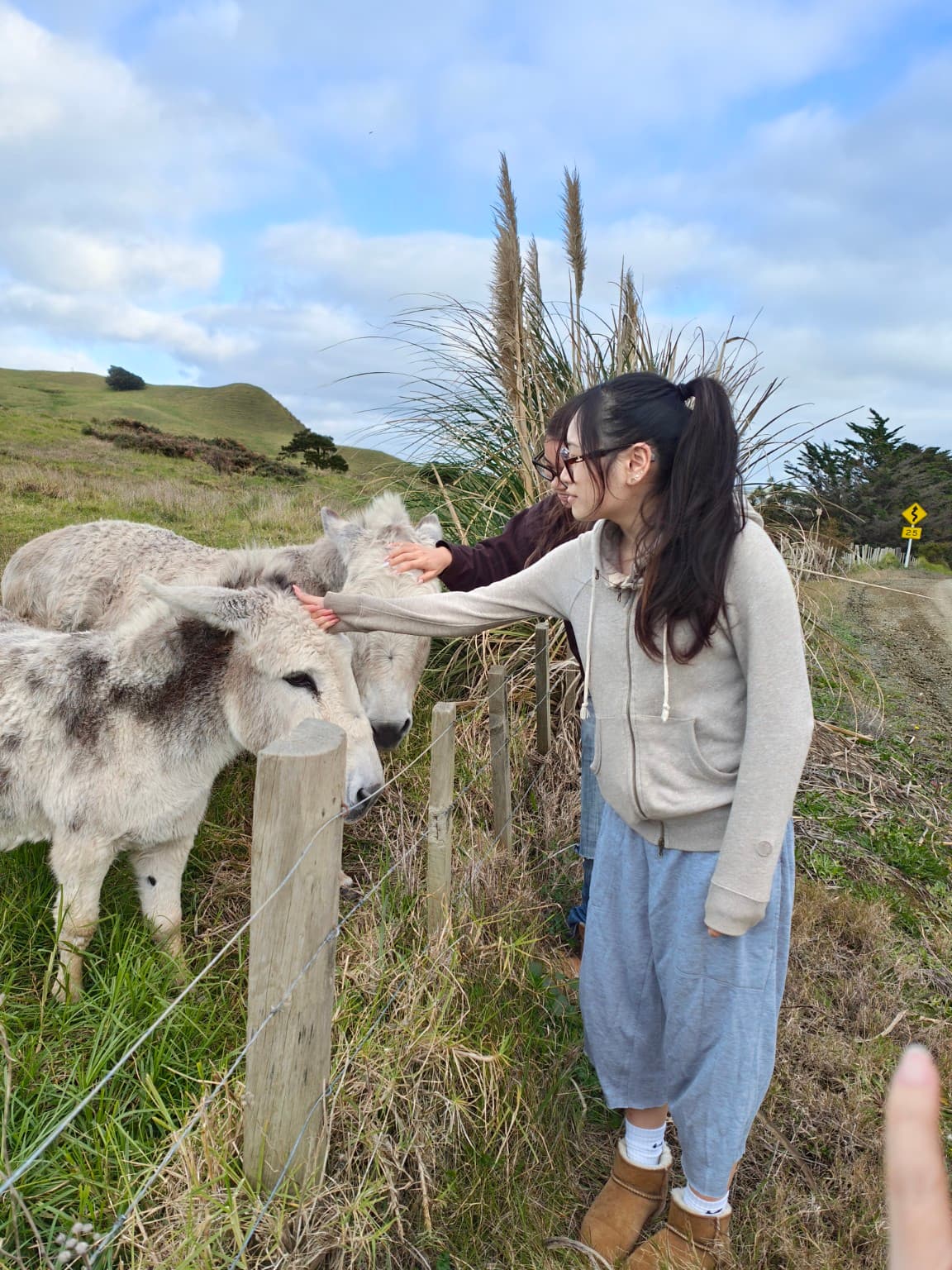
A few roadside donkeys made us stop. Nearby, Tokatoka Lookout was only 700 metres, though much steeper than it sounded.
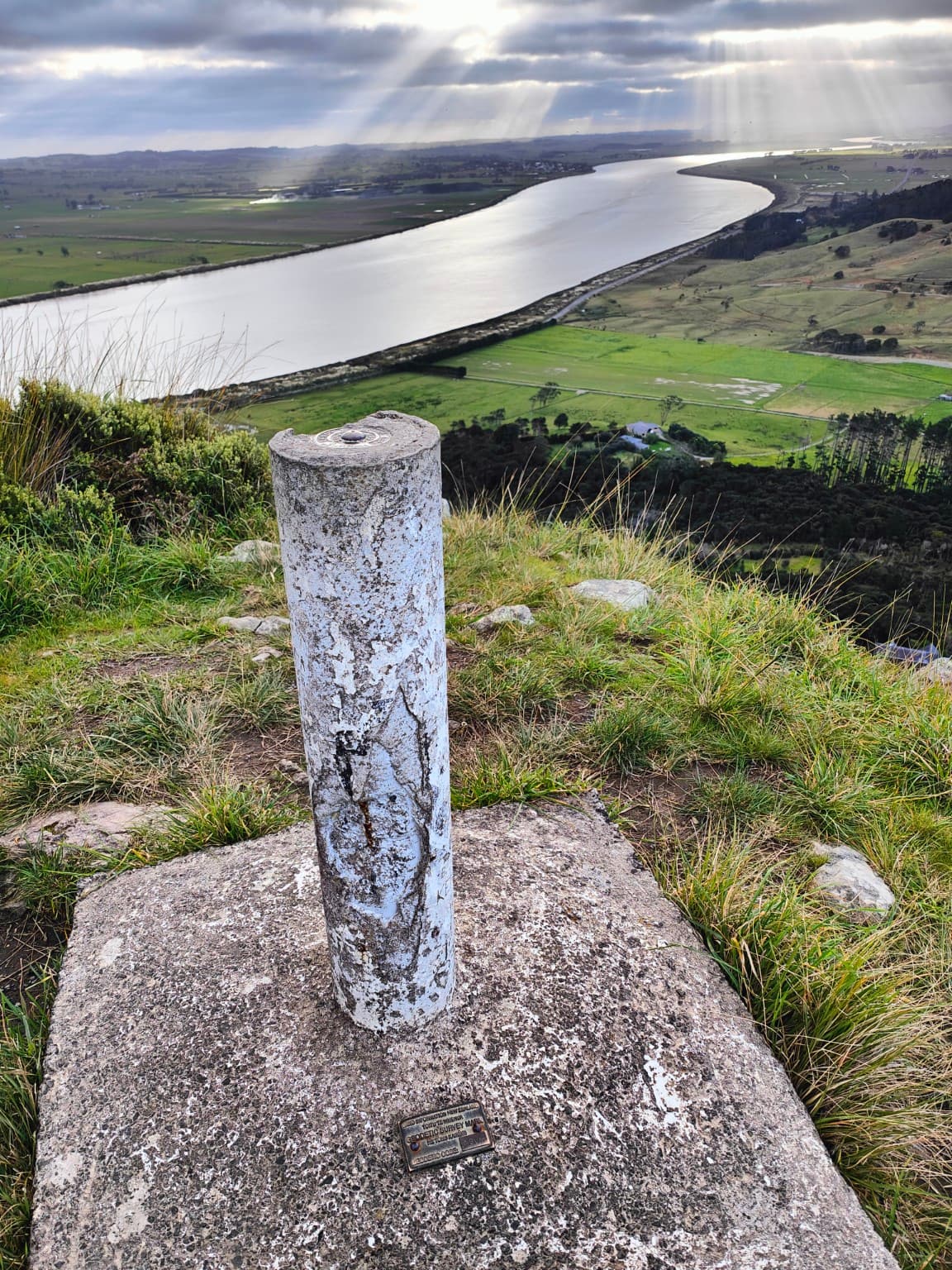
From the summit, the Northern Wairoa River curved through broad, low farmland. This waterway once linked inland farms and timber country with Kaipara Harbour. Before the roads improved, the river was not scenery but transport and livelihood. There are fewer working boats now—only farmhouses, pasture and the occasional vehicle below. The city had disappeared behind us. The world was growing wider, and quieter.
CHAPTER 04 · ARRIVAL
On arrival, the harbour turned down the world
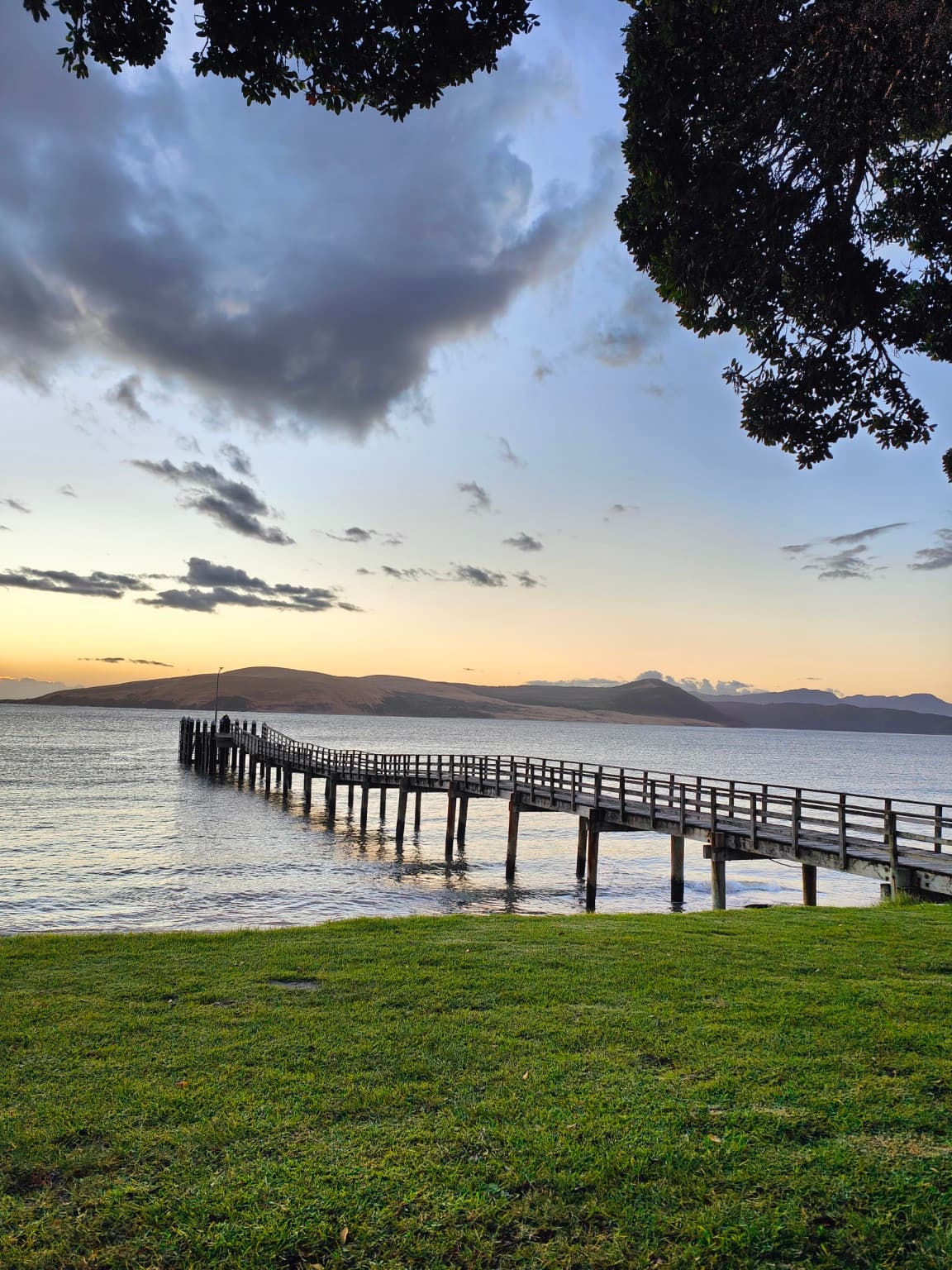
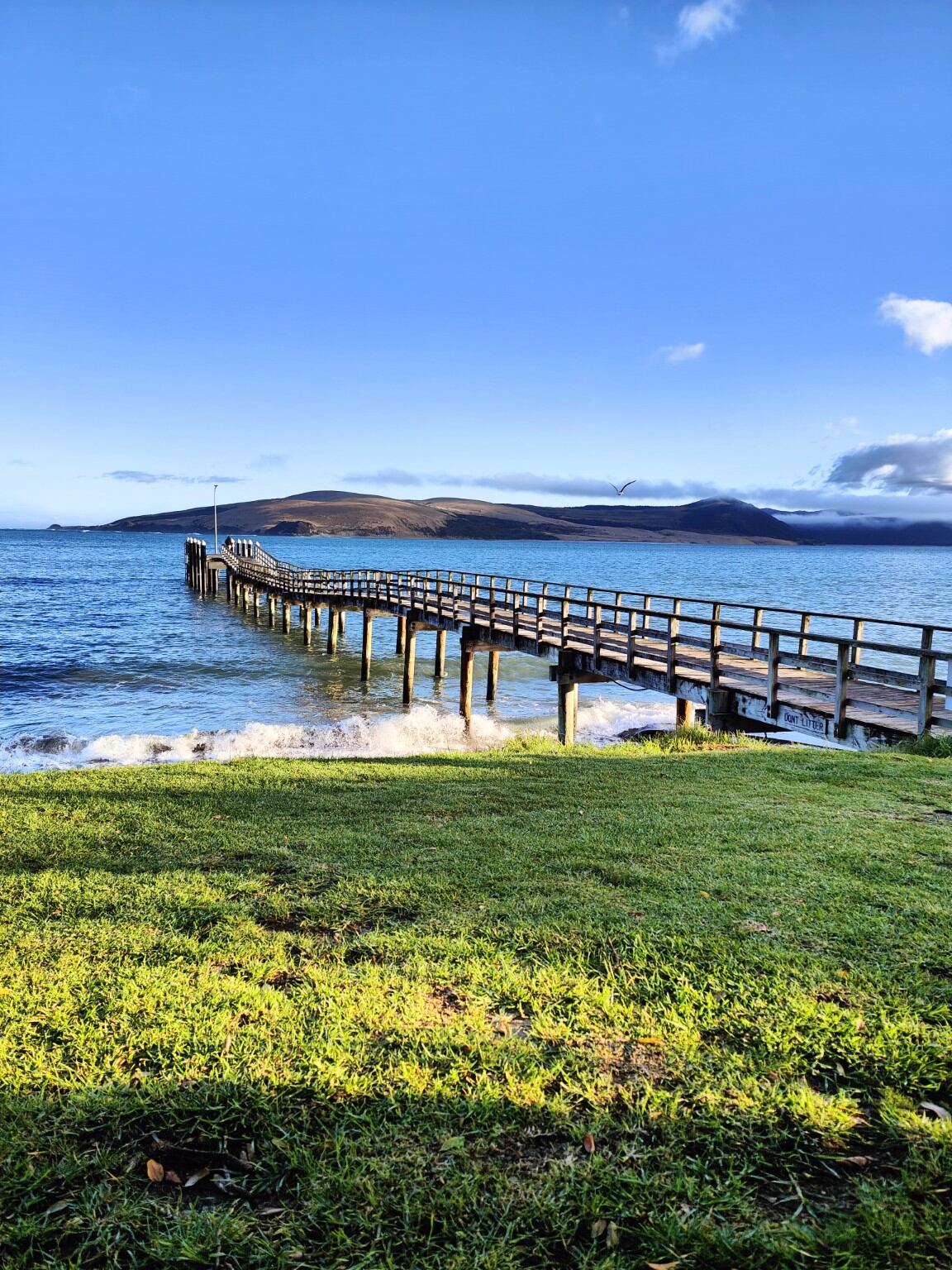
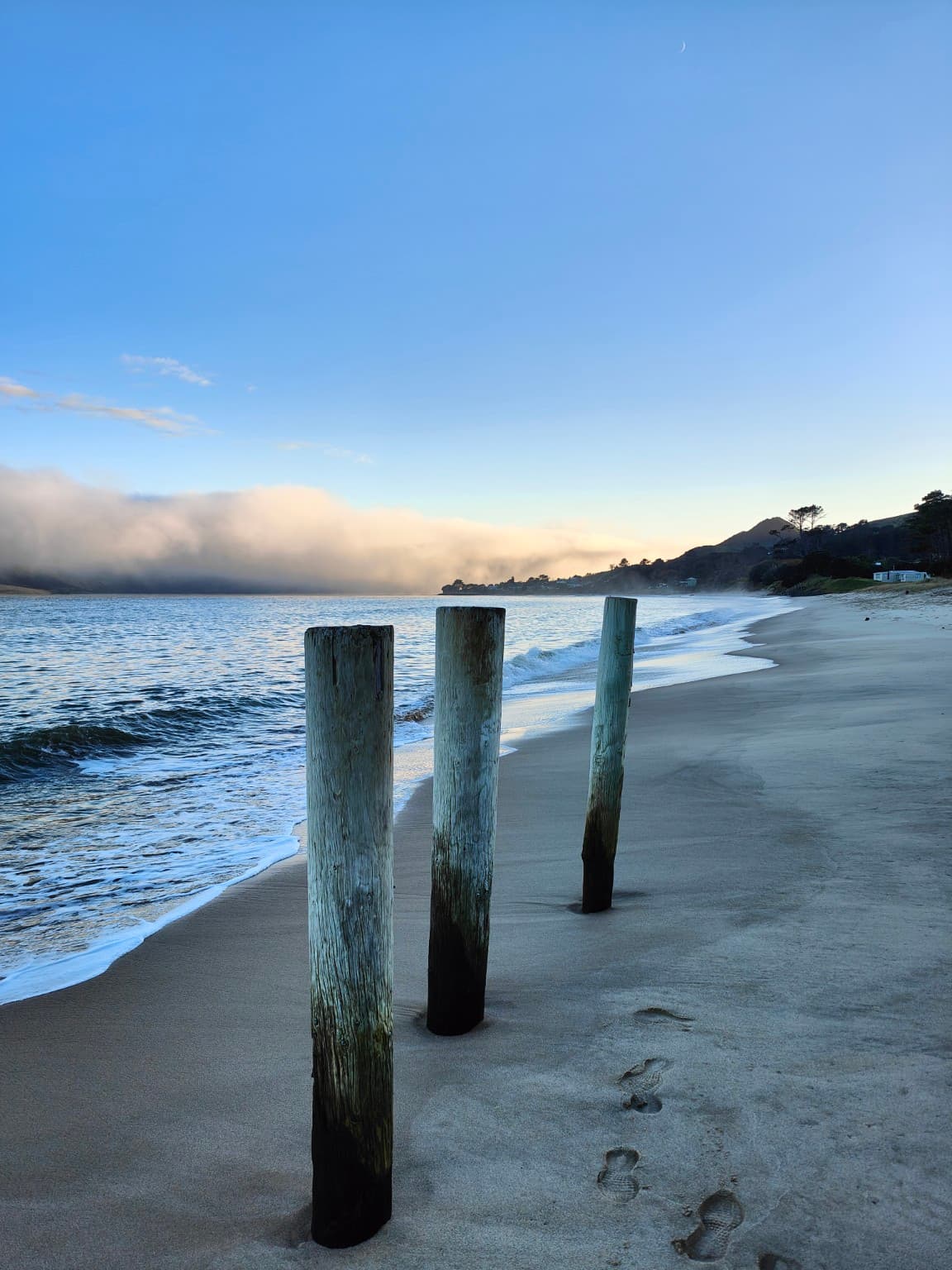
We reached The Sands Hotel Hokianga in the evening. The hotel was quiet, but it was the harbour outside that made us stop. Lawn met water, a boat rested offshore and low cloud slid across the hills opposite. Hokianga is an ancient river valley drowned by the sea, its harbour reaching roughly thirty kilometres inland. Before roads connected the district, boats carried people between settlements on either shore. Water joined these communities, yet each remained held within its own inlet and valley. That distance can still be felt: not remote on a map, perhaps, but living at another tempo. The moon was already visible before the light had gone. Only here did the long road north begin to feel like an arrival.
CHAPTER 05 · GUARDIANS
Here, the harbour is not an end, but a threshold
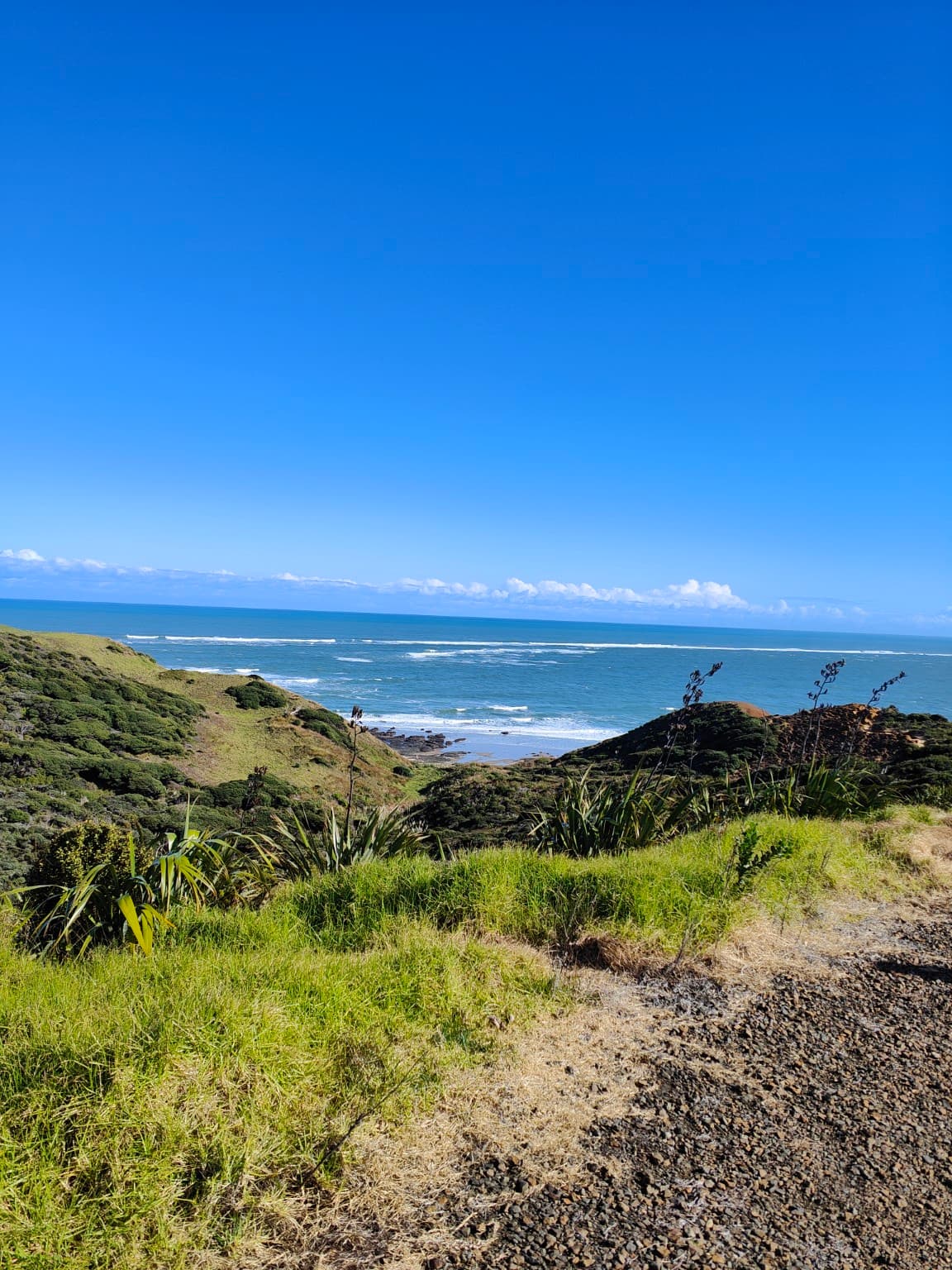
The next morning we climbed to Arai Te Uru. On one side lay the sheltered Hokianga Harbour; on the other, the Tasman Sea kept arriving. The sand hills rested between them.
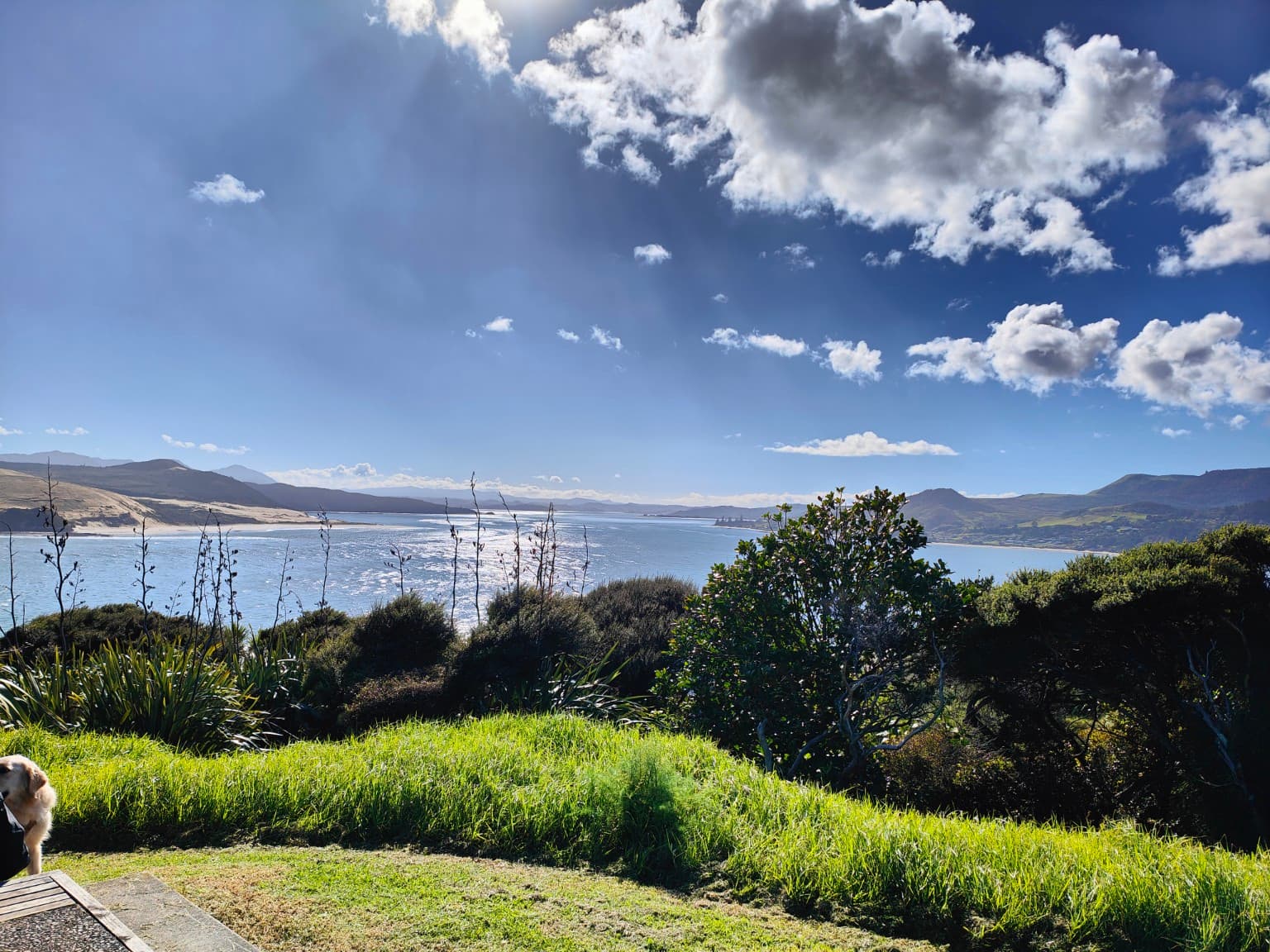
The harbour’s full name, Te Hokianga-nui-a-Kupe, is bound to the navigator Kupe and the idea of departure and return. Local tradition says that when Kupe left, Arai Te Uru and Niua on the northern shore were appointed guardians, watching over vessels and those passing through the harbour mouth. The entrance looks spacious and calm, yet beyond it lie shifting bars, currents and open sea. The wind was strong at the summit. On the way down, our two children each took one of my hands—they said my hands were too cold.
CHAPTER 06 · TIDES
When the tide withdrew, time left something round behind
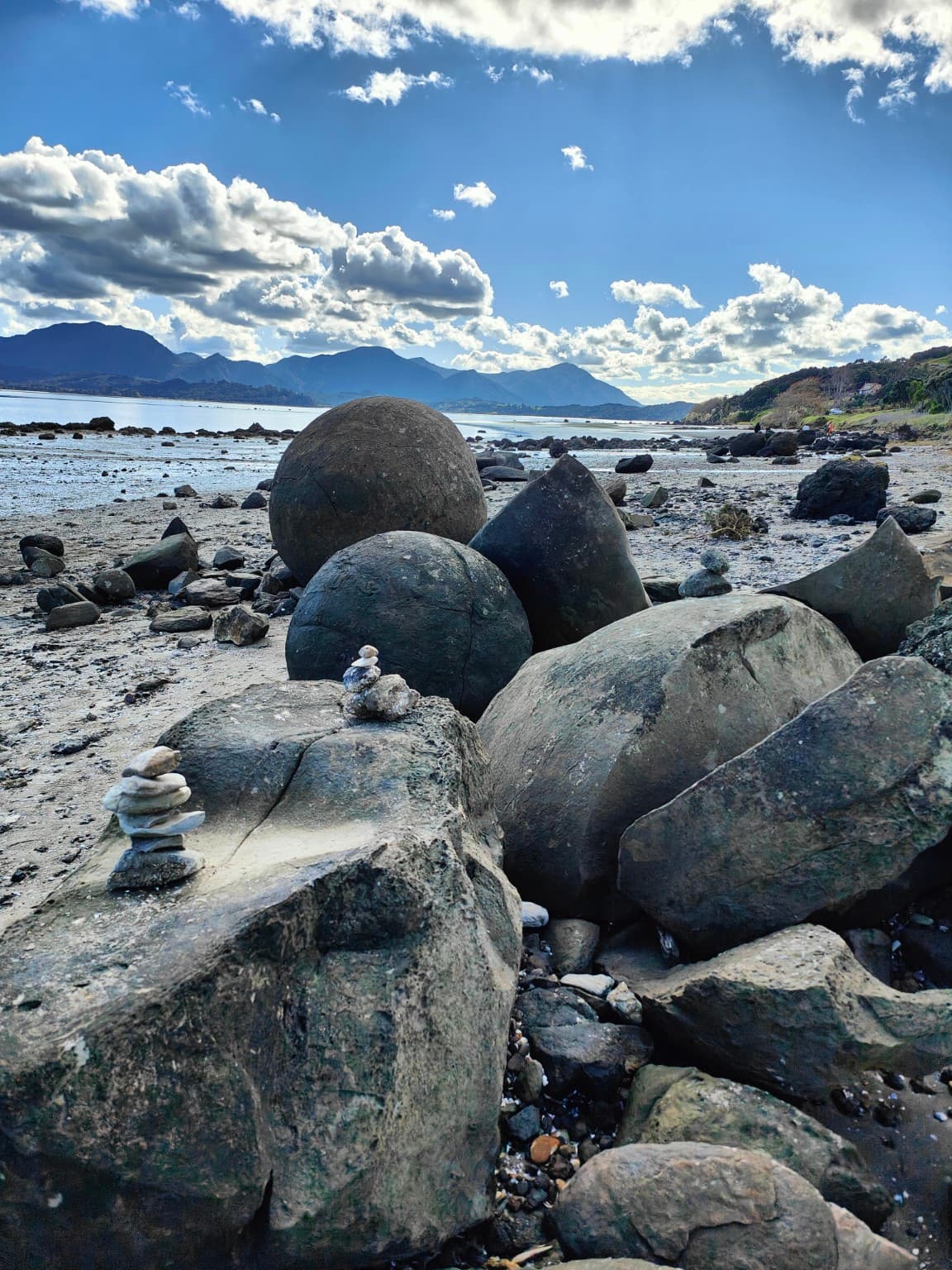
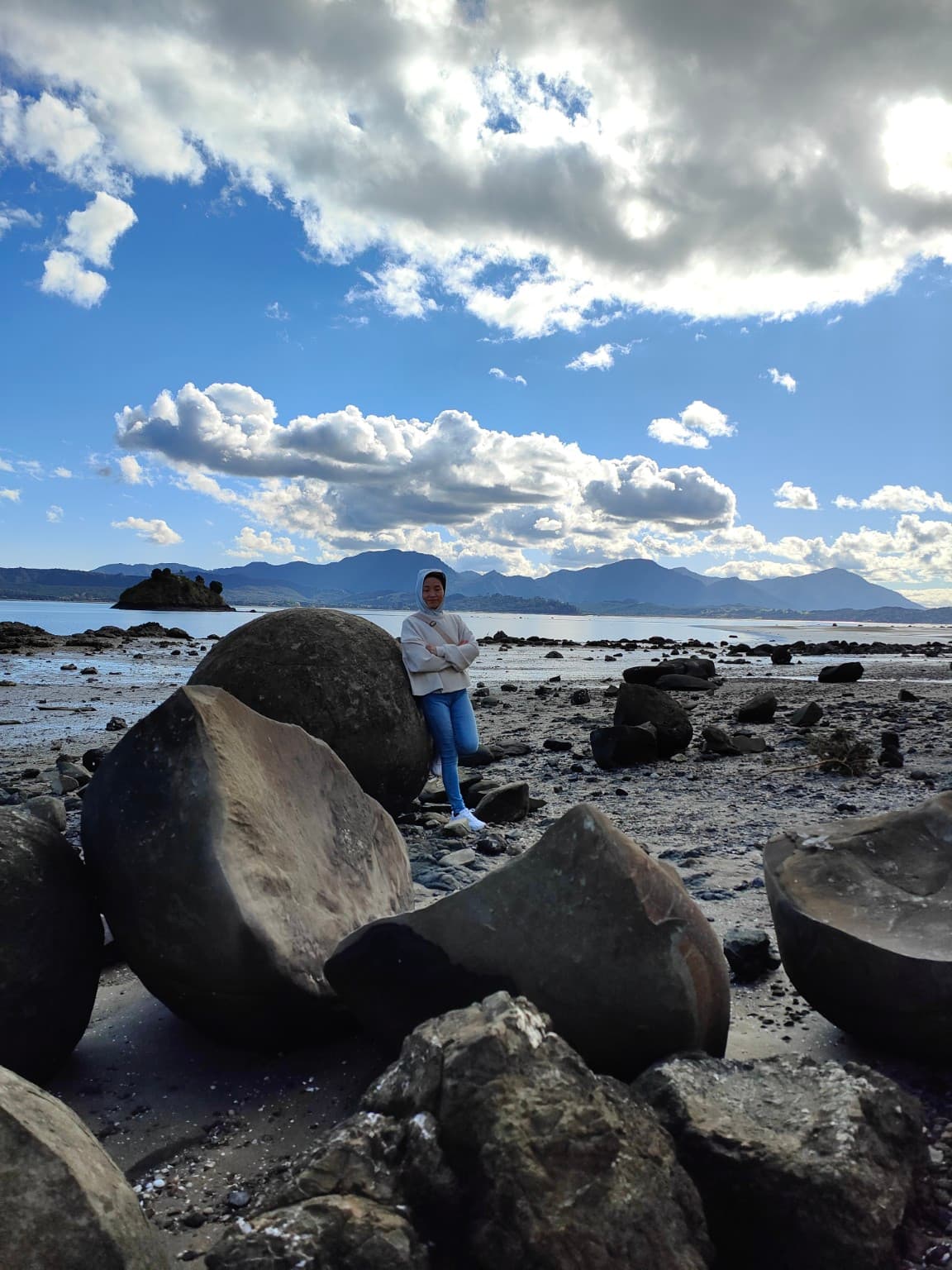
Koutu Boulders is not simply a point to find on a map. The tide decides the journey. After low water we followed the beach, and the mudflats, stones and great round boulders gradually appeared. These giant concretions have been revealed slowly by coastal erosion; some reach several metres across. They are not arranged inside an attraction, but remain on the harbour edge, living through each returning tide. The land around them is still where people live—not a backdrop cleared for tourism. Reaching them means respecting both the coast’s rhythm and local boundaries. Use the beach at low tide. When the water rises, private land does not become an automatic alternative route. Before leaving, the children stacked a few small stones on one of the boulders and made wishes. No one asked what anyone had wished for.
CHAPTER 07 · EVERYDAY LIFE
In Opononi, life happens between the harbour and lunch
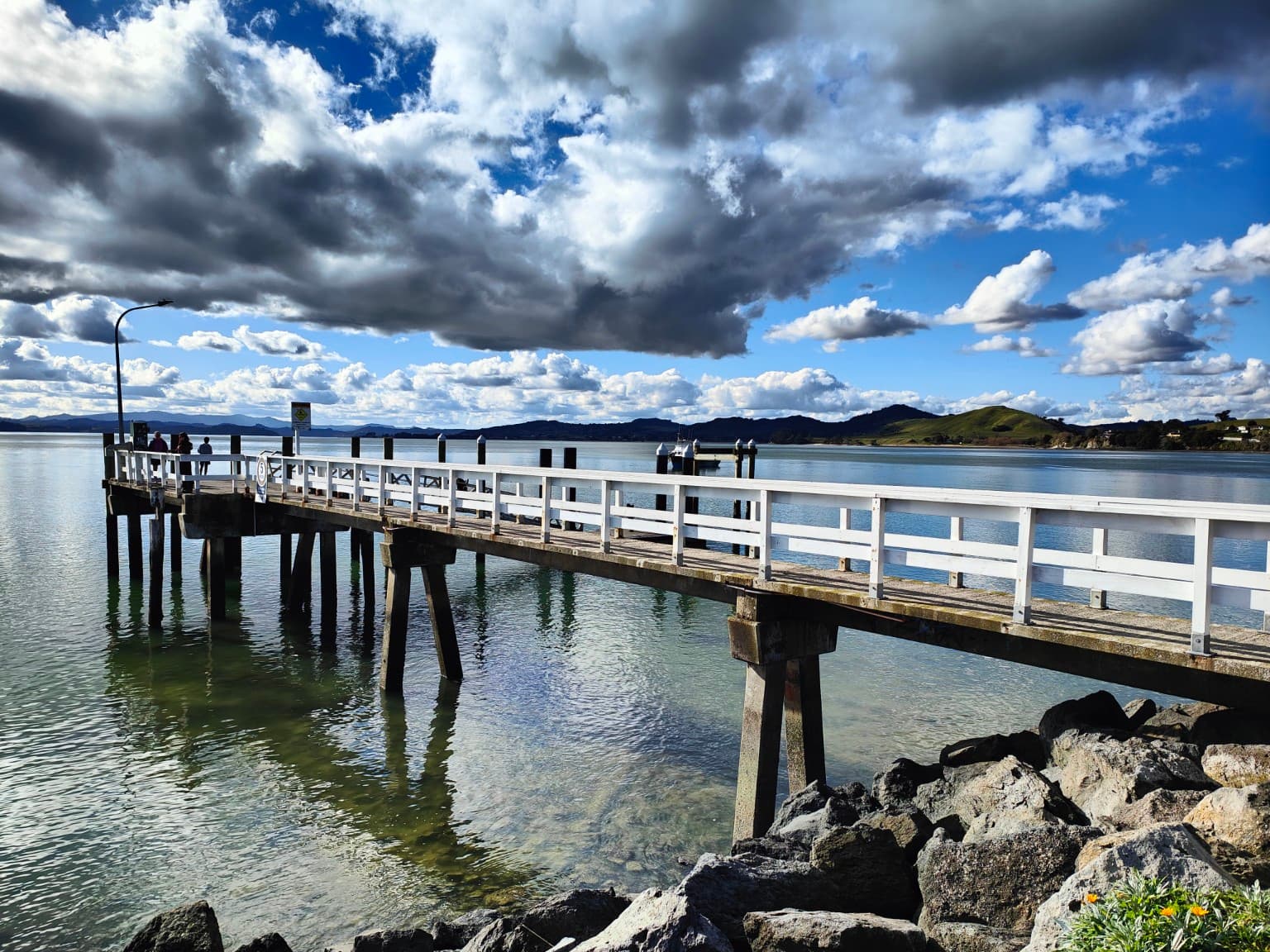
Back in Opononi, the harbour found its everyday voice. People lingered at the end of the white pier, families sat along the beach, and others simply watched the water from the rocks. This small settlement once grew around timber, gum stores and harbour transport. In the summer of 1955–56, a wild bottlenose dolphin called Opo came close to shore each day and played with local children, briefly turning remote Opononi into national news. After her death, she was buried beside the town’s memorial hall.
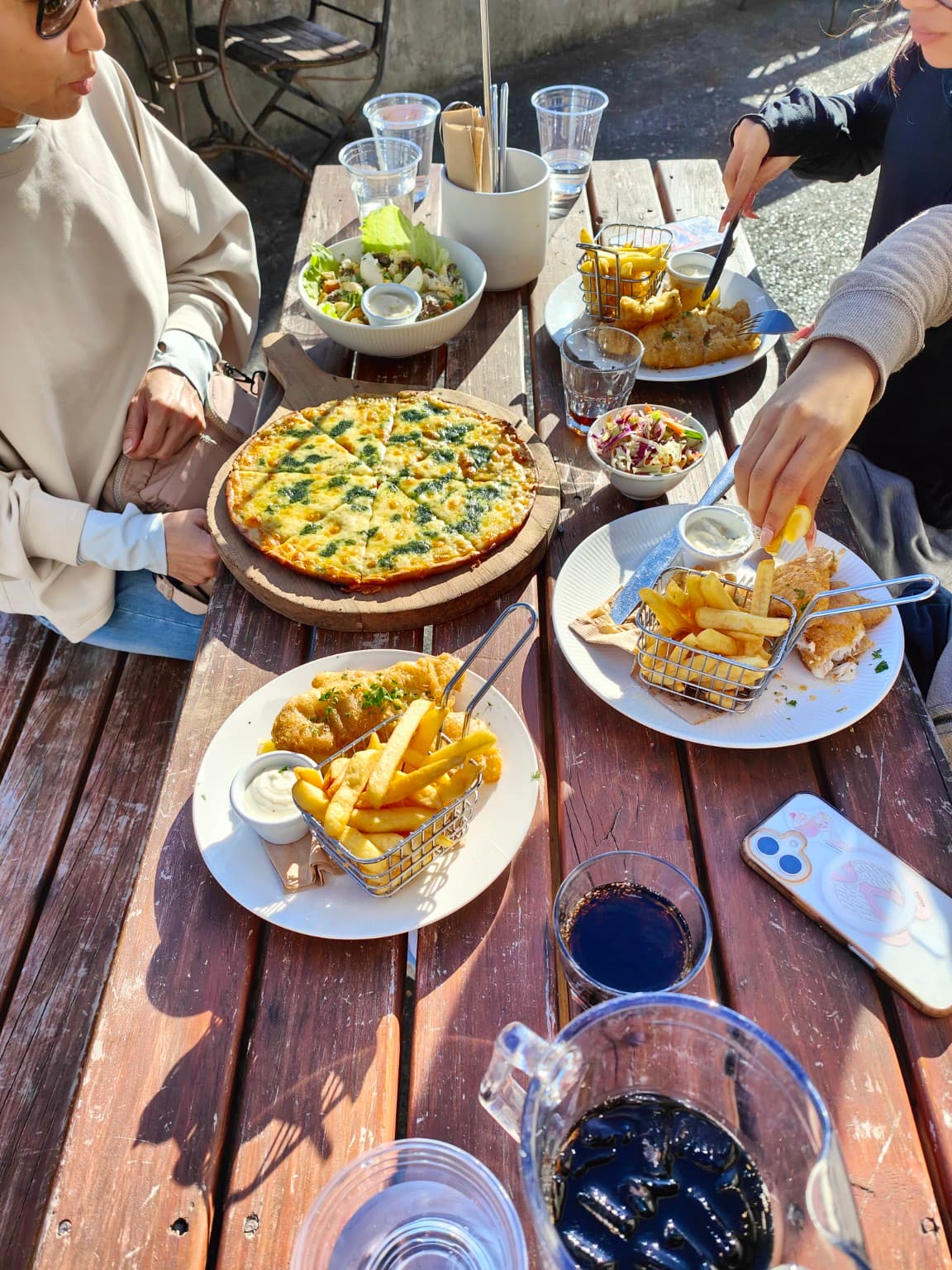
We ate lunch on the terrace at Opononi Hotel—fish, chips, pizza and salad. Nothing ceremonial, just a family sitting in the sun, letting the morning’s miles settle back into ordinary life.
CHAPTER 08 · HOMEWARD
Before we left, the forest returned time to the trees
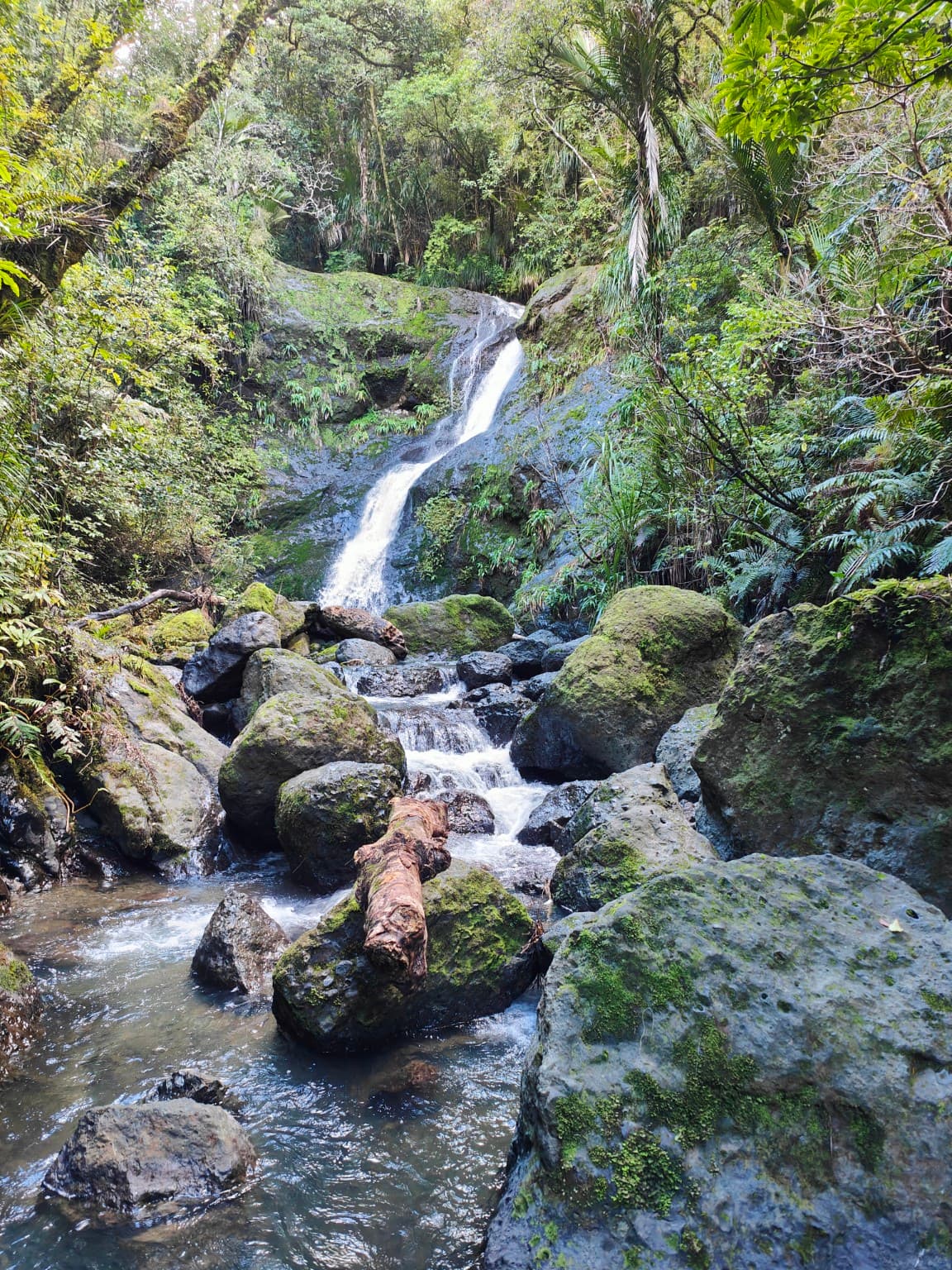
On the journey home, we first entered the Waiotemarama Waterfall Walk. Water slipped down moss-covered rock, while ferns and damp forest shut out the sound of the road.
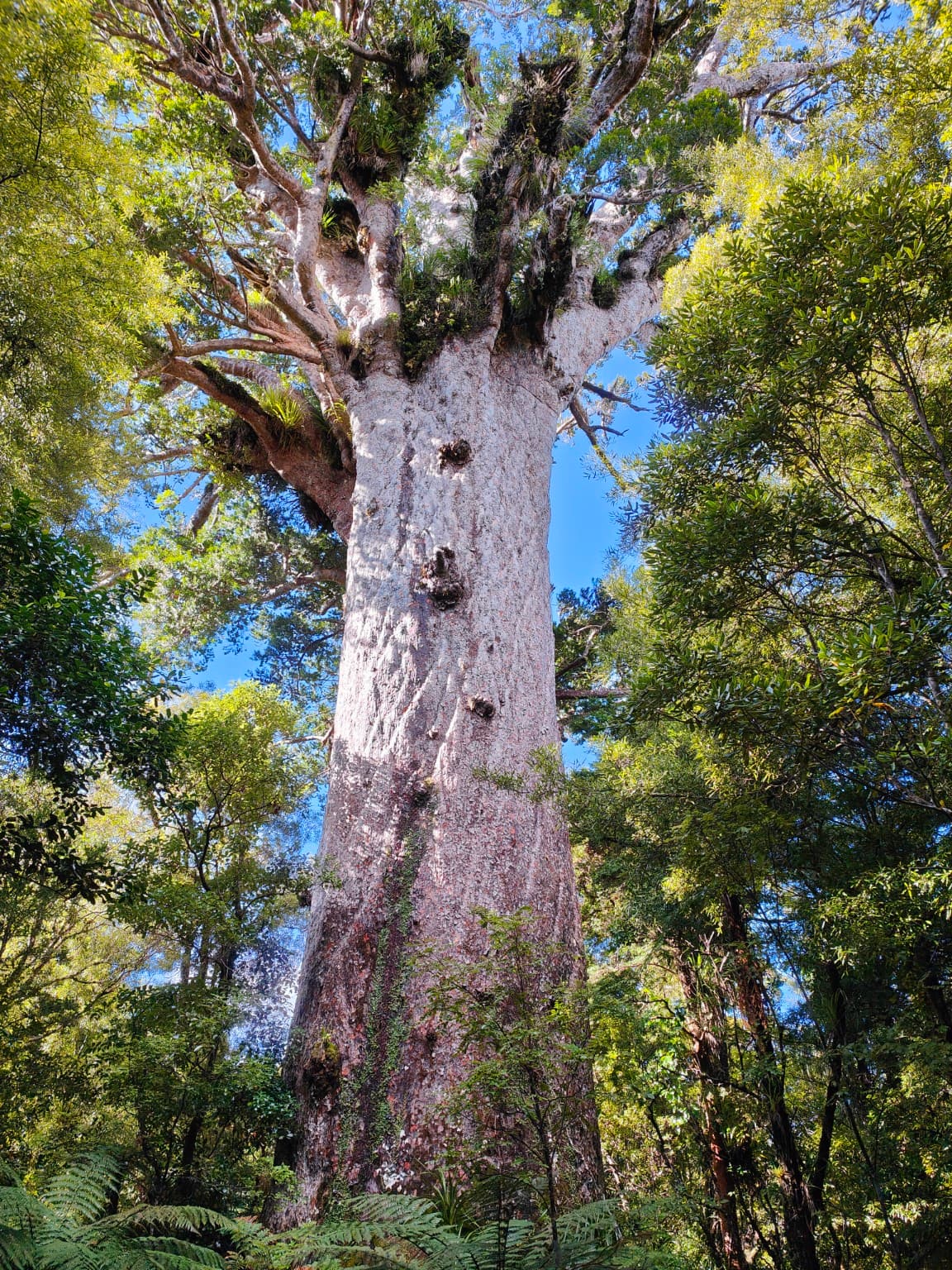
Farther into Waipoua Forest, we stood before Tāne Mahuta—the largest known living kauri. Shoes are cleaned at the entrance, and visitors keep clear of the roots; kauri dieback can travel in contaminated soil, so protecting an ancient tree begins with a seemingly small pause. At the beginning of the journey, a felled kauri in the museum let us read almost a thousand years in its rings. Leaving Hokianga beneath a living tree, time was no longer a scale across a cut surface, but a crown too vast to take in at once.
CHAPTER 09 · UNDER THE STARS
After dark, another passage appeared above the harbour
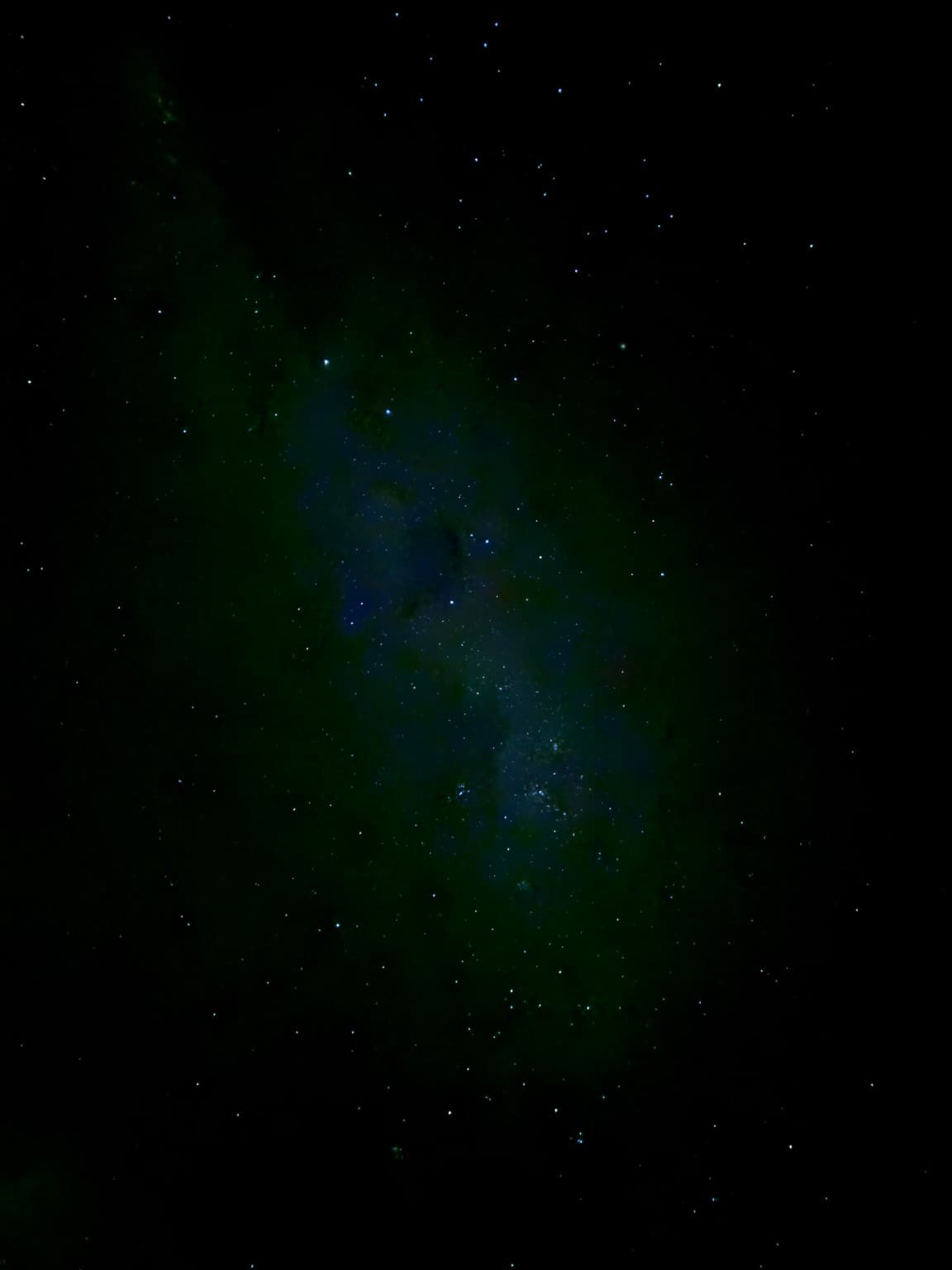
On our last night in Hokianga, we stepped outside into almost complete darkness. The harbour and hills we knew by day receded from view, while the Milky Way slowly emerged. My phone did not capture everything the eye could see, but its faint record was enough to show that, far from urban light, darkness is not an empty space.
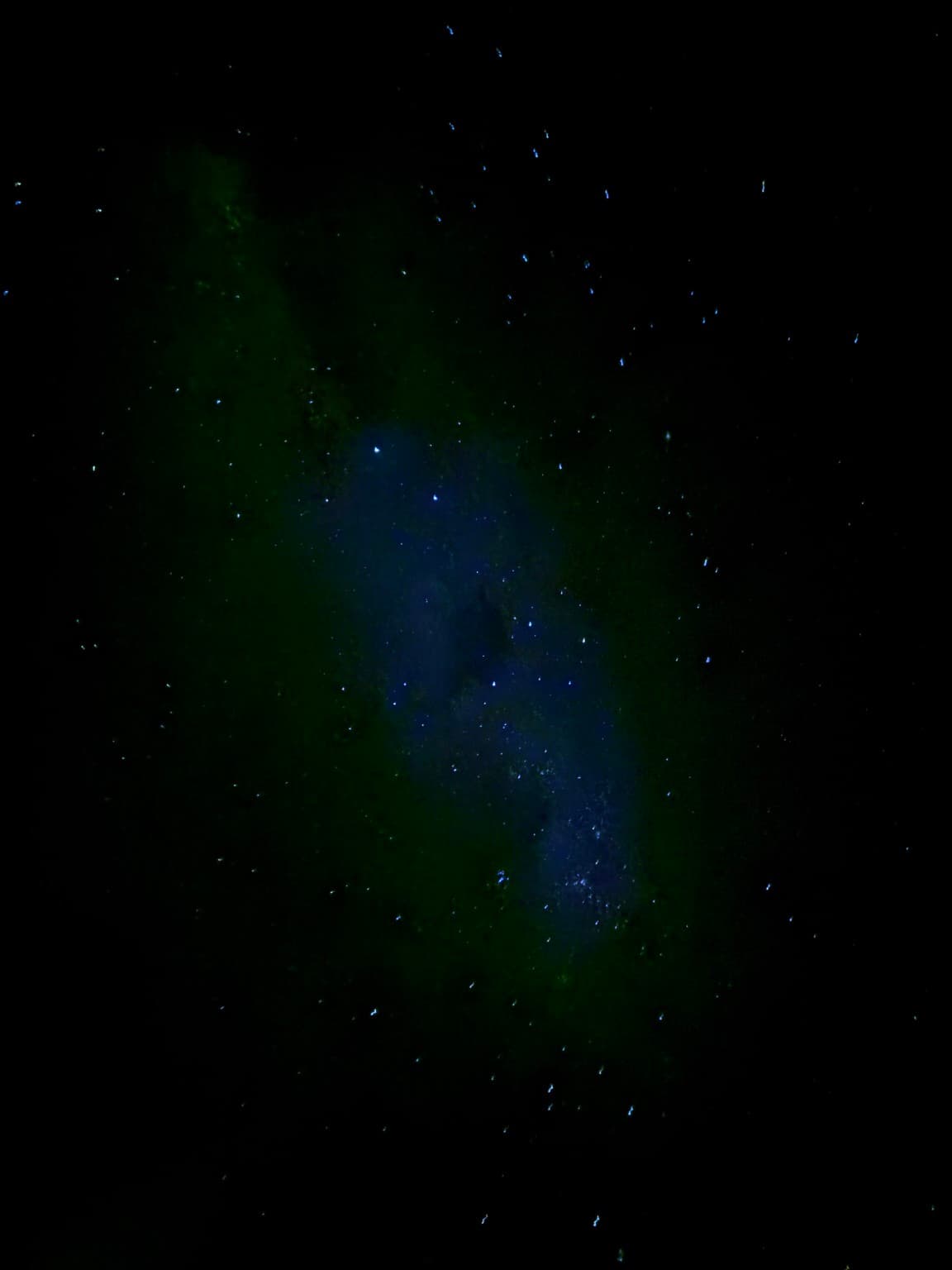
In Māori astronomical tradition, Matariki forms part of a larger constellation called Te Waka o Rangi—the canoe of Rangi. In one widely shared account, Taramainuku captains the celestial waka and casts a net to gather the souls of those who have died during the year. When Matariki rises again to mark the new year, the names of the dead are called and their memory is carried into the sky.
Cultural note: The display I remember at the Kauri Museum was more likely telling the story of Te Waka o Rangi than describing Hokianga itself as a compartment for souls. Māori astronomical traditions vary among iwi and regions; this passage follows official Matariki guidance on the celestial waka, Taramainuku and remembrance.
HOKIANGA · THE END
The night sky did not make this place feel emptier. It gave distance a kind of company.
The journey ended. The quiet remained.