
This SeriesHokianga
- 00Northbound
- 01The Road Begins with Lunch
- 02A Tree Older than a Nation's History
- 03Donkeys by the Road, a River Turning Below
- 04On Arrival, the Harbour Turned Down the World
- 05Here, the Harbour Is Not an End, but a Threshold
- 06When the Tide Withdrew, Time Left Something Round Behind
- 07In Opononi, Life Happens between the Harbour and Lunch
- 08Before We Left, the Forest Returned Time to the Trees
- 09After Dark, Another Passage Appeared above the Harbour
I tried to run, but it was already too late.
A wave suddenly pushed in from the water in front of the black rocks.
I turned, but the stones beneath my feet were slick and uneven. There was nowhere to run quickly. A second later, white water reached my shoes and swept higher.
My shoes were wet.
My trouser legs were wet.
So was part of me.
I stood among the rocks and watched the water pull back.
I looked down at my shoes. Soaked.
Then I looked up. Mist still lay across the harbour.
Fine.
If I was wet, I was wet. It did not stop me looking at the sea.
A Line of Footprints in the Sand
That morning, Katherine and the two children were still asleep.
I left the Sands Hotel Hokianga on my own. Ōmāpere’s waterfront was just outside, and the town had not fully woken. There was almost no one around.
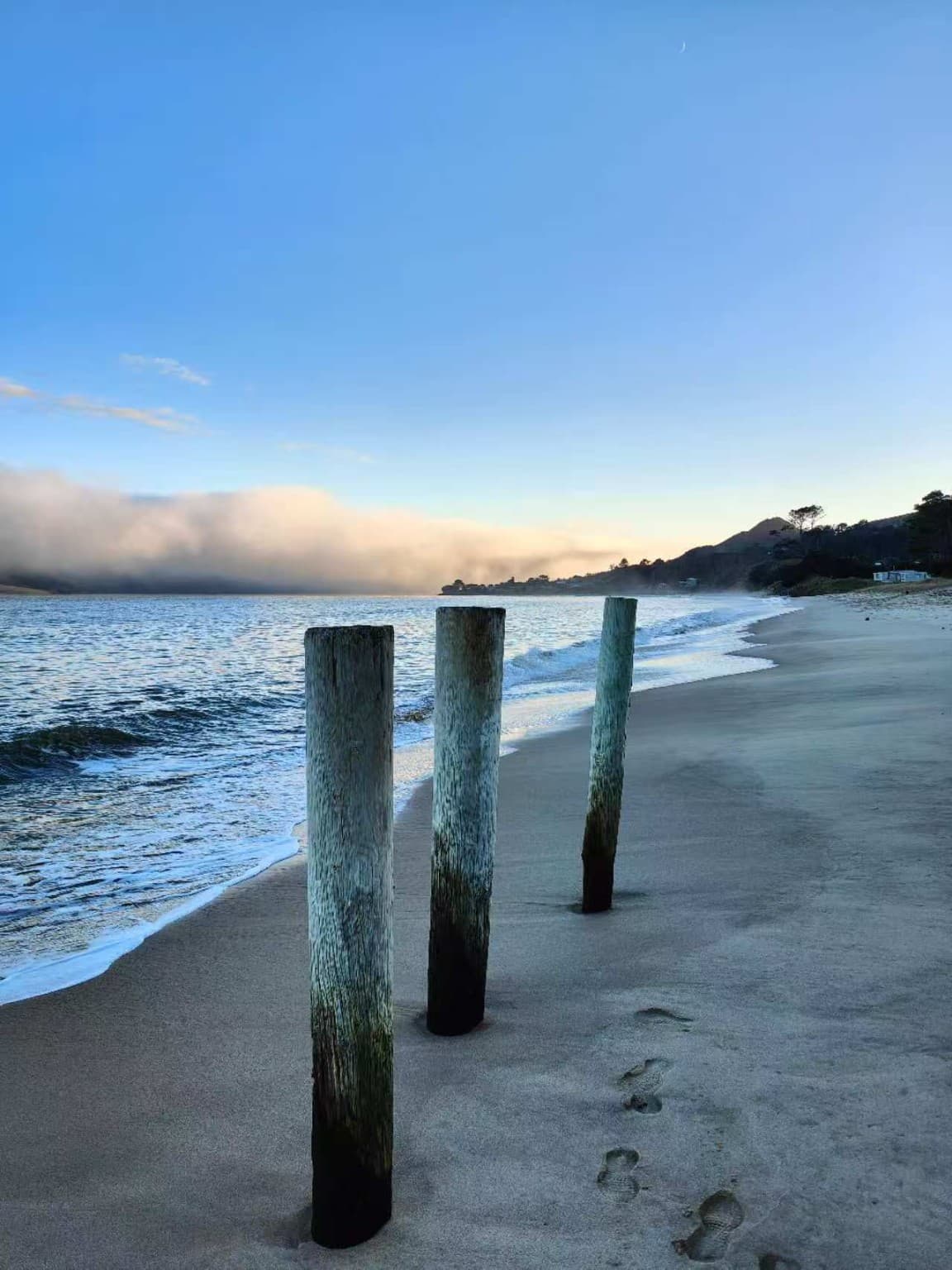
A few old timber piles stood darkened by seawater along the beach.
A line of footprints ran ahead across the sand.
They were mine.
The water slipped back, leaving the wet sand shining. Then the next wave came slowly forward and softened the prints closest to the sea.
The distant hills were still hidden in mist. White fog lay low over Hokianga Harbour, spreading from the foot of the hills towards the middle of the water. Morning light warmed its edge while the sky above had already turned clear blue.
When I looked up, the moon had not gone.
A thin crescent still hung there.
I kept walking along the shore until I reached the black rocks.
At first I was careful.
One secure step, then the next. The rocks were wet and some were slippery. I was still trying not to get my shoes soaked.
The sea did not care.
A wave pushed in from the water ahead of the rocks.
I turned to run, but there was nowhere to run.
The water reached me anyway.
When it pulled back, I returned to the sand. My footprints were still there, though the ones closest to the water had already blurred.
The mist across the harbour had not lifted.
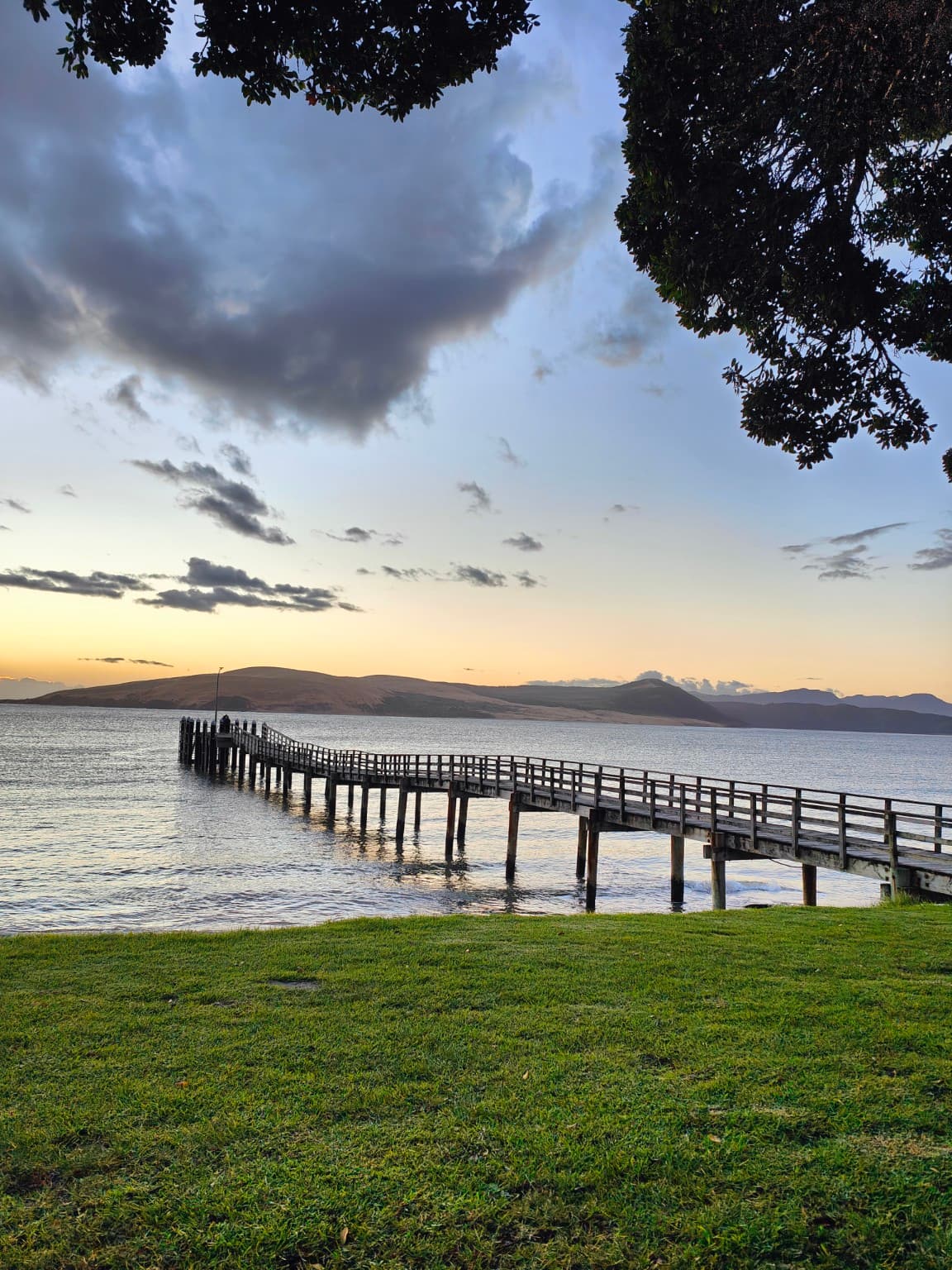
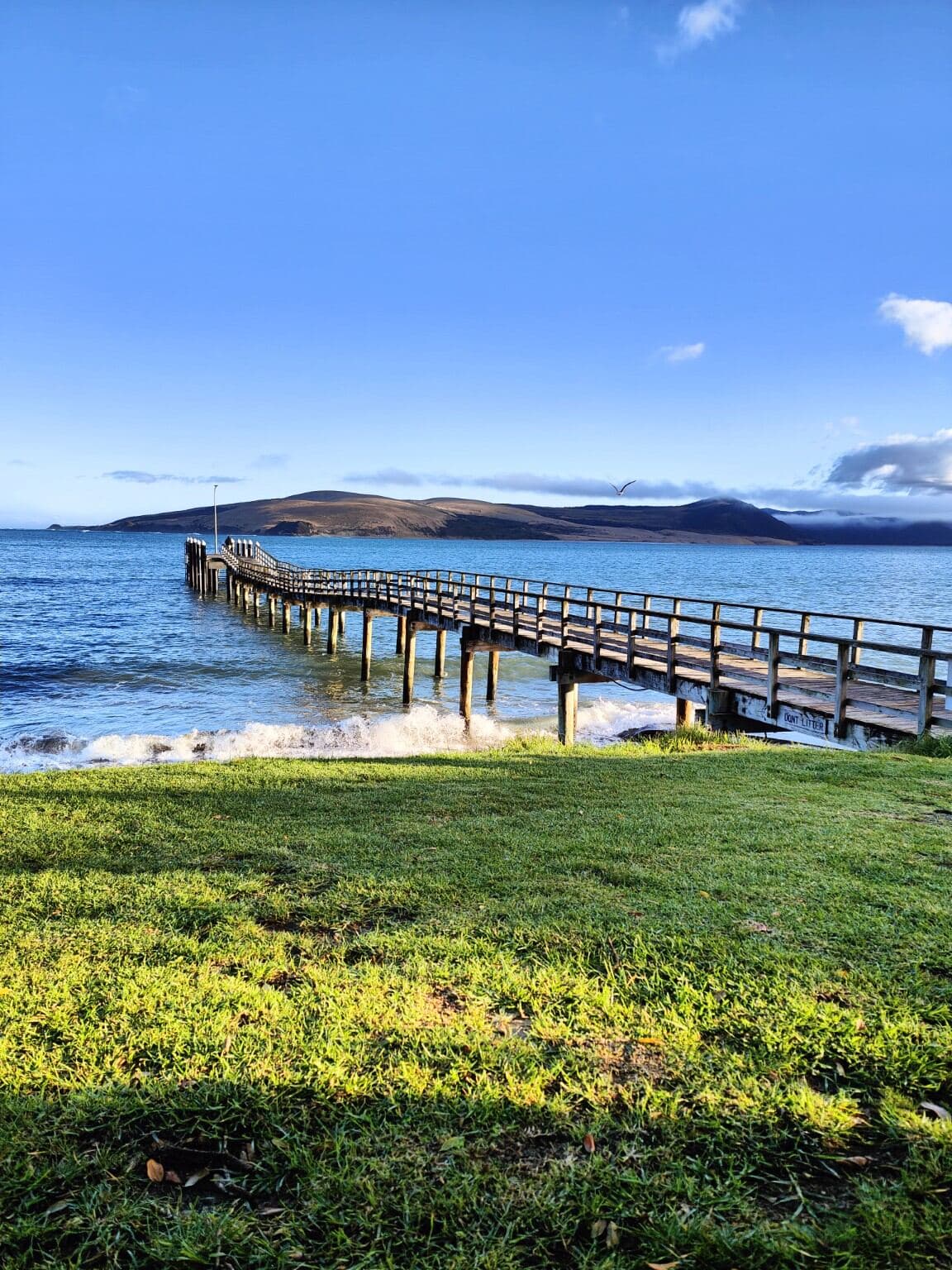
I walked a little farther and stepped onto the old wooden wharf. The boards had been bleached pale by salt and wind. Morning sunlight stretched the railings into long shadows across my feet.
From there, the harbour looked calm.
Before roads joined the small settlements on either side, this water had been more than scenery.
It had been the road.
Boats came this way and left this way.
That morning, only the waves kept arriving at the shore.
By the time I returned to the hotel, everyone was awake.
I changed out of my wet clothes. When I took off my shoes, they were full of sand. I tipped them out and watched it fall onto the floor.
Katherine and the children saw me.
No one said anything.
They were probably used to it by then. Trips with me usually came with some small complication.
After changing, we walked around the corner for breakfast.
The café was small, only a short walk from the hotel. There were not many tables, and the bread, pastries and breakfast food behind the counter looked as if they had been made in small batches rather than on a production line.
The four of us sat down around one table again.
No one mentioned the morning’s little incident.
After breakfast, we went to see the harbour entrance.
The Wind at the Harbour Mouth
At first, the Signal Station Track at Arai Te Uru did not feel like a path leading towards the open sea.
Katherine and the children walked ahead. The track ran between scrub and flax, sunlight falling through the branches so that the ground alternated between light and shade.
The sea had not yet fully appeared.
Only the sky ahead seemed to grow wider.
Then the shelter disappeared.
The wind came straight at us.
Water on the left.
Water on the right.
Hokianga Harbour on one side.
The Tasman Sea on the other.
The two children stopped on the slope ahead. One raised both hands behind her head. The other stood with a hand on her hip.
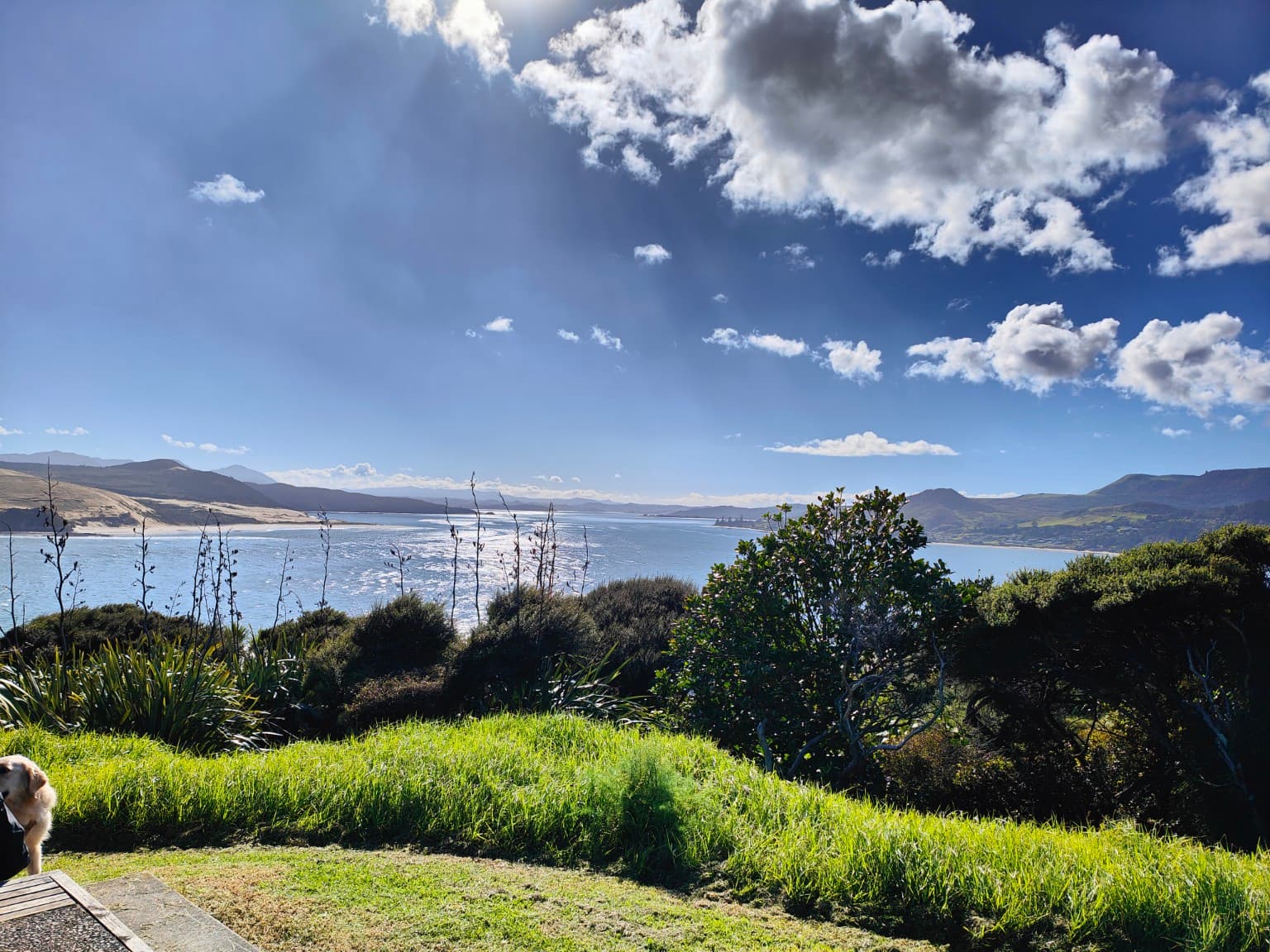
Beyond them was the harbour mouth.
Across the water, pale dunes caught the sunlight, while the harbour ran between them and the headland towards the open sea.
A sand bar lay outside the entrance. In the days when ships entered and left Hokianga regularly, they had to cross these difficult waters. A signal station once stood on the slope above, where people watched the sea and signalled to vessels below.
The station was long gone.
The wind kept blowing.
We left the main track and followed Martins Bay Track downhill.
The path crossed open slopes and low coastal vegetation until it reached the water.
Black rocks covered the shore.
We stepped carefully over them until the waves could almost reach our feet.
From there, it was obvious the water was not moving in one direction.
Harbour water pushed outward.
Tasman swells kept coming in.
Some patches of water looked smooth. Others seemed to twist against themselves.
There were birds everywhere.
They circled above the entrance, and every so often one folded its wings and dropped sharply towards the surface.
I guessed there must have been plenty of fish below.
Huge volumes of water move in and out through this narrow entrance with every tide.
I looked up again.
The birds were still circling.
A few dropped towards the water once more.
In local Māori tradition, Ārai Te Uru guards the southern headland, with another taniwha guarding the opposite side of the harbour entrance.
一人牵一只手
After a while, we turned back.
一个孩子先碰到我的手。
The wind was still cold on the way back.
One of the children touched my hand.
“Why is your hand so cold?”
She took it in both of hers and rubbed it a few times.
On my other side, the second child reached over and took my other hand.
One on the left.
One on the right.
They kept holding my hands as we walked.
Looking down at them, I was suddenly back on that night descent from Te Aroha.
My hands had been cold then too.
The first person to hold them had been Katherine.
Now she was walking behind us.
The two children were holding my hands.
We kept walking.
潮水退下去以后
My hands slowly warmed.
水还没有退够。
At Koutu, we could not simply walk in.
The water had not fallen far enough yet.
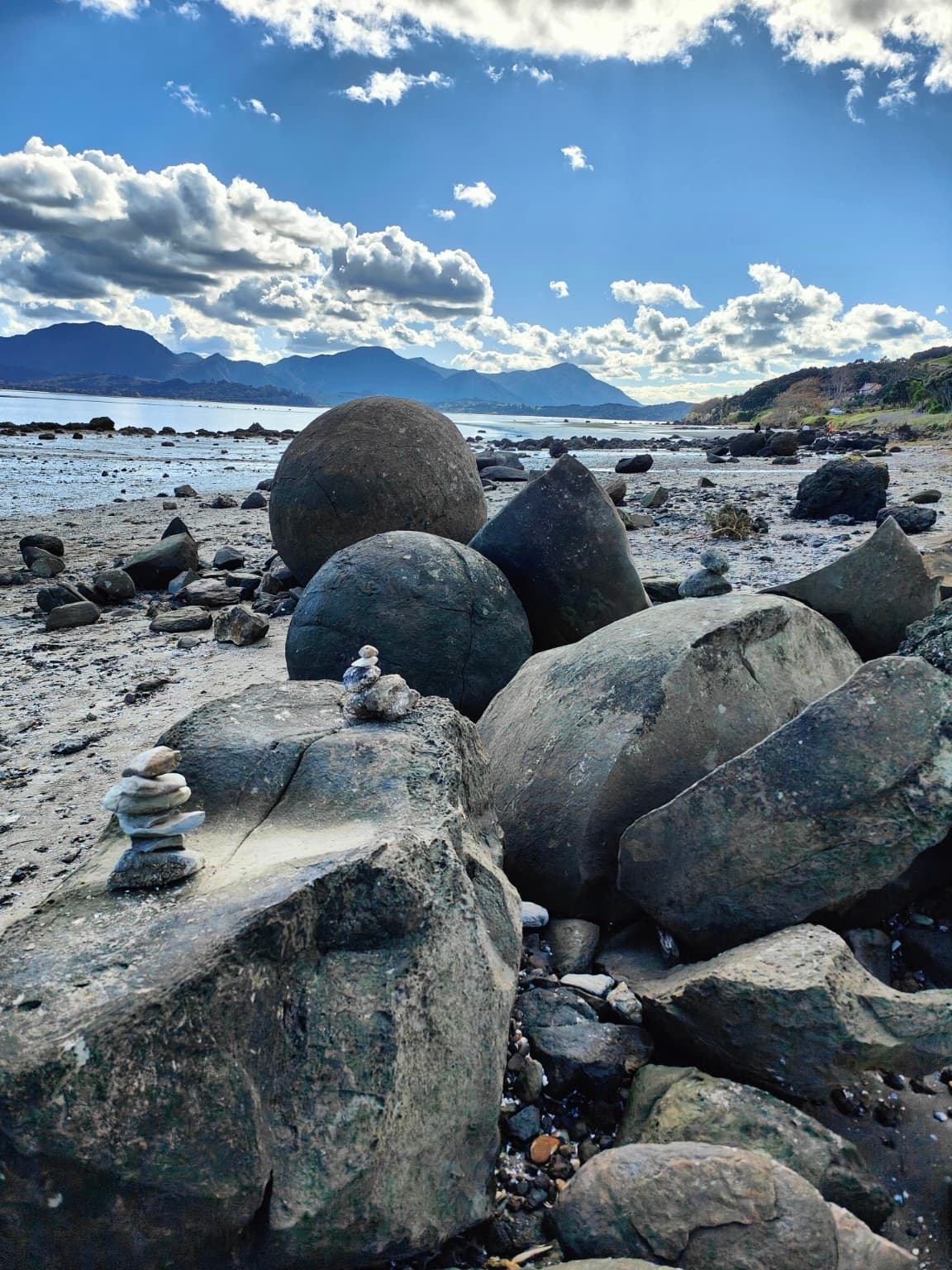
We waited by the shore. Wet sand that had been underwater slowly appeared. The beach seemed to extend as the tide withdrew.
Only when the way opened did we begin walking along the edge of the water.
The first great round boulder appeared.
Then another.
Some were half-buried in the sand. Others lay fully exposed, so round they hardly looked natural.
They had formed within the rock, and the softer material around them had gradually been worn away by wind and sea until the harder spheres emerged.
But standing beside them, geology was not the first thing that came to mind.
Only this:
How could they be so round?
The children wandered among the boulders.
Then they found a stack of smaller stones.
One balanced on another, already built fairly high.
“Wishing stones.”
One child picked up a small stone and placed it carefully on top.
It held.
The other found another.
She added it.
Still standing.
I watched for a moment.
I decided I should add one too.
I chose a stone and walked over.
The children were already warning me.
“Careful.”
I lowered the stone onto the top.
Just as I began to let go—
Crash.
The whole stack collapsed.
Stones rolled across the sand.
Both children turned towards me.
“It’s your fault!”
“It was fine before!”
I looked down at the stones around my feet.
There was not much to argue about.
I had knocked it over.
So the three of us crouched down and started again.
We found a flatter stone for the base and placed another on top.
Unsteady.
Turn it around.
One person held the bottom. Another passed stones over. The third stepped back to judge.
“That one won’t work.”
“Try this one.”
“It’s leaning.”
We stayed there by the sea, rebuilding it one stone at a time.
Eventually, another little tower stood.
Not as high as the first.
But it stood.
I do not remember who said it first.
“Make a wish.”
The three of us became quiet.
The sea had withdrawn into the distance.
Wind moved across the beach.
Facing the little pile we had just rebuilt, each of us made a wish in silence.
After a while, we stood and started walking back.
READER NOTES