
This SeriesHokianga
- 00Northbound
- 01The Road Begins with Lunch
- 02A Tree Older than a Nation's History
- 03Donkeys by the Road, a River Turning Below
- 04On Arrival, the Harbour Turned Down the World
- 05Here, the Harbour Is Not an End, but a Threshold
- 06When the Tide Withdrew, Time Left Something Round Behind
- 07In Opononi, Life Happens between the Harbour and Lunch
- 08Before We Left, the Forest Returned Time to the Trees
- 09After Dark, Another Passage Appeared above the Harbour
“Plans have changed for today.”
Katherine put down her phone.
“No one’s answering the number for the boat to the dunes.”
We were staying at the Sands Hotel Hokianga. Every time we stepped outside towards the harbour, the great dunes were there across the water. In good light, the whole face of the sand turned almost white. They never looked very far away.
The plan for our third day had been simple: take the boat across and go sandboarding.
The website was still online. The booking number was still listed.
Katherine called once.
No answer.
船没了
Still nothing.
“Let’s ask at reception,” I said.
我又问:
The hotel manager did not seem surprised.
He told us the boat service to the dunes had once been run by an elderly local Māori skipper. After the old man died, his son did not carry on the business. No one had maintained the website either.
So the page remained.
The phone number remained.
But nobody answered.
“Can we drive there instead?” I asked.
He said we could go around from the north, but the last section was not an ordinary road. A four-wheel drive would be the sensible option.
Ours quite obviously was not.
So that was that.
Outside the hotel, the dunes looked exactly as they had for the previous two days, lying quietly across the harbour in the sun.
The dunes were still there.
The boat was gone.
Opo 的雕像
So the day rearranged itself.
The dunes were out. We went to Koutu first.
We waited for the tide to fall, then followed the newly exposed beach towards the great round boulders. It was there that I managed to knock over a perfectly good stack of wishing stones, and ended up crouching on the beach with the two children, rebuilding it one stone at a time.
After Koutu, we drove on to Opononi.
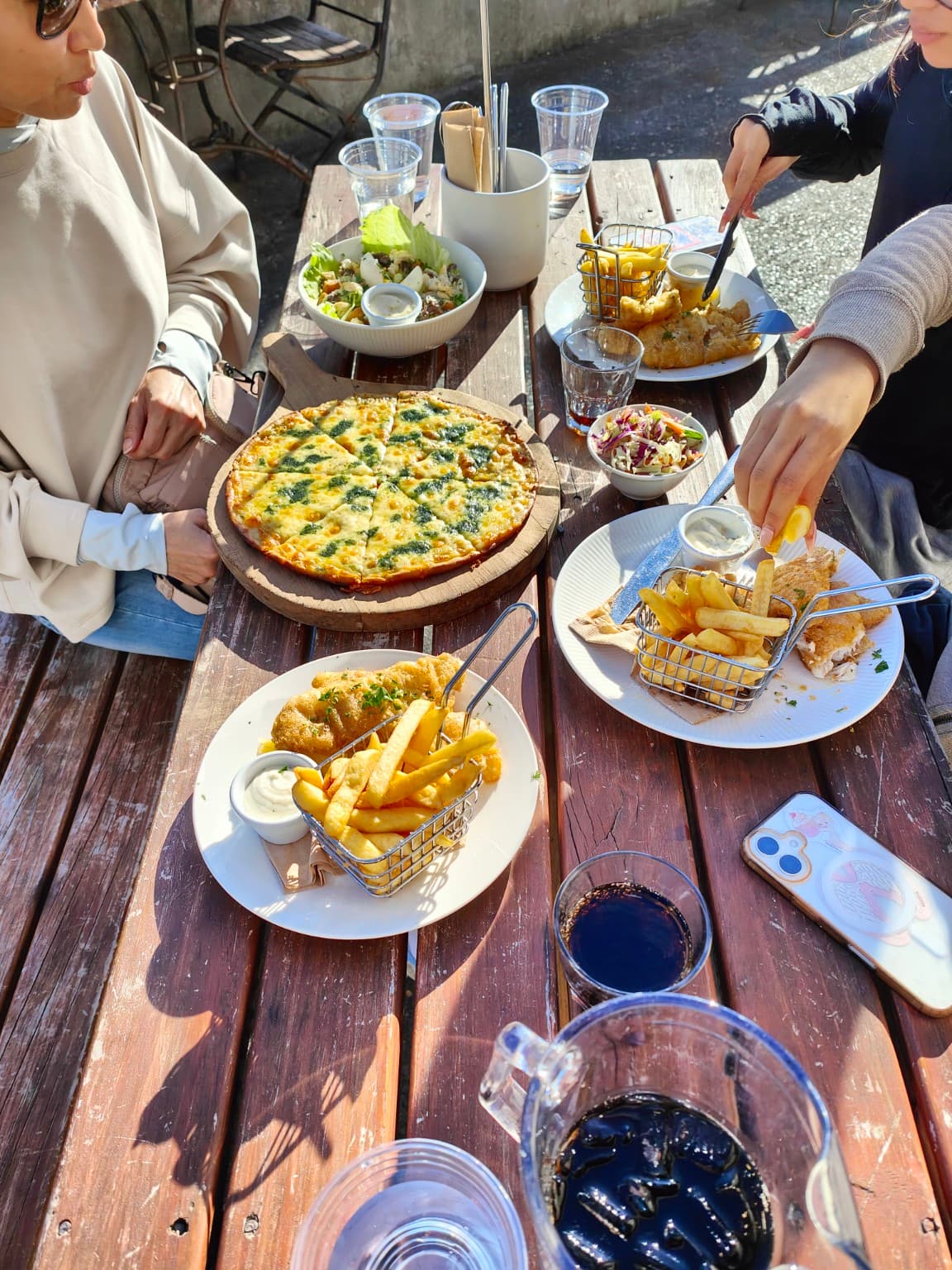
炸鱼和薯条端上来,旁边还有披萨和一盘沙拉,几只盘子把桌面摆得满满的。窗外就是沙滩和栈桥,再远一点,白色的沙丘还在阳光下面。
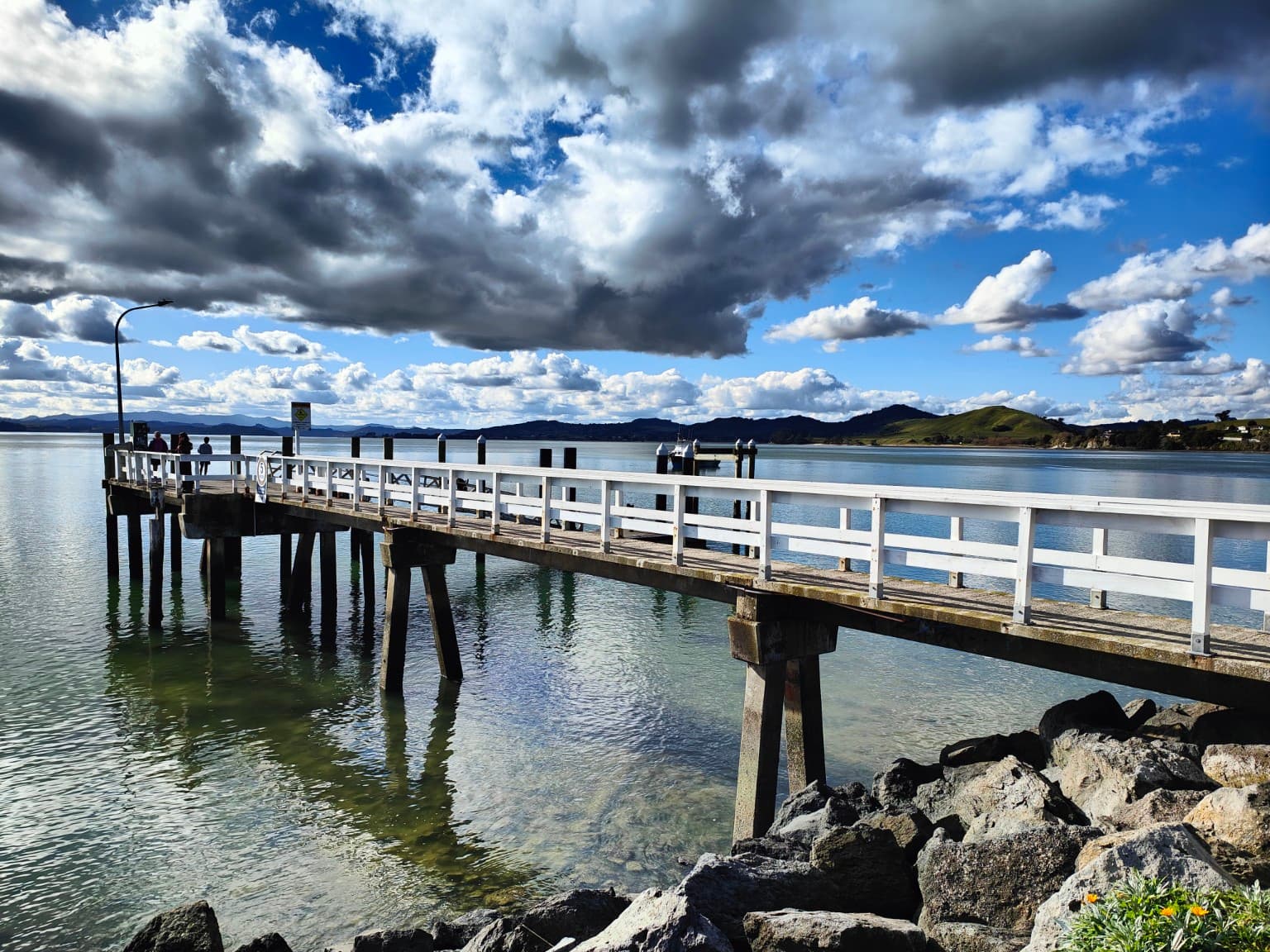
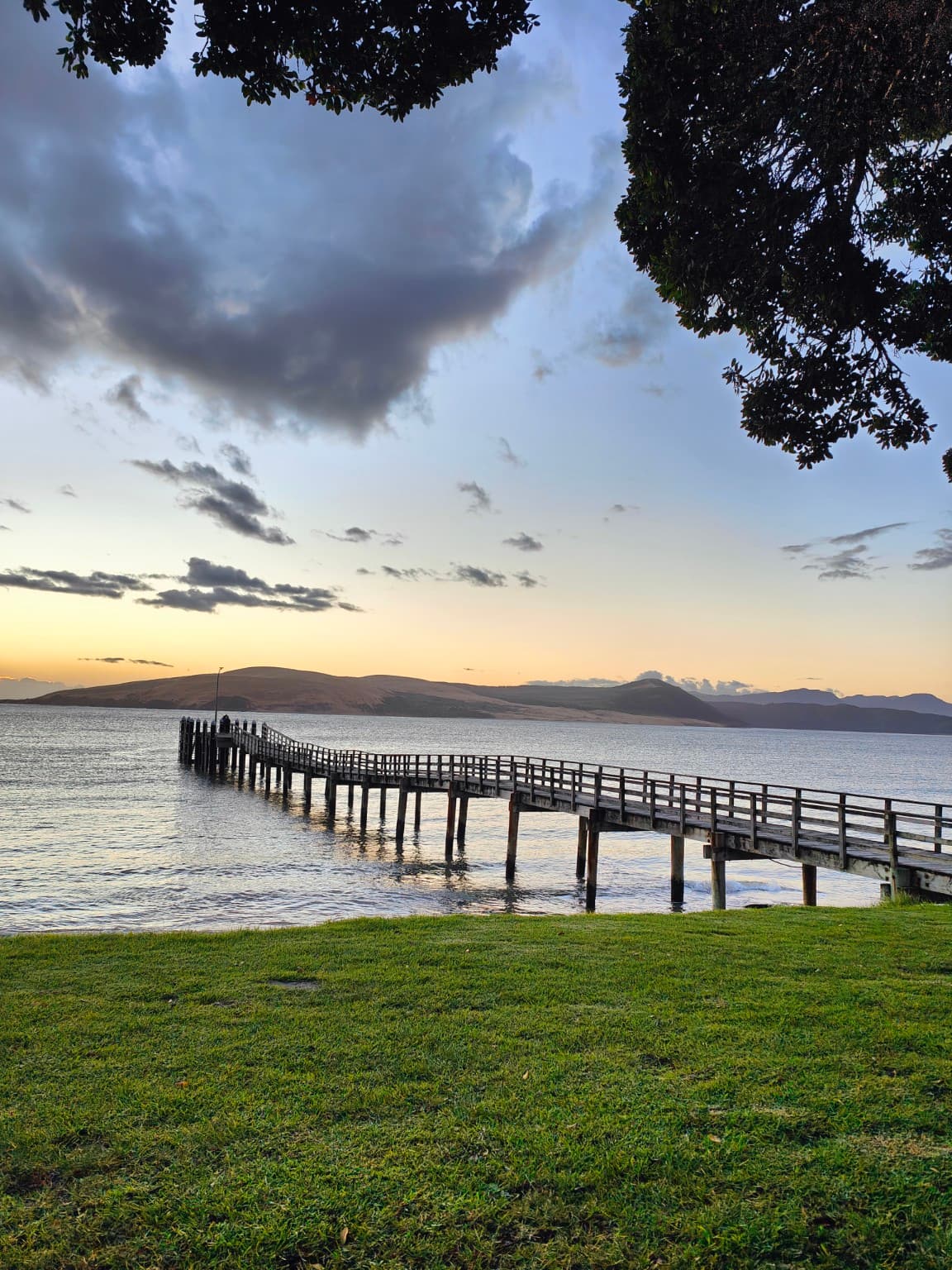
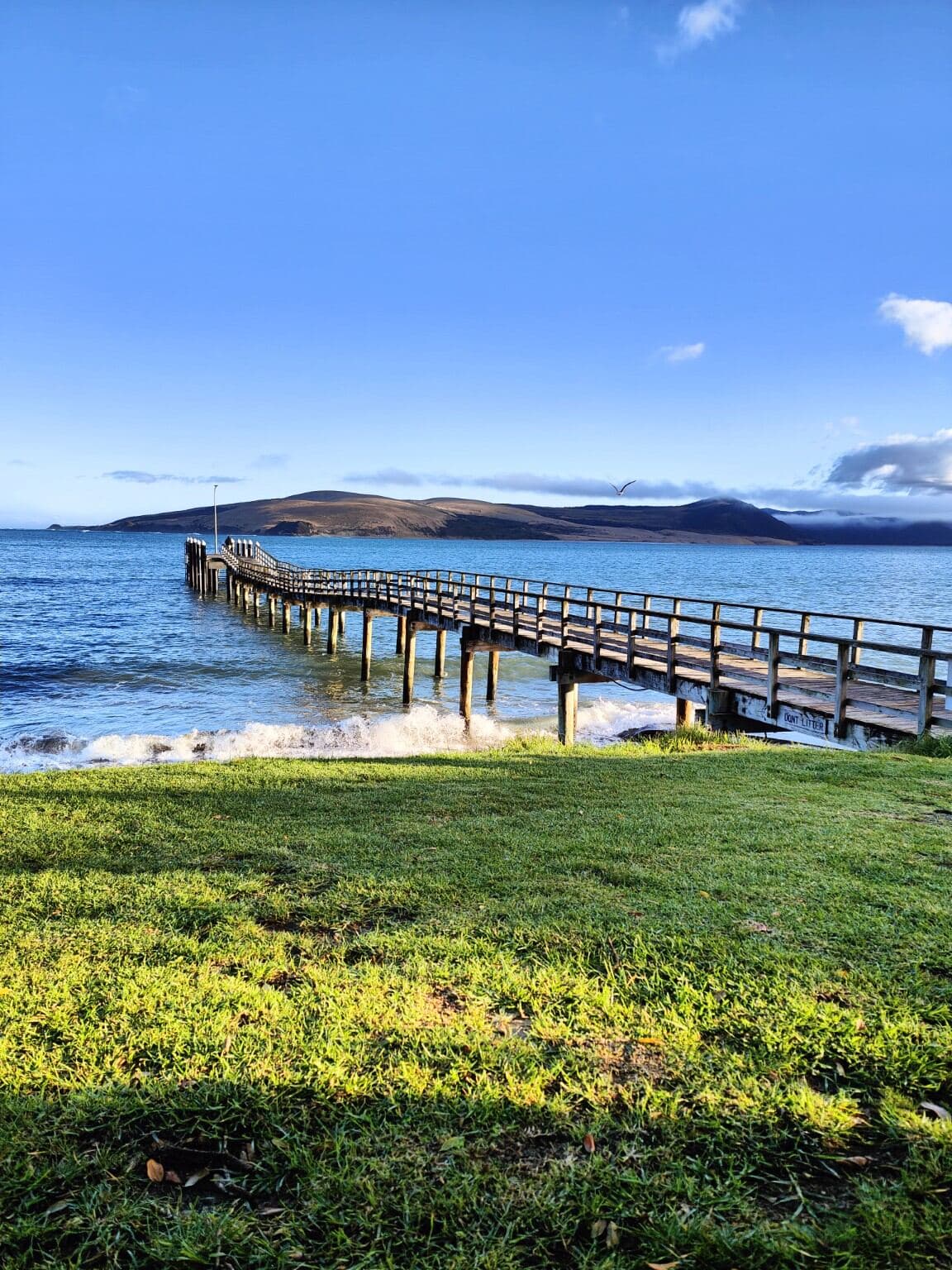
The first thing we noticed in Opononi was the wharf.
It ran straight out from the beach into Hokianga Harbour. Across the water were the same dunes we had been trying to reach that morning.
They still looked close.
Near the waterfront stood the statue of Opo.
Up a short flight of steps was the Opononi Hotel, so we stopped there for lunch.
Fish and chips arrived first, followed by pizza and a plate of salad. Soon the table was crowded with dishes. Beyond the window were the beach, the wharf and, farther out, the pale dunes shining across the harbour.
We ate while looking at the place we had originally planned to reach by boat.
No one mentioned the boat anymore.
After lunch, we walked back down towards the water.
Opo’s statue stood near the wharf.
A child leaned against a dolphin. Decades had passed, yet the two of them were still frozen in the same pose.
In the summer of 1955, a young bottlenose dolphin began appearing regularly around Opononi. The locals called her Opo.
Children loved her most.
They would run into the water and she would swim towards them. Throw a ball and she would chase it. Wait in the shallows and she might come close.
For a while, one dolphin made this quiet little town famous across New Zealand.
But the story did not last long.
The following year, Opo was found among the rocks by the shore.
The town later made this statue for her.
I stood there looking at the child beside the dolphin.
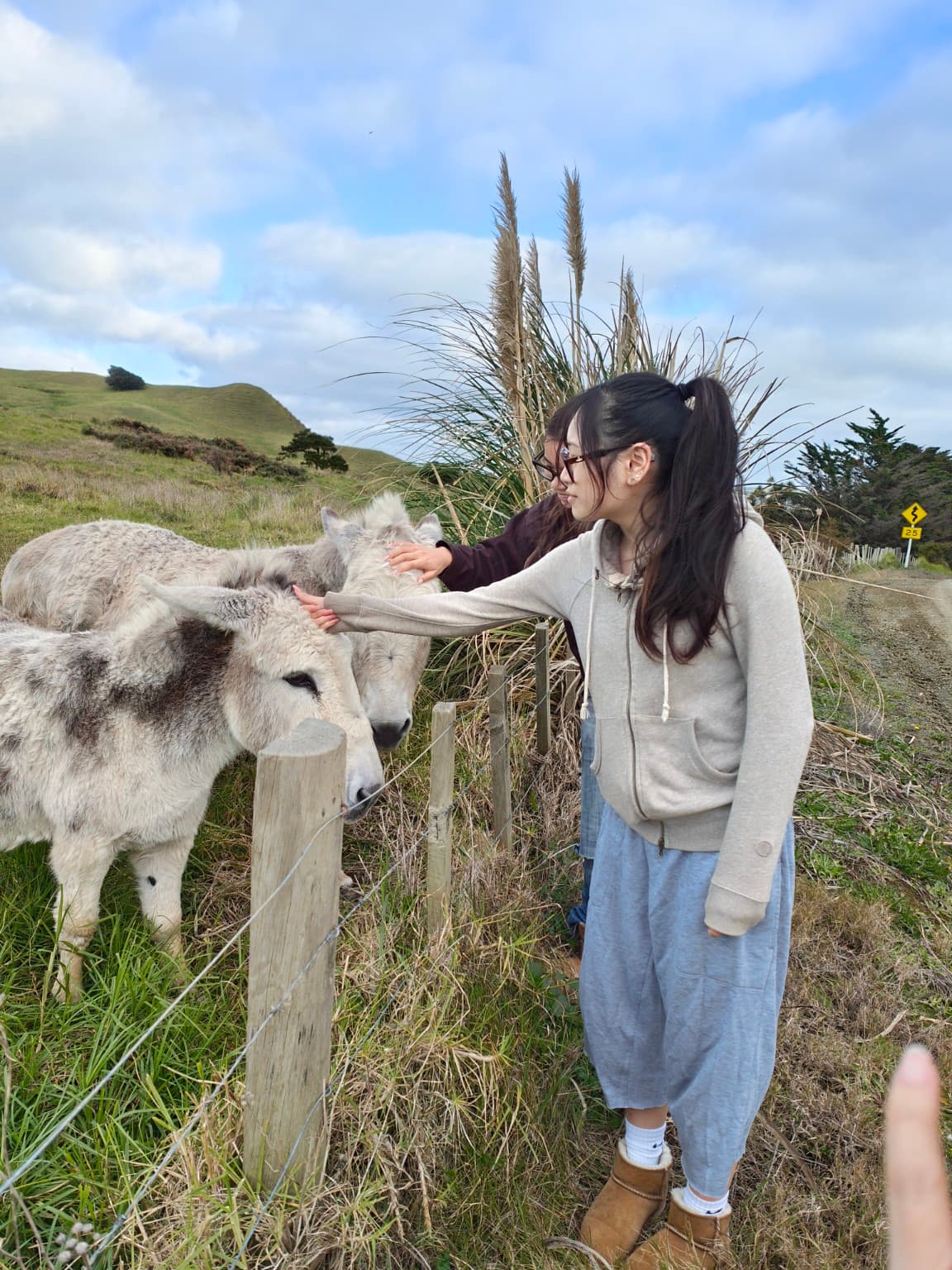
Tokatoka came back in another small scene: two children by the roadside, hands reaching towards the donkeys; a donkey leaning closer, slowly closing its eyes.
Decades earlier, children in Opononi had run into the water too.
Only here, the animal waiting for them had been a dolphin.
Beside the statue, the wharf still stretched into the harbour.
Perhaps one of those children who once chased Opo through the water grew up to become a skipper on this same harbour.
As a child, he might have run from the wharf into the sea after a dolphin.
As an adult, he might have left from the same place in a boat, carrying visitors back and forth to the dunes.
Perhaps that was how it happened.
Opo was gone.
The child grew old.
古老的贝壳杉
The wharf remained.
The dunes remained across the water.
Below us, the harbour moved gently against the piles.
We walked farther along the wharf. Only a handful of people stood at the end, looking over the water. There were not many people on the beach either.
The wind came in from the harbour.
The sea was still there.
再往南,就是怀波瓦森林(Waipoua Forest)。
Leaving Hokianga, the road entered forest again.
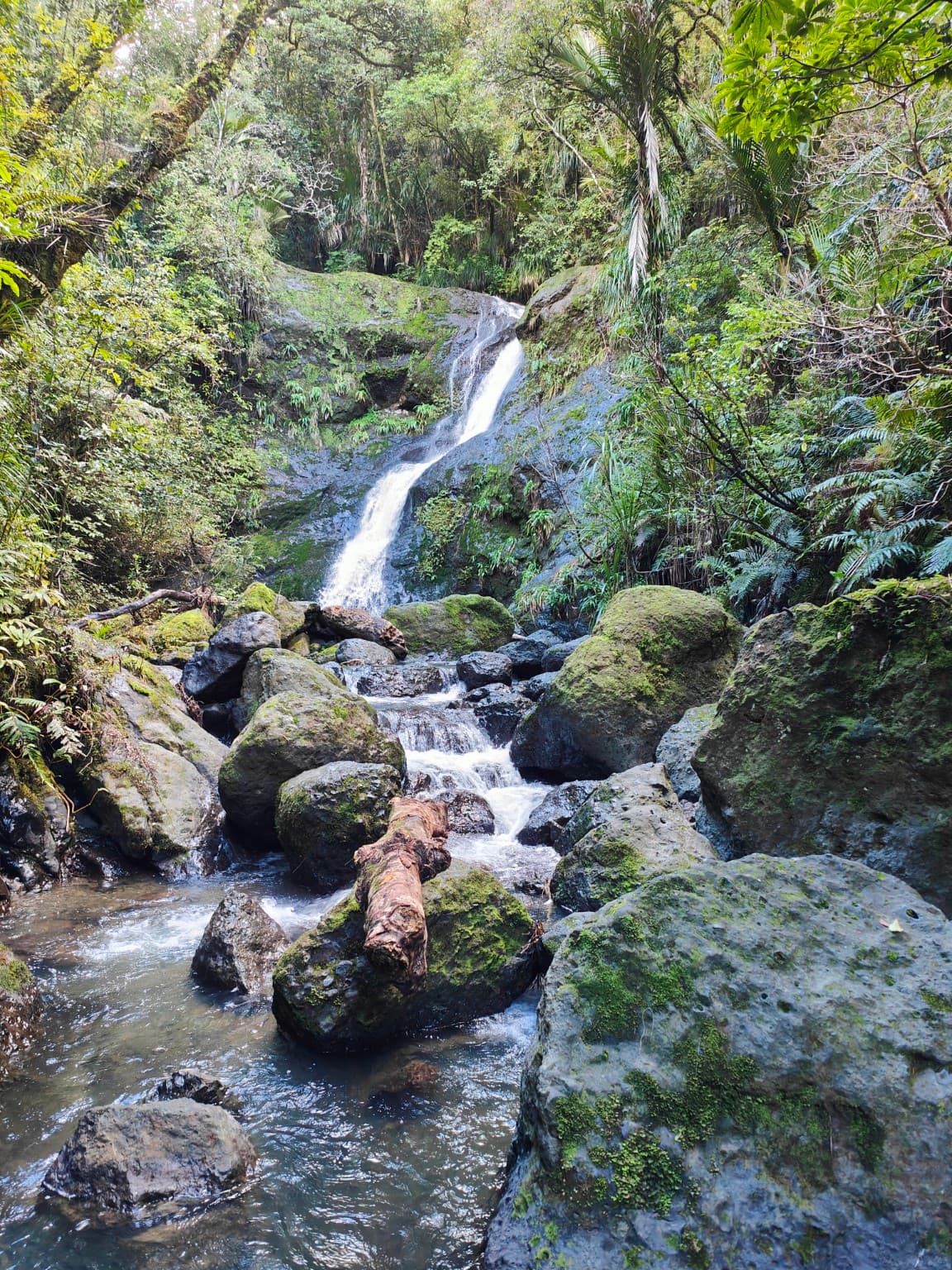
On the way, we stopped at Waiotemarama Waterfall.
It did not take long for the sound of the road to disappear behind us. Ferns leaned in from both sides of the track. The ground underfoot was damp.
Then came the sound of water.
The waterfall dropped over a moss-covered rock face.
The water kept moving.
The forest hardly seemed to.
Farther south lay Waipoua Forest.
As the car entered the trees, the map we had seen on our first afternoon at The Kauri Museum returned: once, broad areas of colour had joined together across the land.
Then there was less.
And less.
Until only scattered patches remained.
Now we were driving into one of those remaining patches.
Before walking to Tāne Mahuta, we had to clean our shoes.
The brushes scraped back and forth across the soles.
Bits of mud fell away.
Only when they were clean did we continue along the track.
It was not a long walk. The trees filtered out some of the light, and the farther we went, the quieter it became.
Then we turned a corner.
There it was.
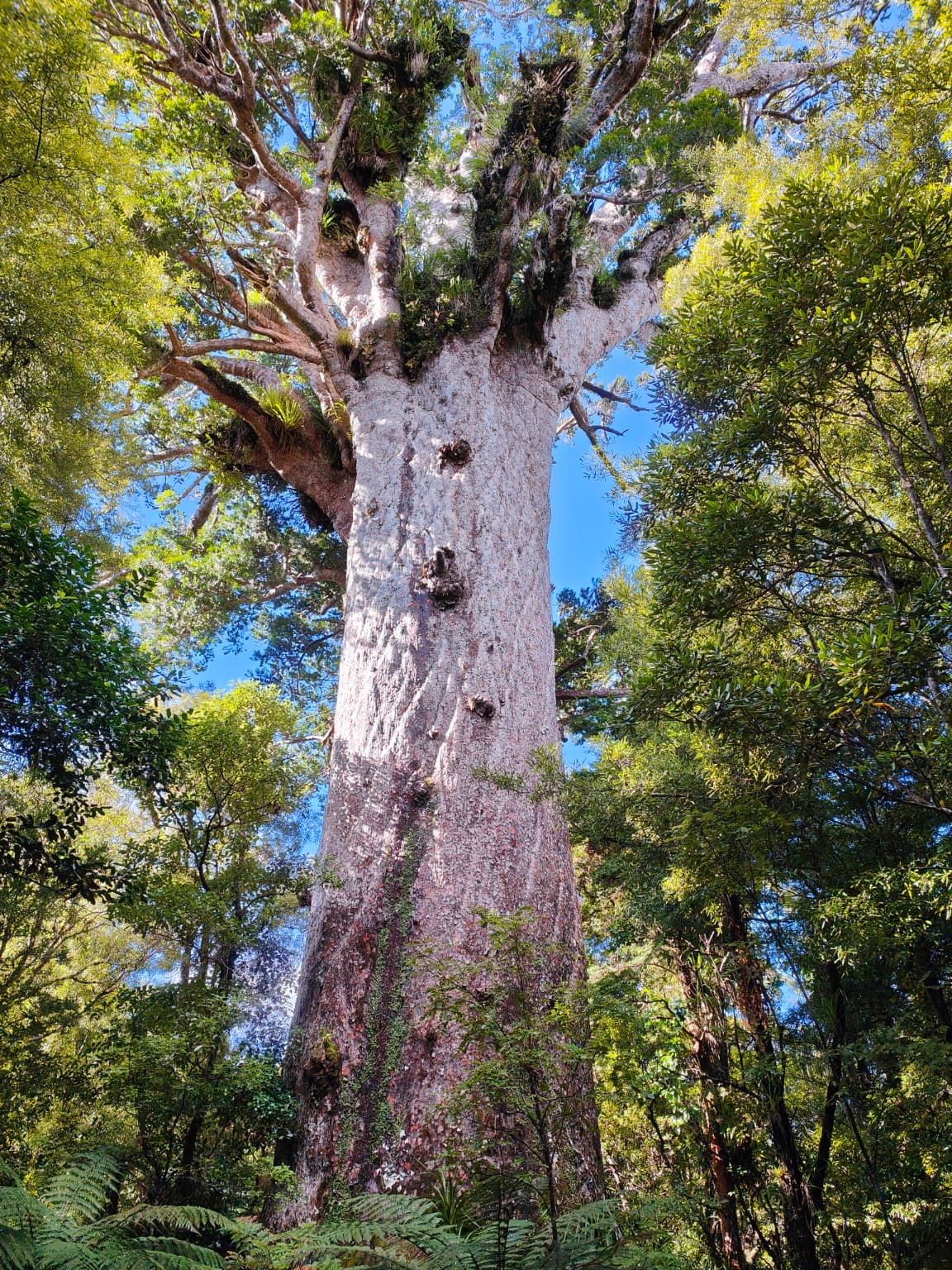
Tāne Mahuta.
The trunk rose straight from the ground.
I looked up.
Then farther up.
The crown was so high that, standing below it, it was difficult to see where the tree truly ended.
On our first afternoon, at The Kauri Museum, I had stood in front of a kauri that had already been cut down.
船在星空里
The timber had felt slightly damp.
Rough beneath my fingers.
I had followed the grain slowly, ring after ring.
This tree was still alive.
I stood outside the barrier.
I did not reach out.
High above us, the wind moved through the crown.
The leaves shifted slightly.
We stood beneath the tree for a long time.
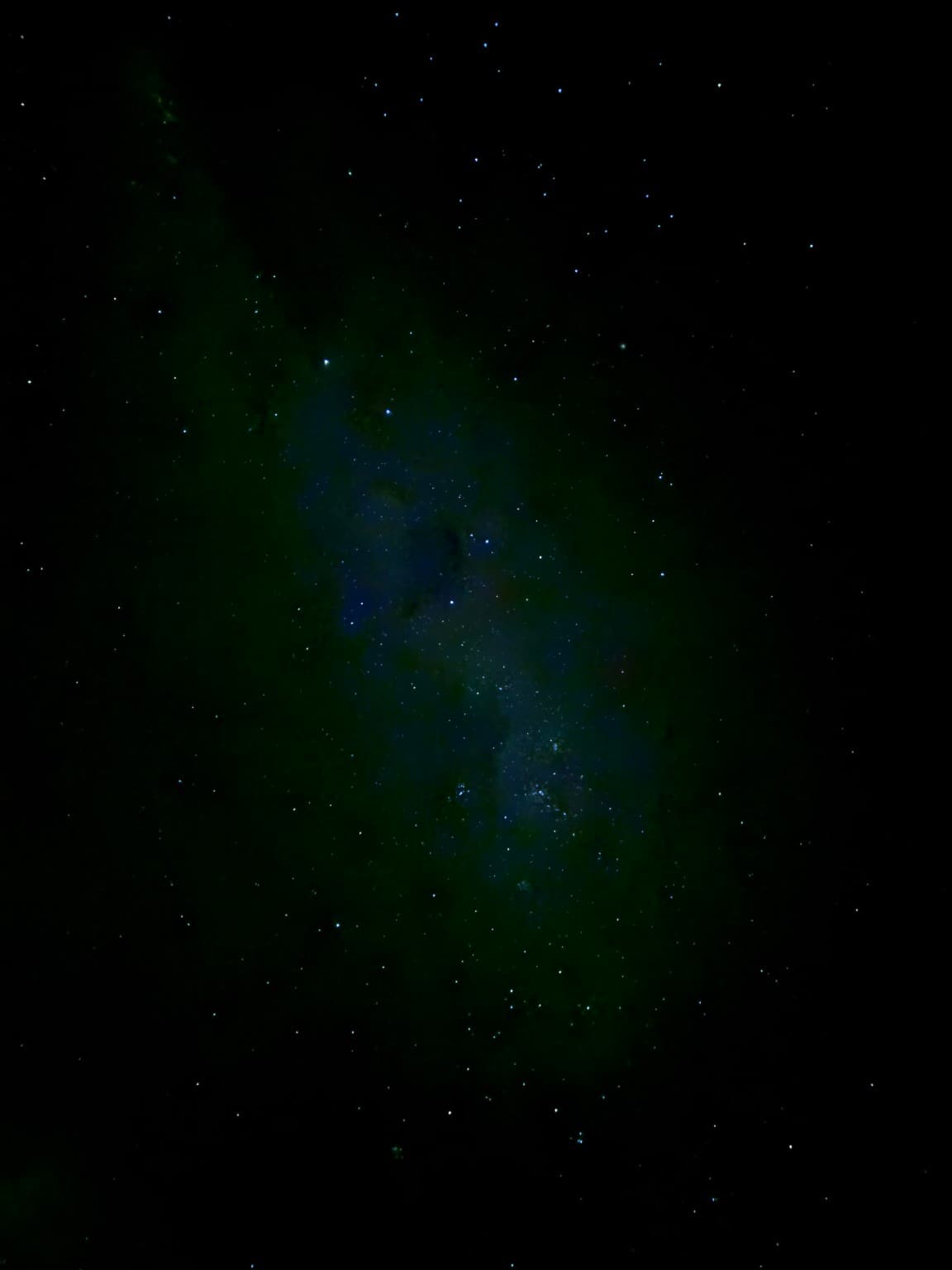
到了霍基昂加的夜里,再抬头看银河,博物馆里那艘航行在星空中的船也跟着回来了。
On the drive home, I thought of a night in Hokianga.
We had walked outside after dark. The harbour, dunes and hills that had been so familiar during the day had all disappeared into blackness.
At first, there were only a few stars.
We stayed outside.
Our eyes adjusted.
More stars appeared.
Then the Milky Way began to show itself.
At The Kauri Museum, we had also read a story about the night sky.
In that story, the sky became a great celestial waka.
In this Māori tradition, Te Waka o Rangi travels through the heavens. Taramainuku guides the waka and casts his net towards the world below, gathering the souls of those who have departed and carrying them into the stars.
Looking up at the Milky Way that night in Hokianga, the boat from the museum came back to us.
Katherine and I stood beneath the stars, trying to piece the waka together from the points of light.
We never quite managed it.
The Milky Way remained stretched across the sky.
Things from the previous days began to surface, one by one.
At Koutu, the great round boulders had appeared only after the softer rock around them had slowly been worn away by sea and time.
At the museum, the kauri forests that once covered great areas of the north had shrunk into scattered fragments.
READER NOTES