
NEW ZEALAND JOURNEY · WAIKATO
A Cup of Tea, Thirty Years in the Making
1,500 plants. Only 130 survived. Then another thirteen years before there was tea to sell.
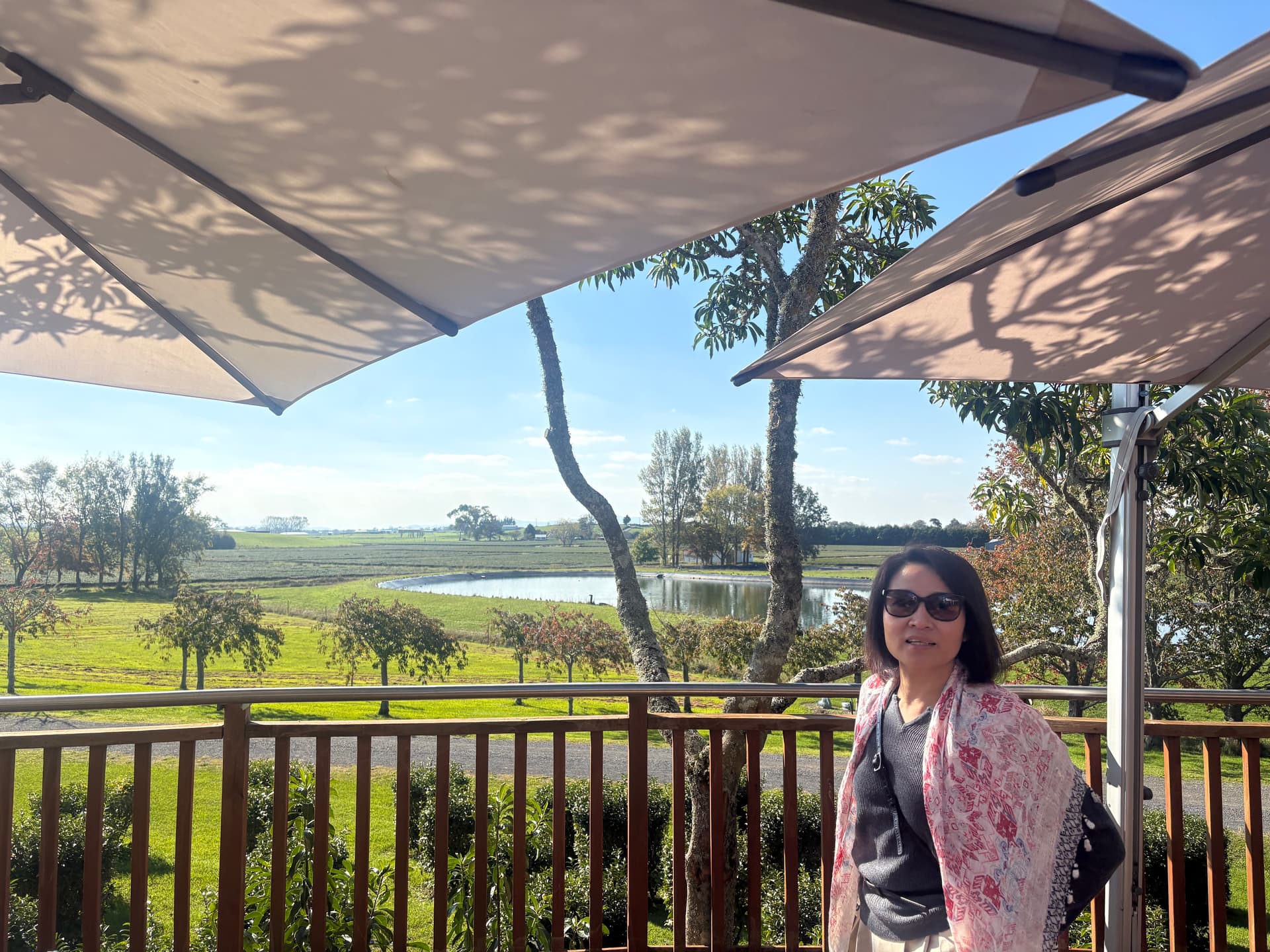
We left Auckland early in the morning.
Zealong is not the kind of place you happen upon. You have to make the trip deliberately. Once we turned off the main road, the traffic thinned and the road narrowed. Manicured green stretched along both sides, with trees further out and almost nothing moving.
Halfway in, you could already feel it: this place was in no hurry. It was not waiting for people to pass through. You had to come here on purpose.
The entrance was modest - just a simple sign with the name Zealong on it. If you were not looking for it, you could easily drive past. Beyond it, the estate opened into rows of tea plants, neat and quiet. It was different from the tea mountains I had imagined: no mist, no dampness. Cleaner, somehow. More restrained.
Before we sat down, my daughter Ella stood looking out over the fields for a while.
"Why is there tea here?"
The story did not begin in a complicated way.
Zealong's founder, Vincent, was living in Hamilton when he noticed that the camellias in his neighbour's garden were growing particularly well. Tea plants belong to the same family. The thought was simple: if camellias could thrive here, why not tea?
Ella listened.
"Was that really all it was?"
Probably, I told her. The beginning of many things is not complicated. The hard part comes afterwards.
"So how did they bring the tea plants here?"
Katherine, sitting beside us, answered before I did.
"That was the difficult part."
They brought 1,500 tea cuttings from Taiwan. After a long quarantine process, only 130 survived.
Ella looked back out at the fields, row after row, all of them impossibly neat. She was quiet for a moment.
"What happened to the others?"
Most of them did not make it, I said. Then I added that Vincent had once described the 130 survivors as the strongest ones.
"Then surviving here couldn't have been easy."
We sat down for high tea - $79 each, including a pot of tea. Between us, we ordered three kinds of oolong. Ella chose Pure Oolong, Katherine chose Chrysanthemum Oolong, and I chose Aromatic Oolong.
Ella made me taste all three and asked which one I liked best.
The chrysanthemum was floral and lightly sweet from the first sip, as if it had always been meant to taste that way. The Pure Oolong was clean and gentle, with a steady finish. Mine was darker. It felt fuller at first, then slowly opened. The sweetness arrived late, but it stayed.
"Which one do you like most?"
I smiled, but did not answer.
Some things are better not to say. Once you explain them, they change.
At first Ella was still more interested in the food, studying the three-tier stand from one level to the next. Halfway through, she returned to the story.
"So what happened after that?"
From the first planting to the point when Zealong could actually sell tea, thirteen years passed. Planting something does not mean you get a result. For a long stretch in the middle, there was nothing visible to show for the work.
"What about the years in between?"
Katherine said what all three of us were thinking.
"Most people would find it very hard to wait that long."
I thought for a moment, then told Ella something Vincent had once said.
"If I had simply opened a supermarket or a restaurant, that would have been business. But if I could grow the best tea here, that would be culture."
Ella listened without replying. After a while, she looked at me.
"So what have you been doing in New Zealand?"
I paused.
"Making a living," I said.
She did not ask anything more.
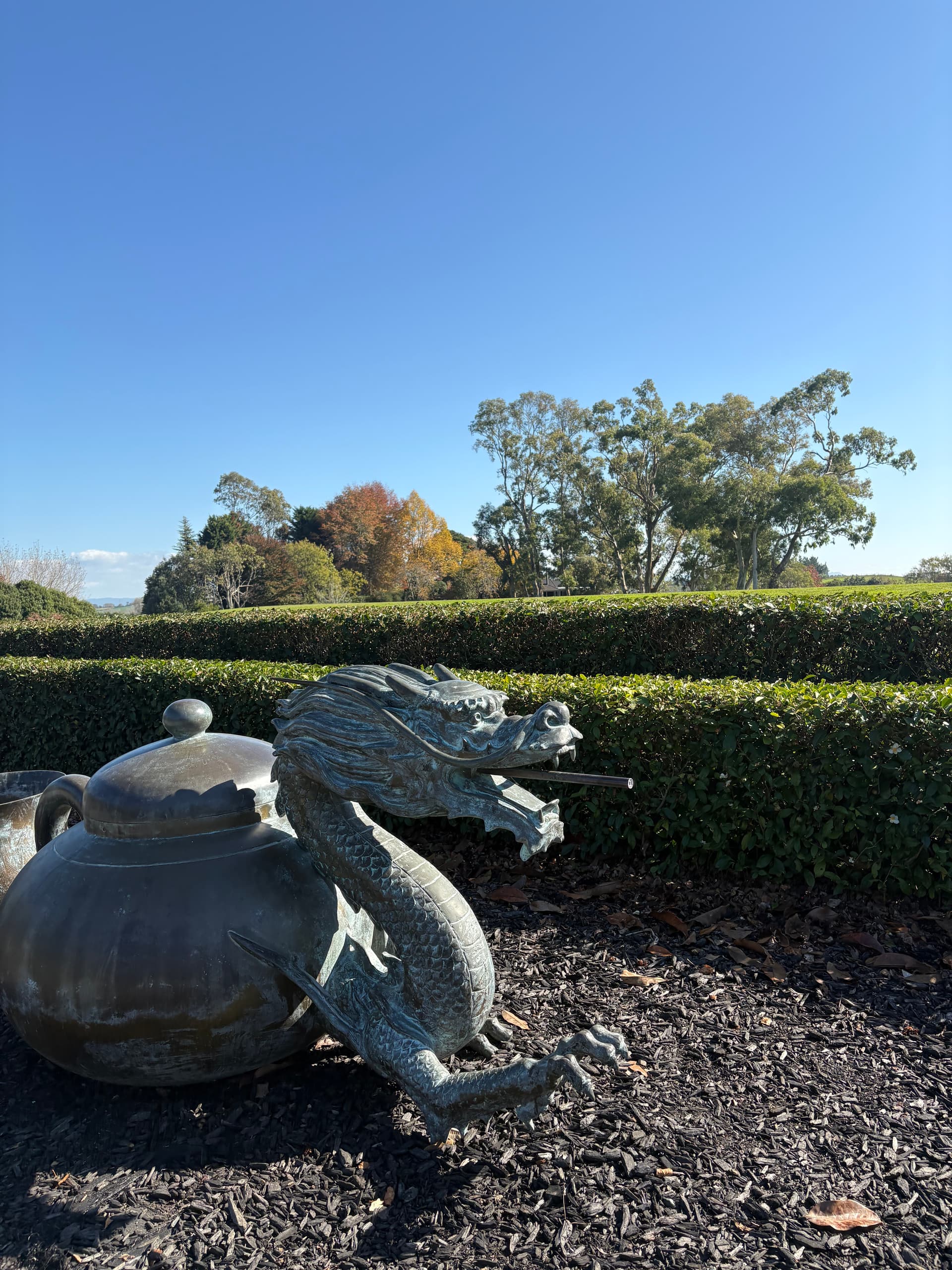
After high tea, we walked towards the white building. Inside, the walls rose high and light fell from above. Tea and teaware were arranged neatly on both sides. It felt less like a shop than a carefully composed space.
Further in was a wall of framed newspaper clippings. One was in English, about a visit by members of the British royal family who had stopped here for tea. Another was in Chinese, about Zealong tea being served during an official visit.
Ella stood there for a while.
"So they made this happen?"
Yes, I said.
She looked again at the clippings, then turned to me.
"What about you?"
I thought for a moment.
"You," I said after a moment.
She did not ask anything more.
Katherine looked at the wall and said that now, when many people think of tea from New Zealand, Zealong is the first place that comes to mind.
Ella looked once more at the clippings.
"So they really created this."
"You could say that," I said.
Later, Ella stopped at an information board.
"Why do they have to be so strict about everything?"
The tea is organic, I told her - no pesticides, no herbicides. A lot of the work simply has to be done slowly.
"Doesn't that make it really expensive?"
It does. Most of the picking is still done by hand, and only the youngest leaves are taken.
"It must cost a lot to make."
Yes. Most of the tea is sold here at the estate, though you can also find it in places such as Harrods and Fortnum & Mason in London.
On the way back, we drove the same road again - still quiet, still almost empty.
After we had been driving for a while, Ella said,
"Some things take a very long time to become what they are."
I did not answer. The car kept moving.
1,500 plants. Only 130 survived. Then another thirteen years before there was tea to sell.
There was no single turning point. Just year after year, slowly arriving here.
On the drive home, the Hamilton motorway opened up and the speed limit rose to 110. The car moved quickly.
Ella had fallen asleep in the back seat. A few strands of hair lay across a face that looked a little like mine. Katherine had closed her eyes in the passenger seat too.
The question came back to me.
The chrysanthemum had its fragrance from the start.
The oolong had acquired its depth with time.
In the end, I found myself drinking more of the one whose sweetness arrived late and stayed.


READER NOTES