
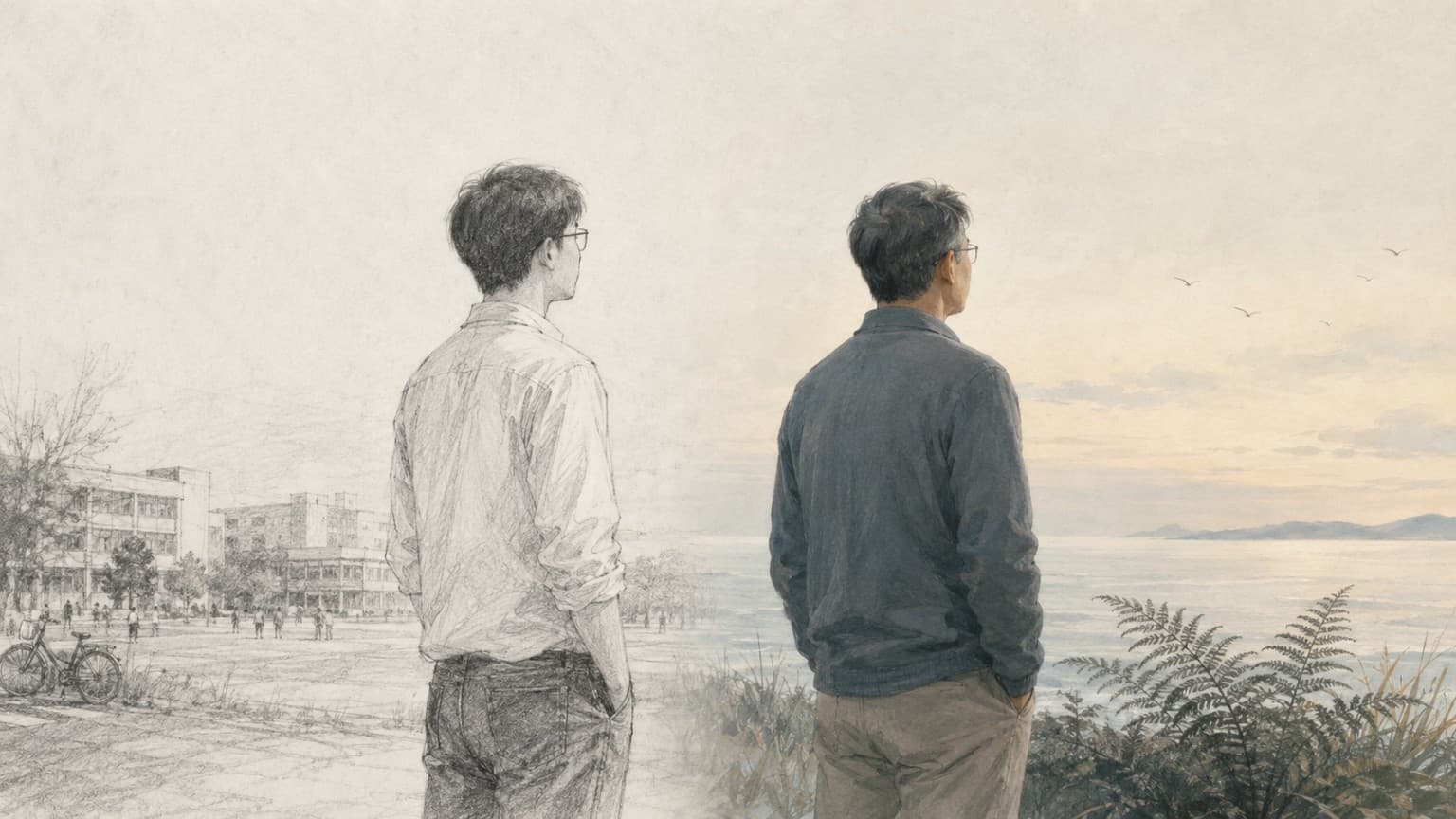
That July, I flew back to China from New Zealand for a reunion with my old classmates from Tongji Medical University.
The night I left Auckland was a southern-hemisphere winter night. The airport was bright and noisy. Holding my boarding pass, I realised this trip felt different from the many times I had flown back before.
I was going to see people I had not seen for thirty years.
More precisely, I felt as if I were going to meet the person I had been thirty years earlier.
The plane left Auckland and crossed the Pacific.
Outside was darkness. Now and then, a scattering of lights appeared far below. I could not tell whether they belonged to a city or to a ship.
I leaned back in my seat and thought of a boy who had once left a small city in Guangxi for Wuhan.
He could hardly have imagined that one day, someone would fly back from the other side of the world to meet him.
The Boy Who Couldn’t Use Pinyin
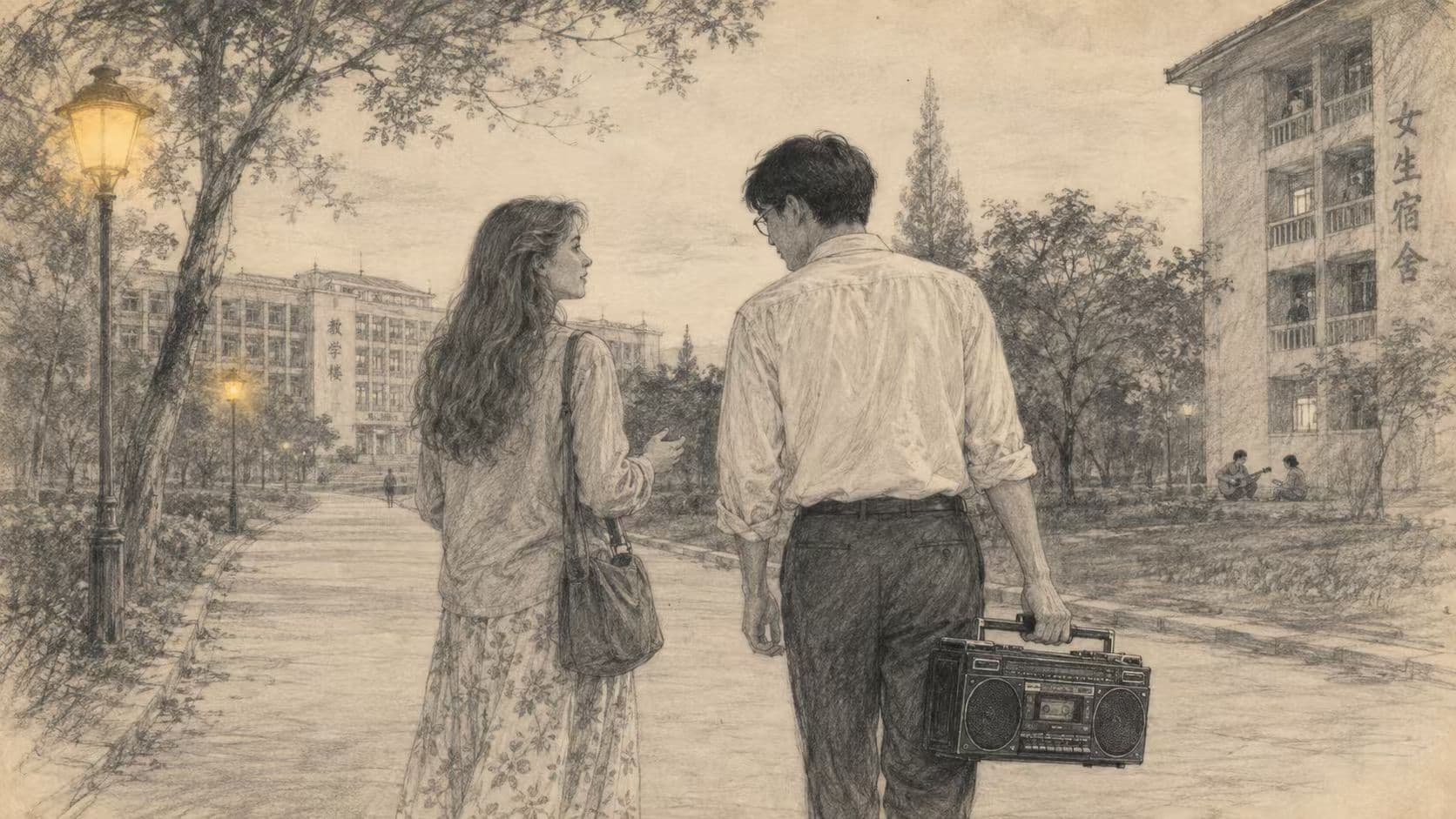
The first time I walked onto the campus of Tongji Medical University, it was early autumn.
I had come from a small city in Guangxi, dragging my luggage into a place that felt completely unfamiliar.
People were everywhere, from different provinces, speaking in different accents.
I was assigned to Room 201 in Building 507, a six-bed dormitory with three sets of bunks lined up neatly.
At first, I was excited.
Getting into Tongji had not been easy for a student from a small place like mine.
But that feeling did not last long.
One day, a classmate from a province known for high entrance scores heard what I had received in the gaokao. He nodded slightly and said, almost casually:
"With that score, in our province you’d probably have gone to a technical secondary school."
I froze.
He may not have meant anything by it.
But the sentence was like a fine needle. It punctured the confidence I had only just begun to build.
For the first time, I understood quite clearly that there was still a real gap between me and many of the people around me.
Before long, I discovered something even more embarrassing.
My Mandarin carried a heavy Guangxi accent.
Once, on the football field, a student from another class called out to me:
"Hey, mate, this is Wuhan. Speak Mandarin."
My face went red.
Later, I realised I could not even use Hanyu Pinyin properly.
For those first few years, I often had the feeling that everyone around me was running quickly while I was still trying to work out which direction to go.
I struggled with first- and second-year subjects such as higher mathematics and organic chemistry. My marks regularly dragged down the class average.
Fortunately, I was physically fit.
I was soon chosen as the class sports representative.
On the football field, running felt easier. It was one of the few places where I did not feel I had to explain myself.
Later, my classmates elected me class monitor.
It did not feel like an easy honour.
I knew being fit was nowhere near enough.
If I was going to stand in front of dozens of classmates, I would have to fill in the gaps, slowly, one by one.
A medical degree took five years.
Five years is a long time.
Long enough for someone who had started out a little behind to keep moving.
When I sat the postgraduate entrance examination, I unexpectedly finished with the highest overall score in the university.
I also knew that result had its context - many of the strongest students had already found jobs or were preparing to go overseas and did not sit the exam.
But the result still mattered to me then.
It felt like a quiet full stop at the end of an awkward, effortful stretch of youth.
Years later, I can no longer remember exactly how discouraged that boy felt.
I only remember that he kept going.
Thirty Years Later, We Were Together Again
After the plane landed, the memories paused.
Our reunion was held in Qingyuan, Guangdong.
After thirty years, some classmates were recognisable from a distance.
With others, I had to look for a few seconds.
Then they would speak, and something in the voice would suddenly bring the old face back.
We took a boat along the Beijiang River.
The water slipped past the side of the boat.
People stood on deck talking and taking photos, the wind on their faces.
Looking at the river, I found myself thinking that perhaps thirty years had passed in much the same way.
Always moving.
And the people standing in the current had no idea how far they had already travelled.
Thirty years later, familiar people were walking together again.
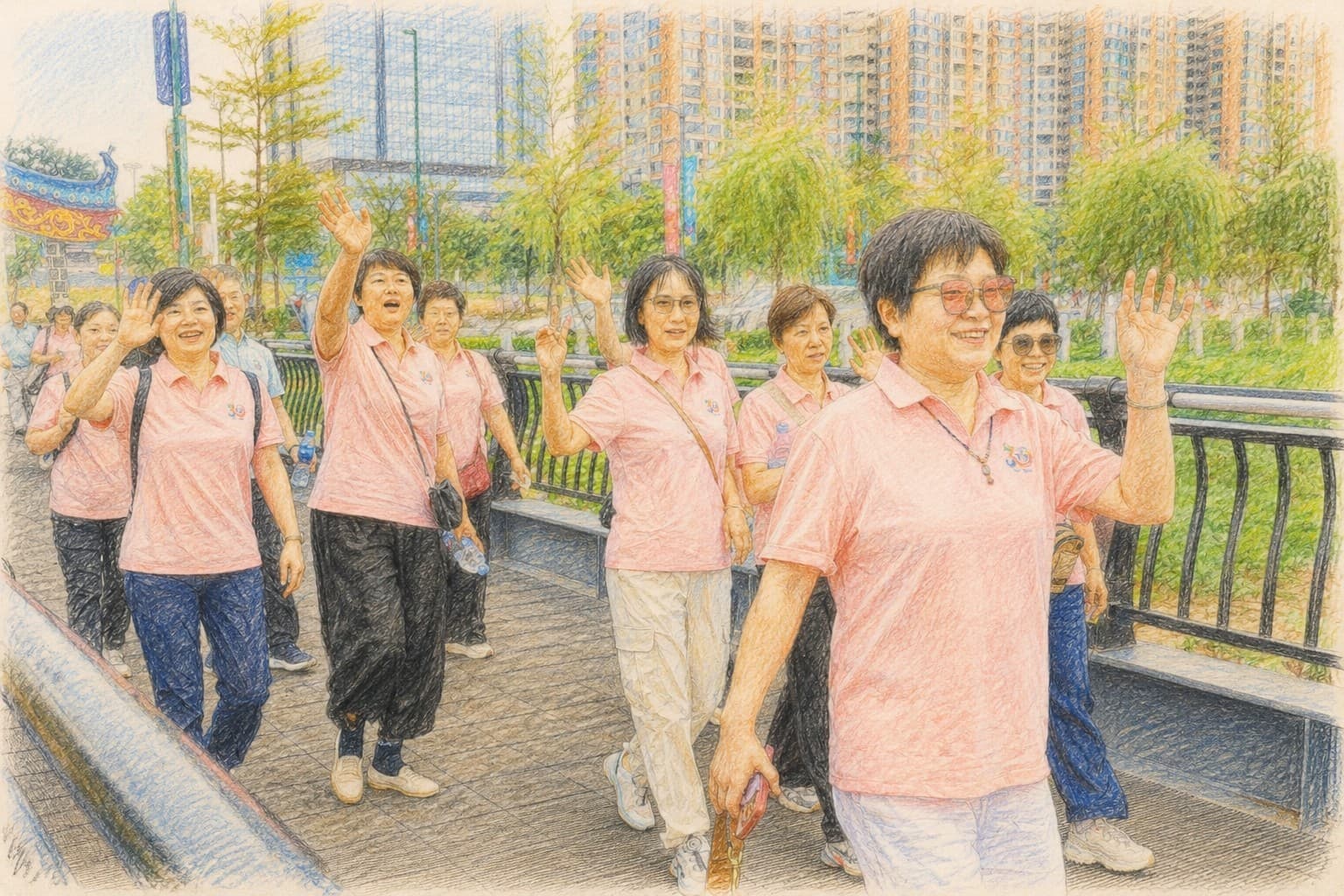
The next day, we climbed Feixia Mountain.
Thirty years earlier, I doubt any of us would have talked about our knees.
Thirty years later, we climbed while reminding one another to slow down.
Before dinner that evening, we had a social gathering with a series of team games.
People who spent their working lives in hospitals, universities, government offices and companies suddenly found themselves passing hula hoops and trying to walk with their legs tied together.
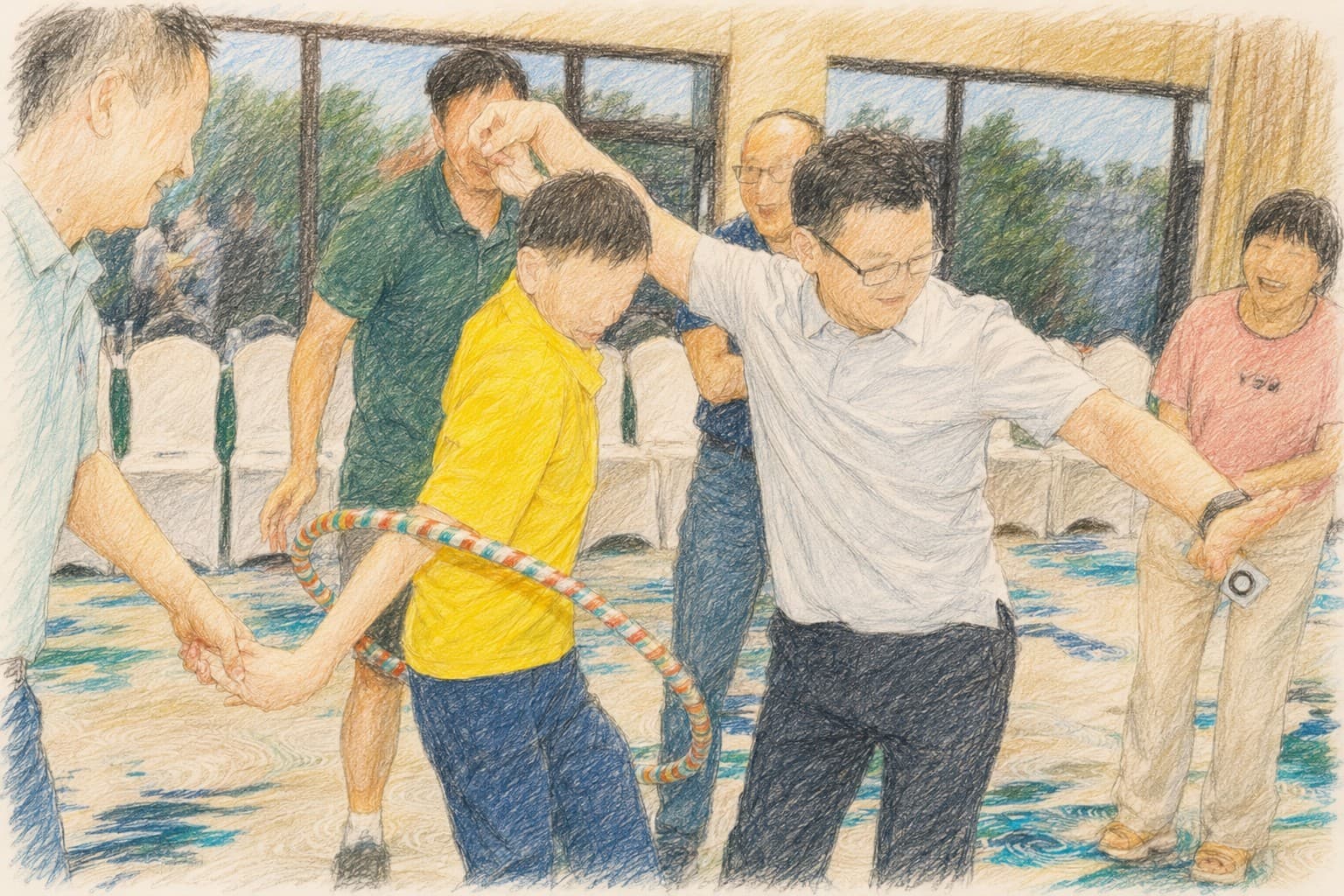
At the gathering, we ended up laughing like students again.
Someone kept calling, 'One, two, one, two,' while three tied-together legs still managed to head in different directions.
Someone else simply collapsed laughing.
For a while, there were no directors, no professors, no titles.
Just a group of people who had once attended lectures, sat exams and messed around on the same campus thirty years earlier.
By the time the games ended and dinner began, everyone had relaxed.
I sat there looking at faces that were both familiar and strange.
Thirty years had certainly passed.
But not everything seemed to have grown old with us.
A Remark About My Mandarin
Near the end of dinner, an old classmate came over and patted me on the shoulder.
He said:
"Lin, your Mandarin is really standard now. I can hardly hear an accent."
He said it casually.
I stopped for a moment.
The boy who had once been told to 'speak Mandarin' because of his Guangxi accent suddenly returned.
So did the boy who could not use Pinyin.
For an instant, they overlapped with the man I had become.
I smiled and lifted my glass.
"Thank you."
I did not say anything else.
But I remembered that ordinary little remark for a long time afterwards.
Sometimes we do not realise how far we have travelled.
Then someone mentions something we had nearly forgotten, and we suddenly see that a thing which once embarrassed us deeply has quietly changed over the years.
Things I Had Not Noticed Before
A few other small moments from the reunion stayed with me.
One classmate now holds a senior local government role.
The reunion ended late.
After everyone else had gone back to their rooms, she did not call a driver or an assistant.
She stayed behind alone, sorting the clothes we had ordered for the reunion, packing them into bags, adding labels, and making sure classmates who could not attend would still receive theirs.
When I was younger, I might first have noticed her position.
This time, what stayed with me was the sight of her quietly sorting bags late at night.
Another classmate now oversees maternal and child health work in a major city.
I asked her, 'After everything it took to get here, what matters most to you?'
She thought for a moment and said:
"Hard work and persistence are necessary. But what matters most to me is putting the collective interest first. When the collective interest and my own interest conflict, I choose the bigger picture."
She said it calmly.
I did not press her further.
I only thought that talking about ideals when we were young was not quite the same as hearing those words from someone who had actually carried responsibility.
There was also an older classmate I have always respected.
He now carries significant responsibility in food safety at the national level.
His phone hardly stopped ringing during the reunion.
I asked him, 'If you could go back thirty years, would you choose the same path?'
He thought for a moment, then answered firmly:
"I would."
Then he added:
"And if I ever felt I was no longer suited to management, I would go back without hesitation to the professional research I love."
I paused with my glass in my hand.
For a moment, I did not know what to say.
We often talk about how high someone has risen.
But listening to him, I found myself thinking that perhaps the rarer thing is to know, even now, what you genuinely love - and to know where you would return if one day the position no longer fitted you.
The Boy Never Really Left
After I returned to New Zealand, I kept thinking about the reunion.
Especially that remark about my Mandarin.
More than thirty years ago, I had blushed because of my accent. I had been embarrassed that I could not use Pinyin properly.
Back then, I always felt I was still a little short of what I should be.
As if I had to become slightly better, work slightly harder, catch up a little more, before I was entitled to be a 'better version' of myself.
Thirty years later, I am not in quite such a hurry.
That evening, my classmate said, 'Your Mandarin is really standard now.'
As I lifted my glass, I suddenly felt that the boy who had once stood on a campus in Wuhan, unable even to use Pinyin, had never really left.
He had simply travelled with me.
From Guangxi to Wuhan.
Then to New Zealand.
He had seen the sea in Auckland.
He had raised children.
He had done a few things.
He had failed at a few things too.
When he was young, he had no idea where he would end up.
Now his hair had begun to turn grey.
But looking back, he was still more or less the same person - a little awkward, not especially fast, but never very willing to stop.
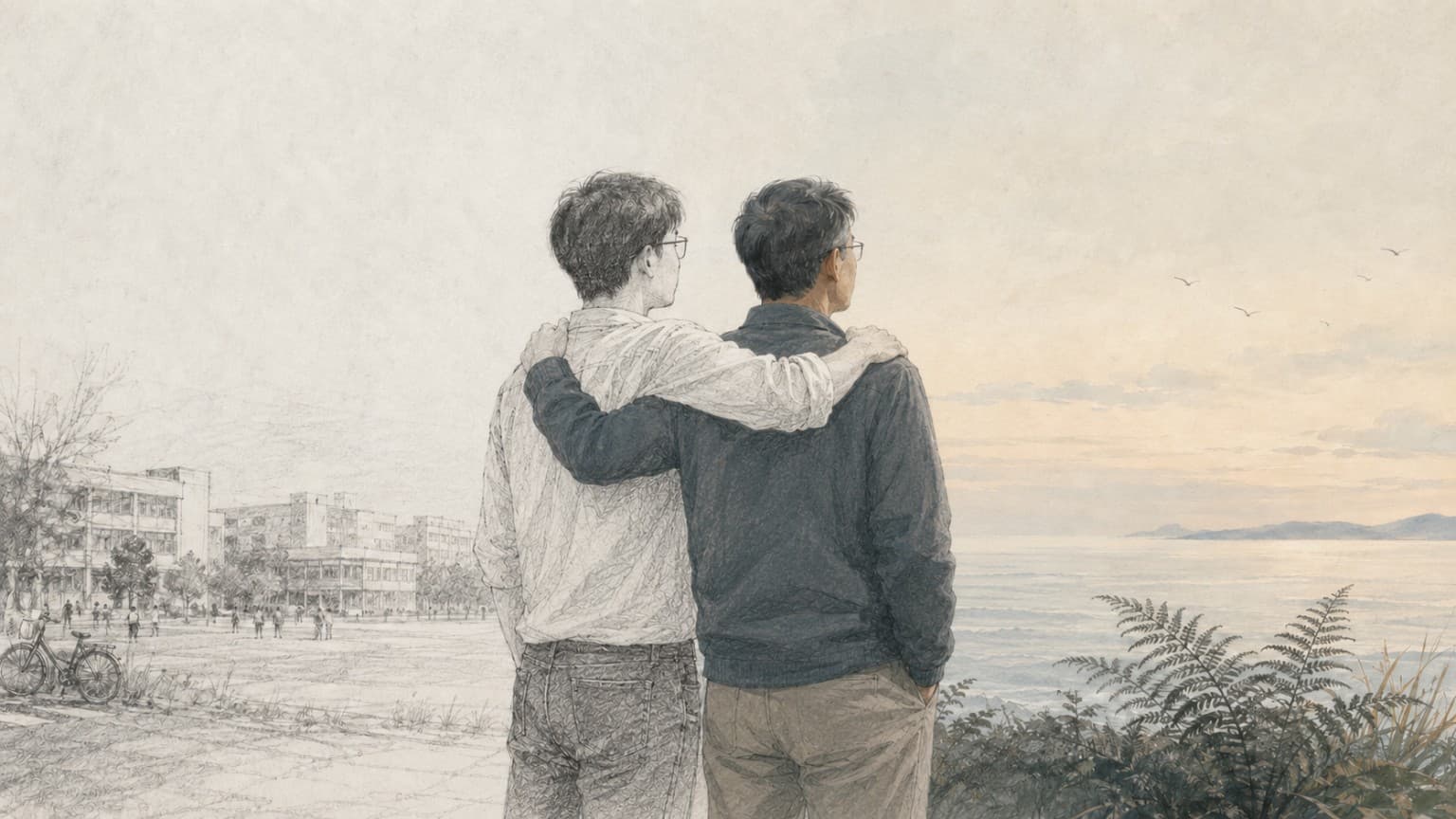
And suddenly I wanted to say something to him:
Don’t rush.
We’ll meet again in thirty years.
And when we do, I’ll tell you this:
You didn’t become the person you imagined you would.
But that’s all right.
The person you did become -
I rather like him.
READER NOTES