
More than twenty years ago, my wife Katherine and I had just arrived in New Zealand, and we knew almost nothing about the country. We had come as skilled migrants. After landing in Auckland, we hired a car and simply headed south. There was no grand plan. We just thought, now that we were here, we might as well see what the place was like. We drove all the way to Dunedin. I cannot quite say why, but we both liked it. It was small, unhurried, and we stayed.
We were studying at the University of Otago. We did not have much money, but after living there for a while a very ordinary thought began to take hold: perhaps life would feel properly settled if we had a place of our own.
Looking back, I think we were rather brave. At the time it did not feel brave at all. Everything was a first. We did not know what to be afraid of, and we did not know what questions we were supposed to ask.
House hunting was completely different then. There were no property websites like there are now, no phone full of recent sales, valuations, school information, maps and reports. We read the property pages in the local paper and sat in real estate offices leafing through stacks of printed property sheets. A photo, a few lines of copy, a phone number. If the price looked possible, we went to have a look.
We did not have much money, so the more expensive parts of Dunedin were largely out of the question.
Eventually we found a house in Green Island. It was only ten or fifteen minutes from the centre. That sounds like nothing now, but in Dunedin it felt a fair way out.
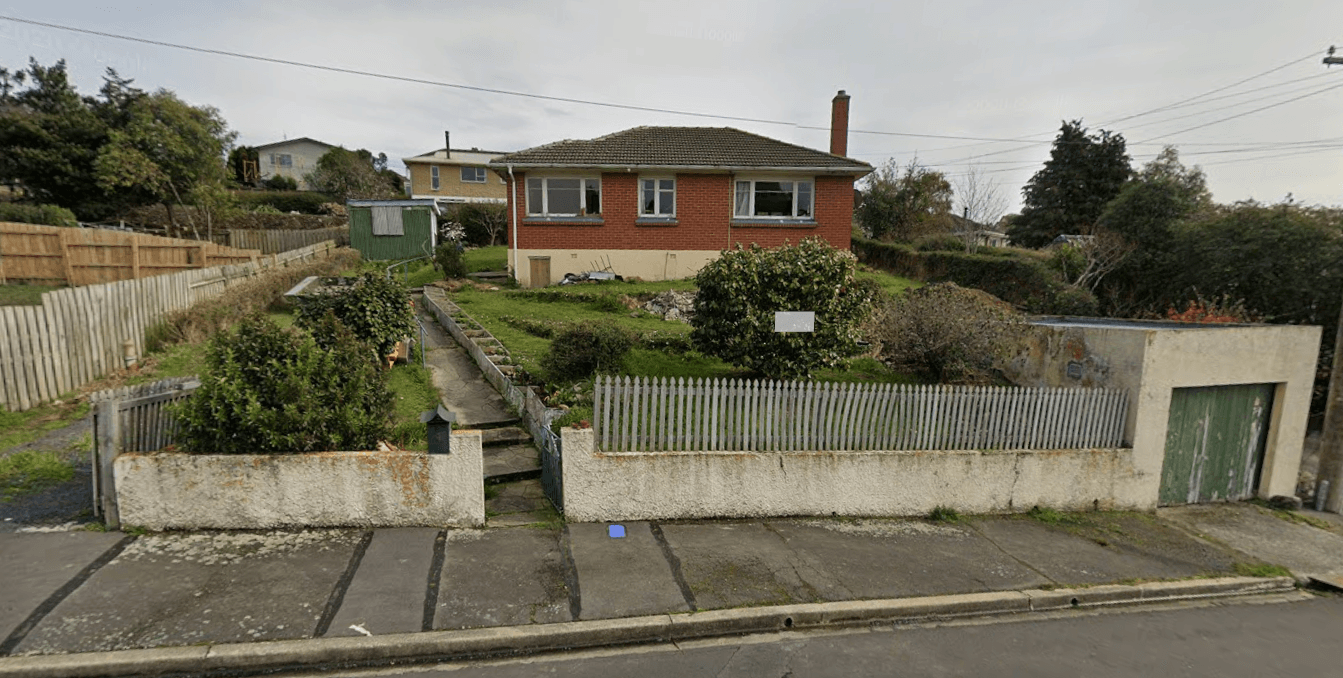
It was a three-bedroom brick house on a 670-square-metre section. Parts of it were old. The inside had been kept tidy, but you could still see that the place had been allowed to run down in places. We knew nothing about building structure, damp, foundations or roofs. To us, it was brick and it looked solid.
We liked it.
The agent told us the house was going to auction.
I knew what the word auction meant. What I did not really understand was what buying at auction meant in New Zealand.
It was October 2003. The auction was held in the living room of the house itself.
Prospective buyers, agents and the auctioneer were standing around the room. It was our first auction. My English was still not very good, so one of the agents stayed with us.
Every time the price moved up, she would turn and look at me, checking whether I wanted to stay in. If I was comfortable with it, I would give her a nod.
She would put her hand up for me.
The price went up again.
She would turn back to me.
I would nod again.
Her hand went up again.
I seem to remember Katherine and I were the only two Chinese people in the room. Most of the others were locals. I cannot now remember exactly where the bidding started. I only remember it kept climbing until, one by one, the others stopped.
The hammer came down.
The agent turned to us and said the house was ours.
Only then did it really hit me:
we had bought it.
It was only when we met a New Zealand solicitor for the first time that we began to understand what we had just done. He explained that once the hammer had fallen, the sale was done. It was not the way we had imagined it: buy first, inspect later, and if something serious turned up, decide whether to go ahead.
But none of that was in our heads before the hand went up.
We had not thought about getting an independent building inspection before bidding. We did not know what an old house should be checked for. We did not even know, at first, that buying a house involved a solicitor. The solicitor we eventually used had been recommended by the real estate agent.
After we bought the house, I even asked him, “So when do we get the property certificate?”
In my head I was picturing the kind of official little property-ownership booklet I knew from China. Instead, he showed me a sheet of paper. It looked nothing like what I had imagined. He explained that land title registration in New Zealand worked differently from the system I knew.
All that money for a house, and the thing in front of me was a single sheet of paper.
If I could stand again in that Green Island living room and look at the younger version of myself, I think I would find it rather astonishing. My first house overseas; I did not understand the local law, the auction process, or much about the house itself. In a stranger’s living room, I kept nodding and somehow bought a house.
And, as it happened, nothing disastrous followed.
Our thinking about money was just as simple. Put in as much cash as we had. If we could borrow less from the bank, surely that was safer. If we could afford to buy outright, why would we take out a mortgage?
So after settlement, we were left with almost no savings.
Owning a house was reassuring. Having almost no cash was a different feeling. We had only just arrived in New Zealand and life was not properly stable yet. Study, food, transport — any extra expense had to be thought through. If the house suddenly needed work, or life threw us something unexpected, the first question was not what the house was worth. It was how much money was left in the account.
I have never really forgotten that pressure.
We lived in the house for three and a half years. It was a three-bedroom home, and we never rented out the two spare rooms. At the time it never occurred to me that those empty rooms might have another financial use.
I only learnt that sort of thing much later, after years in business, property investment and dealing with banks.
Later, Katherine finished her studies and received a job offer from a hospital in Christchurch. We decided to leave Dunedin and move to Christchurch, so we sold the house in Green Island.
If you look only at the outcome, it was a tidy story. It was our first home in New Zealand; we lived there for three and a half years, and by the time we sold it, the price had more than doubled.
For years, I thought I had done rather well. Lucky, yes — but perhaps I had a decent eye as well.
Recently Katherine and I were talking about that house again, and I found myself recalculating the story.
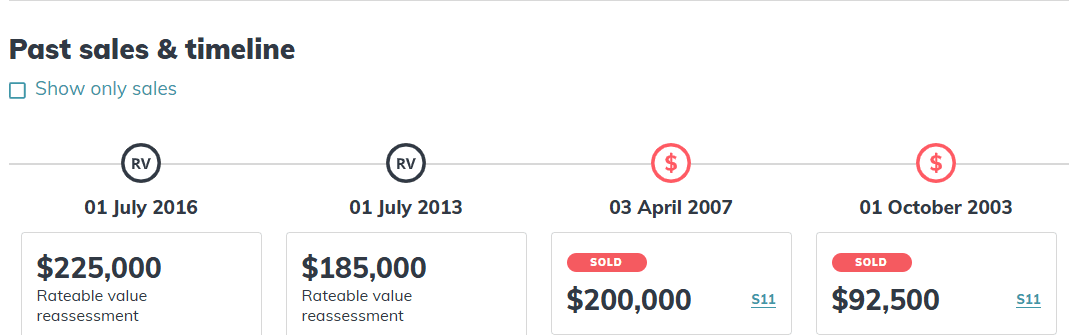
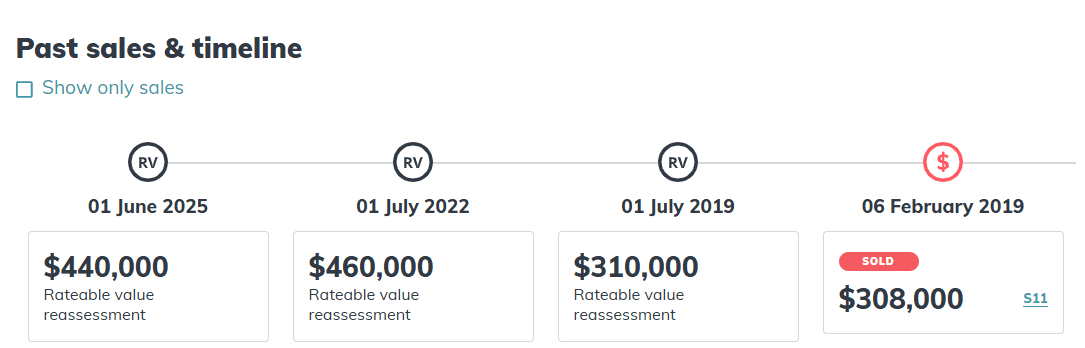
Put those years back in context and you can see the market itself was rising. It was not just our place. Plenty of houses were going up.
We had simply been sitting in a boat while the water rose.
When the boat rises, it is easy to think you are the one rowing brilliantly.
When I look at that younger man now, I do not feel like criticising him. He had just landed in a strange country. Building a life, and managing to buy a home at all, was no small thing.
I just know a little more than he did.
If I could go back to that afternoon in Green Island, stand again in that living room, and see the agent turn to ask, “Still in?”
I might still buy it.
But I think I would take that younger version of myself aside and ask a few more questions.
I would ask whether he had arranged an independent building inspection; whether a solicitor had seen the documents before the auction; what exactly the fall of the hammer meant; and whether every last dollar of cash really had to go into this one house.
I would take him to a bank as well.
It was a three-bedroom house. I would ask how a bank at the time would have treated the potential rent from the two spare rooms. If we already had a very large deposit, did we really need to put every last bit of cash into the purchase?
Back then, I thought the safest thing was not to borrow.
Today, I would not be so quick to give him the answer.
I would ask him one question: if buying the house left him with nothing in reserve, would he really feel safer?
As for whether keeping some cash might have opened the door to another property, or whether the equity that built up as prices rose could later have been used to restructure the mortgage or refinance, those were things I only learnt years later.
I can sit here now and push everything I learnt afterwards back into 2003 and design a neater version of life for that younger man. But that would not be an honest way to remember it.
If we had borrowed more and the market had gone the other way, the story might have been completely different. It is easy to be bold on behalf of your younger self when you already know the ending.
So if I really met him, I do not think I would give him many answers.
I would just stay with him a little longer and help him ask more questions.
More than twenty years ago, we hunted for houses with a newspaper in our hands and a stack of printed property sheets from real estate offices. Today, the questions we did not even know existed are easy to look up.
A few days ago, I saw the house online again. More than twenty years on, it looks almost unchanged.
But sometimes my mind still goes back to that afternoon in Green Island.
The living room is full of people I do not know. The auctioneer is still calling the bids.
The agent turns and looks at me again.
I nod.
She puts her hand up for me once more.
READER NOTES