
That evening, she would not meet his eyes.
A few days earlier, she had been searching the room for him. In between, he had told her something.
The Marquis de Sévigné was twenty-two and making little attempt to conceal his feelings. The countess knew why he called. His eagerness left her very little to wonder about.
He went for advice to Ninon de l’Enclos, some thirty years his senior. She listened to his troubles, then set about changing his approach.
There is a Chinese phrase for the method:
To catch, first let go.
The next time he found himself alone with the countess, he spoke to her as a friend. At a gathering, he appeared beside another young woman, a pretty one. He missed occasions she expected him to attend, then turned up where she had not expected him.
She began asking other people about him. When he spoke, she listened more closely.
She began looking for him in the crowd.

Ninon advised him to wait. A few more weeks, perhaps longer.
He did not wait.
A few days later, alone with the countess, he told her he had fallen in love with her.
When he left that evening, she did not come out to say goodnight. On subsequent visits, he was told she was not at home. When she finally received him again, the meeting was strained.
The Han Feizi puts it briefly:
Plans succeed in secrecy; disclosure undoes them.
Berlin, 3 December 1850.
Four days earlier, Prussia and Austria had reached a settlement at Olmütz. Now, in the Prussian parliament, the thirty-five-year-old Bismarck rose to defend it. He opposed going to war at this moment.
The German states were about to return to negotiations. Anyone determined to have a war, he argued, could still find one in four weeks, or six.
Not now.
Twelve years later, Bismarck became Prussia’s prime minister.
Four years after that, in 1866, Prussia went to war with Austria.
Prussia won.
More than twenty-three centuries before that speech in Berlin, a defeated king in China had asked for peace.
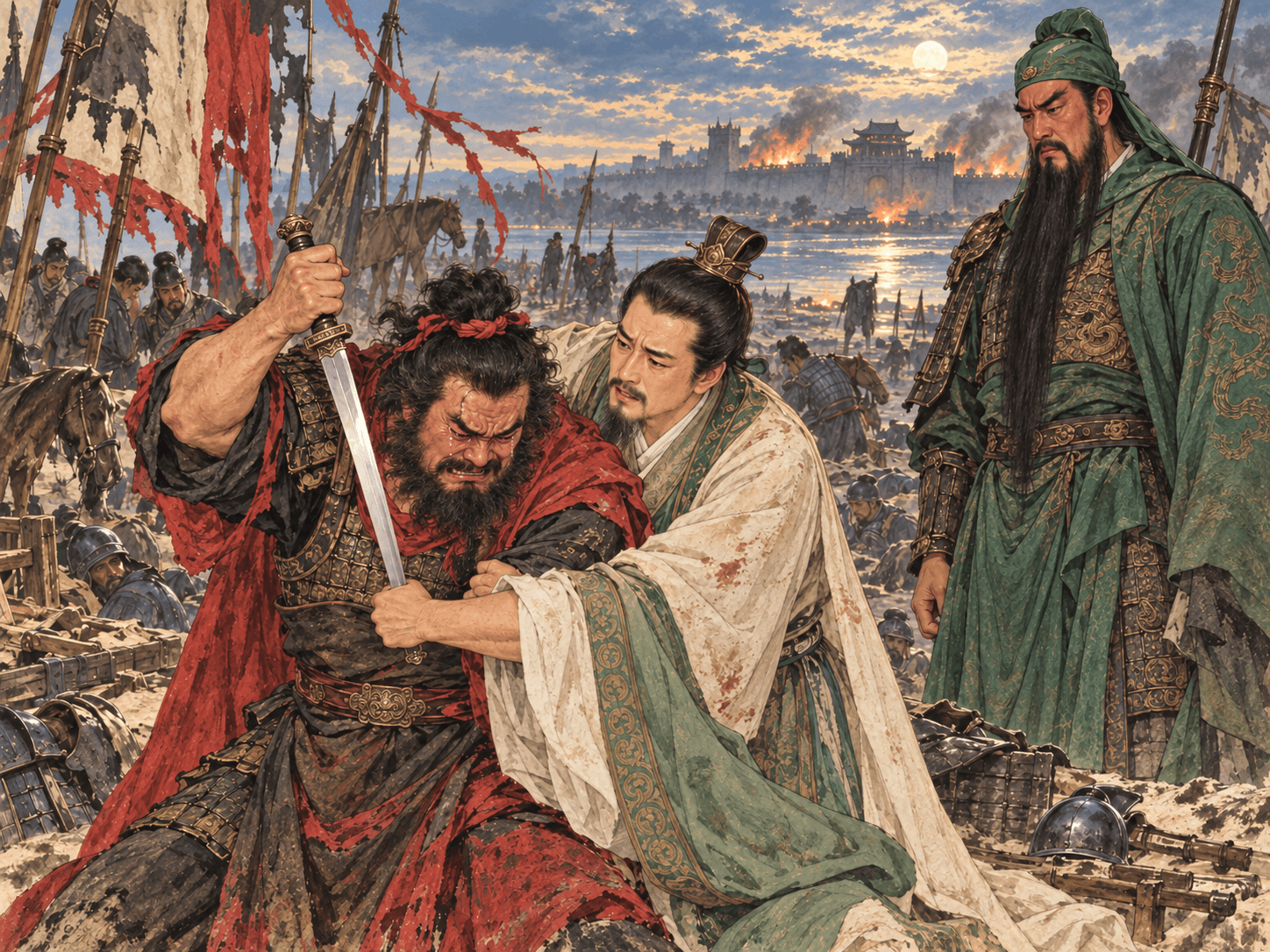
In 494 BC, Goujian, king of Yue, lost to the armies of Wu and withdrew to Kuaiji. After seeking terms, he went to Wu to serve its king, Fuchai.
Three years passed before Fuchai allowed him to return home.
Back in Yue, another year went by.
And another.
In 473 BC, Yue conquered Wu. Fuchai killed himself.
The gentleman keeps his abilities in reserve and waits for the time to act.
— The Book of Changes
Chicago, early in the twentieth century.
Sam Geezil had a property for sale. A young man named Joseph Weil came to see him about it. He would later be better known as Yellow Kid.
There was nothing unusual about the transaction. During their conversation, Weil happened to mention another deal he had in hand. It would pay out in a few days. A substantial sum.
Geezil asked about it. Weil was reluctant to discuss it. Geezil kept asking.
Eventually, Weil explained.
His uncle worked for some wealthy men who owned a hunting estate. It had been standing idle, and they were not particularly concerned about the price. Someone could buy it cheaply, sell it on, and make a considerable profit.
Geezil wanted in. Weil resisted at first, but Geezil persisted.
Eventually, he was in.
On the journey to meet the owners, Weil brought along a man called George Gross. His hair was greying, and he had a belly. Weil said he was a boxer.
Geezil gave him little thought. He had the estate to think about.
The men they met were well dressed. They talked about property, business, investments. In the course of the conversation, somebody mentioned boxing. As it happened, one of the men had a fighter too.
A bout was arranged.
The result could be arranged as well.
There would be money from the estate, and more from the fight. That evening, Geezil watched the two boxers rehearse what they would do the following day. He put in his own money.
At first, the fight went much as they had practised. Geezil sat and waited.
Then Gross took a punch and fell. Blood came from his mouth.
Someone knelt beside him and felt for a pulse.
Gross did not move.
Dead.
The room erupted. An illegal fight, and now a death.
Geezil ran.
He left the money.
Once he was gone, the dead man got up.
The blood had come from a small ball concealed in his mouth, filled with chicken blood and warm water.
Nobody else left.
They divided the money.
The best hunters look like prey.
Addis Ababa, 1928.
Tafari Makonnen was still Ethiopia’s regent. Two years later, he would be crowned Haile Selassie I.
Balcha Safo, an old soldier, did not accept the younger man’s authority.
Summoned to the capital, Balcha arrived with several thousand armed men. Most remained in camp outside the city. About six hundred accompanied him to the banquet.
In the palace, Tafari received his guest with every courtesy.
Balcha remained at the table.
Outside the city, Ras Kassa, one of Tafari’s trusted men, arrived at the camp. He told the soldiers that Balcha and the regent had reached an agreement.
He had brought money and valuables.
The soldiers began handing over their weapons. One by one, they left.
When Balcha returned, the ground where his tents had stood was empty.

The men were gone.
A little smoke still rose from the extinguished fires.
Chapter 28 of the Tao Te Ching:
Know the masculine; keep to the feminine; be the world’s stream.
Notes
Reading source
Robert Greene, The 48 Laws of Power, Law 3, “Conceal Your Intentions”.
Classical passages
The English renderings in the article were prepared for this edition.
- Han Feizi, “The Difficulties of Persuasion”: “Plans succeed in secrecy; disclosure undoes them.”
- The Book of Changes, “Appended Statements”, Part II: “The gentleman keeps his abilities in reserve and waits for the time to act.”
- Tao Te Ching, Chapter 28: “Know the masculine; keep to the feminine; be the world’s stream.”


READER NOTES