
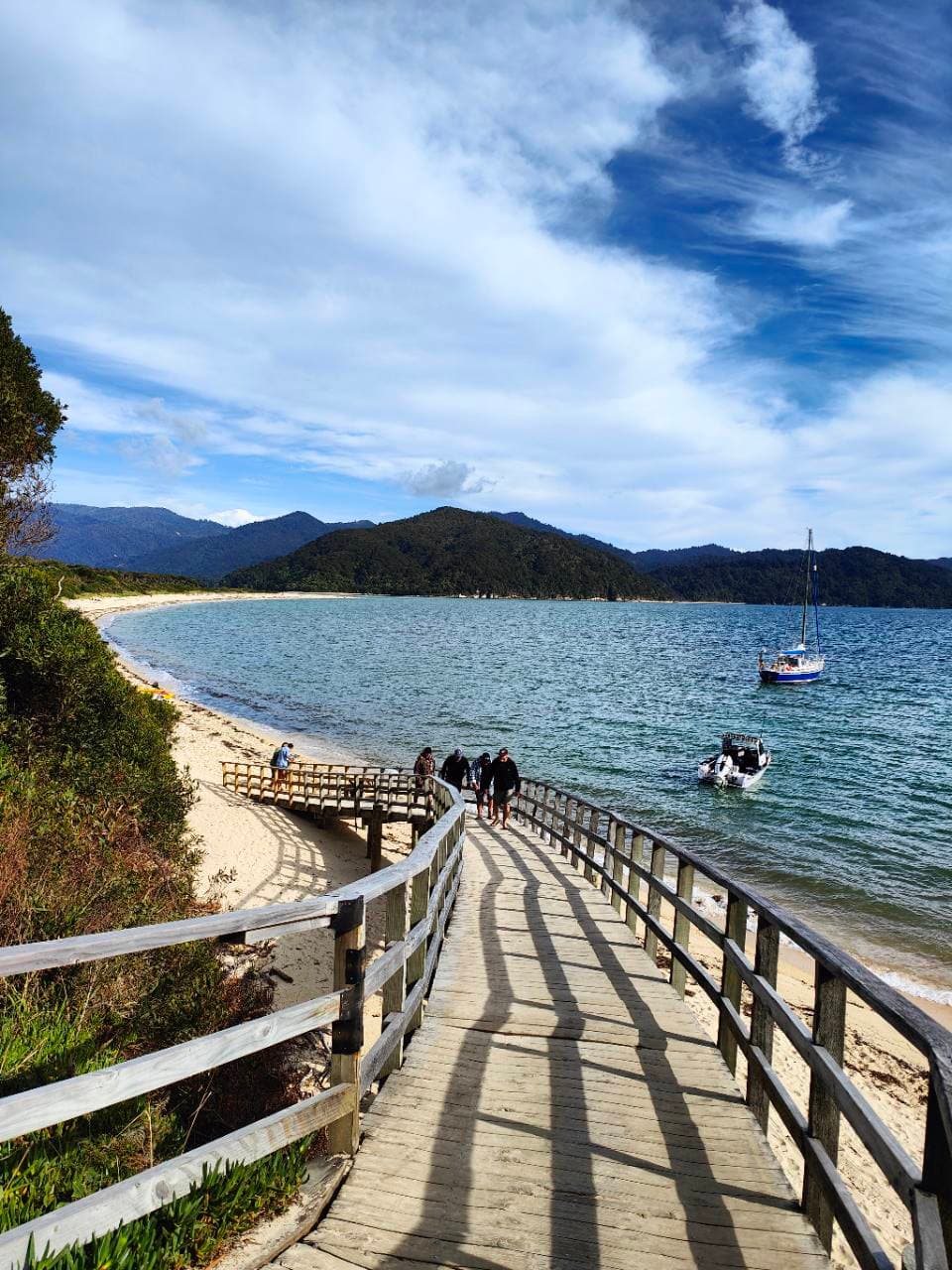
This SeriesAbel Tasman
- 01Only Two in the Photograph
- 02The Tractor Pulled the Boat into the Sea
- 03There Was a Café Behind the TreesCurrent
- 04A Bird on the Bridge
I took off my clothes and walked slowly into the clear water.
At Bark Bay it rose from my ankles to my knees, then to my chest.
The water was cold.
A Rock in the Wrong Direction
A few hours earlier, we had been back in Mārahau.
Katherine got out of bed, walked across the room and pressed a hand against her thigh.
“I don’t know if I can finish today.”
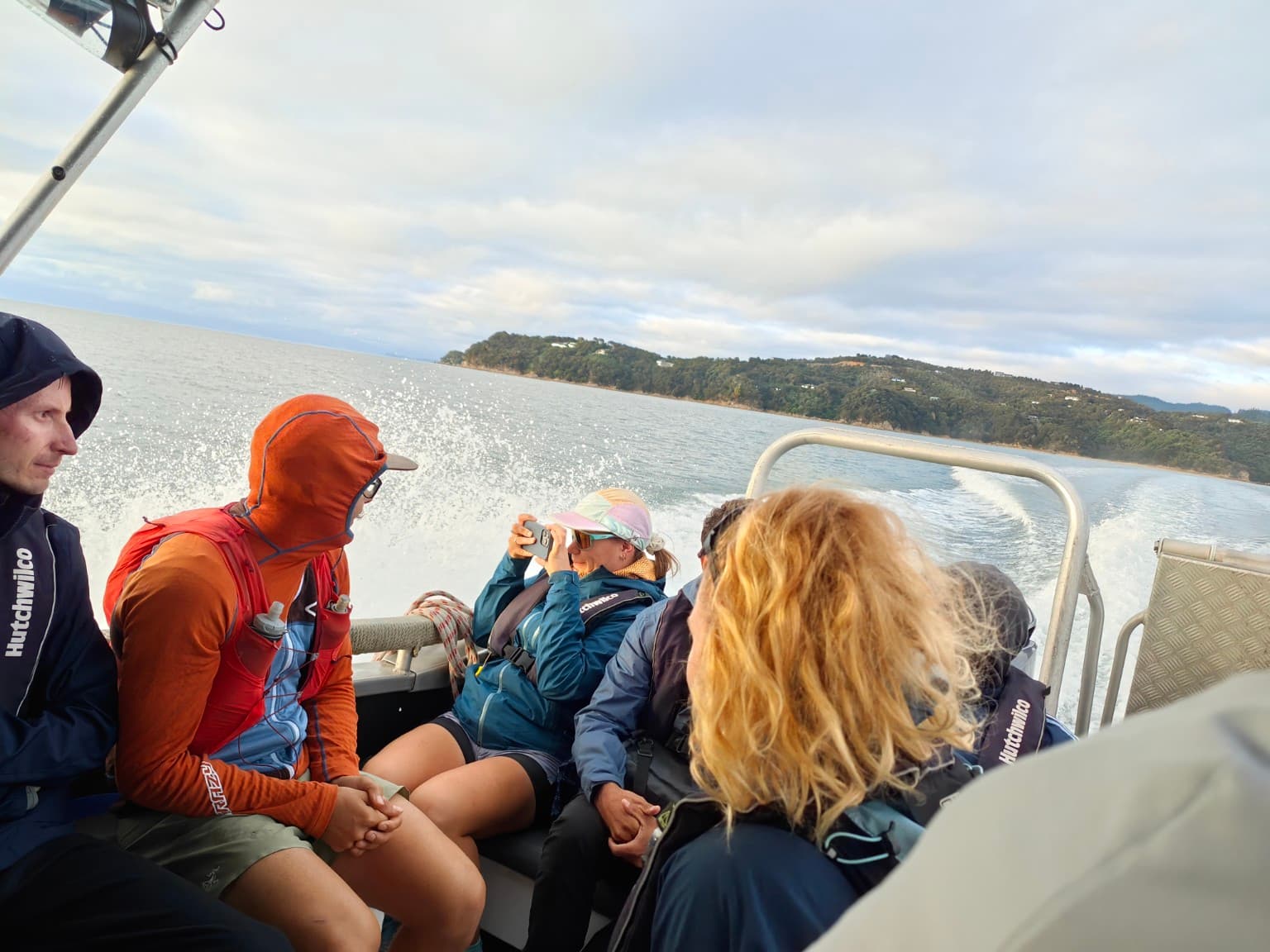
The water taxi left Mārahau as usual, but instead of heading north, the skipper turned the boat the other way.
I looked ahead, then back towards the village.
For a moment I wondered whether we were going in the wrong direction.
A large granite boulder appeared offshore.
As we came closer, the split became visible.
Toka Ngawhā — Split Apple Rock.
The skipper eased the throttle. Phones rose around the boat almost at once.
The two halves stood in the water with a narrow gap between them, as though one solid block had been cut cleanly down the middle.
I took a photograph.
Then the skipper turned the boat around.
Awaroa was north.
The taxi gathered speed along the coast. The hills and bays we had walked through the day before passed beside us. Forest came down almost to the water. A strip of golden sand would appear beyond a headland, then slip behind us.
Yesterday we had been somewhere inside those trees.
Today the whole green coast moved past at once.
A Café Behind the Trees
The boat put us ashore at Awaroa.
I shouldered the pack and we walked inland.
There was no road.
A boardwalk left the sand and disappeared into the trees. Soft beach gave way to timber underfoot. The ground on either side was low and damp, crowded with ferns, scrub and wet grass.
Within minutes the sea was gone.
The boardwalk turned deeper into the shade.
First came the corner of a roof.
Then tables.
Chairs.
Umbrellas.
Someone was drinking coffee.
I stopped.
This was Awaroa Lodge.
No road came in here. People arrived by boat or on foot. The sea had vanished behind the trees, and the buildings were hidden among them.
I had expected the walking to begin as soon as we stepped off the boat.
Instead, the forest gave us coffee.
Katherine had already found a table.
I put the pack beside my chair.
When the coffee came, she held the cup in both hands and took a drink. The faint line between her eyebrows began to ease.
We stayed where we were.
There were no engines, no traffic. Occasionally a walker appeared from the track with a large pack and left it against a table leg. Someone in sandals came out of the lodge carrying another coffee.
When her cup was empty, Katherine pushed herself up from the chair and moved one leg, then the other.
“Let’s go.”
I put the pack back on.
A short distance down the track, the tables and roof disappeared behind the trees.
The Sea Comes Back
South of Awaroa, the track climbed towards Tonga Saddle.
The sea vanished quickly.
The path followed the slope beneath a closed canopy. Roots crossed the dirt. Ferns hung down the hillside. Patches of sunlight reached the track and were gone almost as soon as we passed through them.
I reached the first bend and stopped.
Katherine was still below.
When she came level with me, I turned into the next climb.
At the following bend she was only a few steps behind.
Beyond the saddle, the track began to descend.
The air grew cooler.
The land flattened.
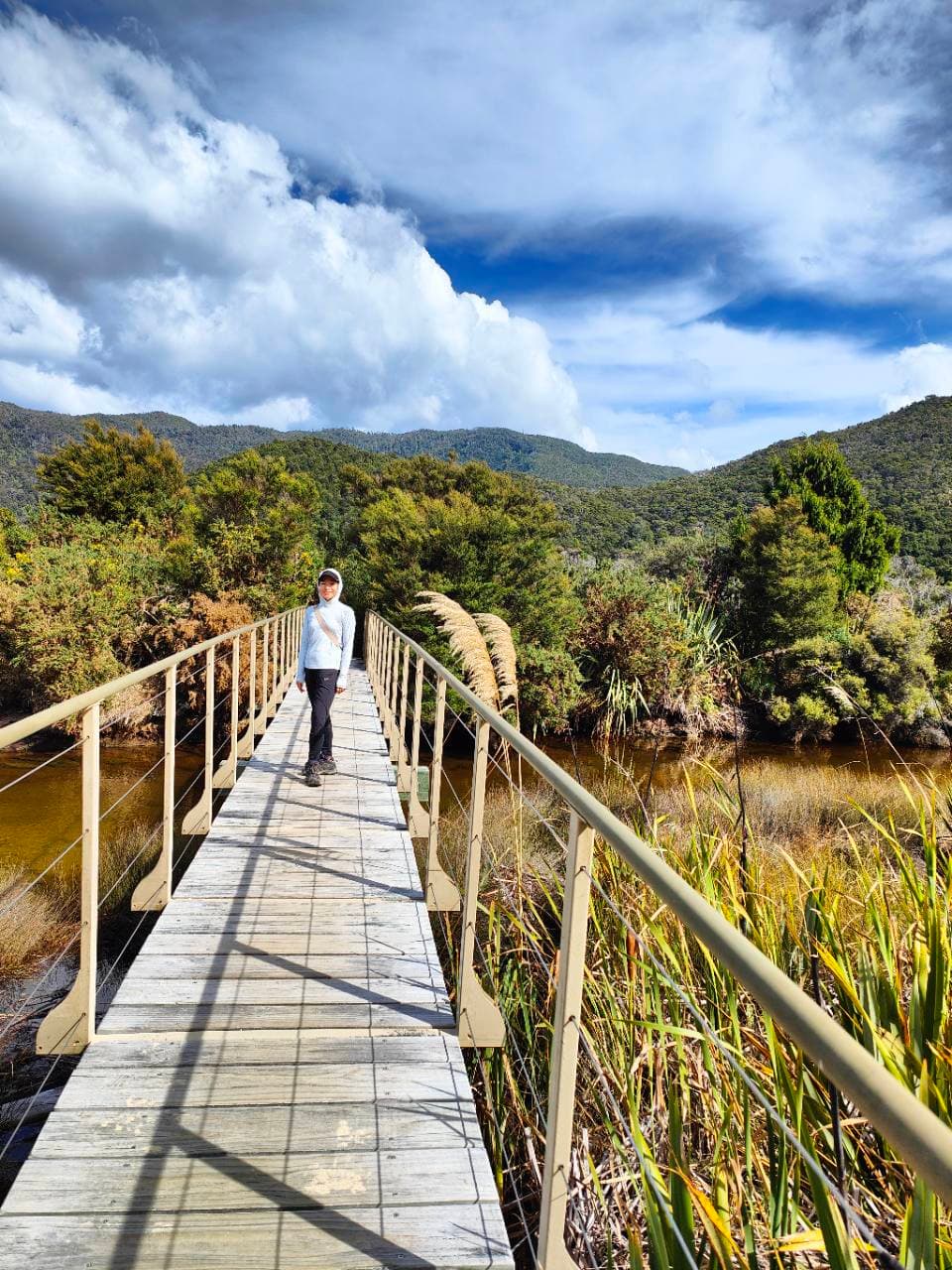
Water coming down from higher ground no longer stayed in one channel. It spread through the low country in shallow threads. A boardwalk carried the track over wet ground towards Richardson Stream.
Katherine walked to the middle of the bridge and stopped.
Both hands rested on the railing.
Below her, water wound between grass and reeds. Farther away, the wetland opened and the colour gradually became that of the sea.
Wind came up from the water and lifted the hair beneath her hat.
My hand touched the phone in my pocket.
I left it there.
Katherine kept looking.
After a while she turned around.
Only then did I take the phone out.
A Long Beach
Beyond the bridge, the trees withdrew.
Onetahuti Bay opened in front of us.
Pale sand curved a long way around the bay. Behind it lay the wetland and forest we had just crossed. In front was blue-green water, with Tonga Island farther offshore.
Timber ended.
Sand began.
The ground softened under our shoes.
Small waves pushed a thin sheet of water over the beach, then withdrew, leaving the sky on the wet sand.
Katherine walked close to the water.
After a while she stopped and took out her phone.
I had gone a few steps ahead.
I came back.
She was still pointing it towards the sea.
I stood beside her.
We walked south along the beach.
The wetland behind us grew smaller. The hillside ahead drew closer. At the southern end of the bay, the sand narrowed and the track moved back towards the foot of the slope.
Then the forest broke.
A patch of ground appeared that looked unlike anything around it.
No dense fern cover.
Grey-white stone lay exposed, some of it showing flat, cut faces.
This was Tonga Quarry.
Two days earlier, below Christ Church Cathedral in Nelson, we had climbed a long flight of pale granite steps.
Some of that stone had come from here.
The track crossed the edge of the old quarry.
A few minutes later the exposed rock had disappeared behind forest again.
Back to Bark Bay
South of the quarry, the track climbed into mānuka.
The hillside shut out the sea.
Katherine’s stride shortened again on the ascent. At each bend I stopped ahead. She came up, looked at the next piece of slope, and continued.
Once, the sea reappeared through the trees.
Katherine stopped.
Her arms hung at her sides.
Below us, branches divided the water into several pieces of blue.
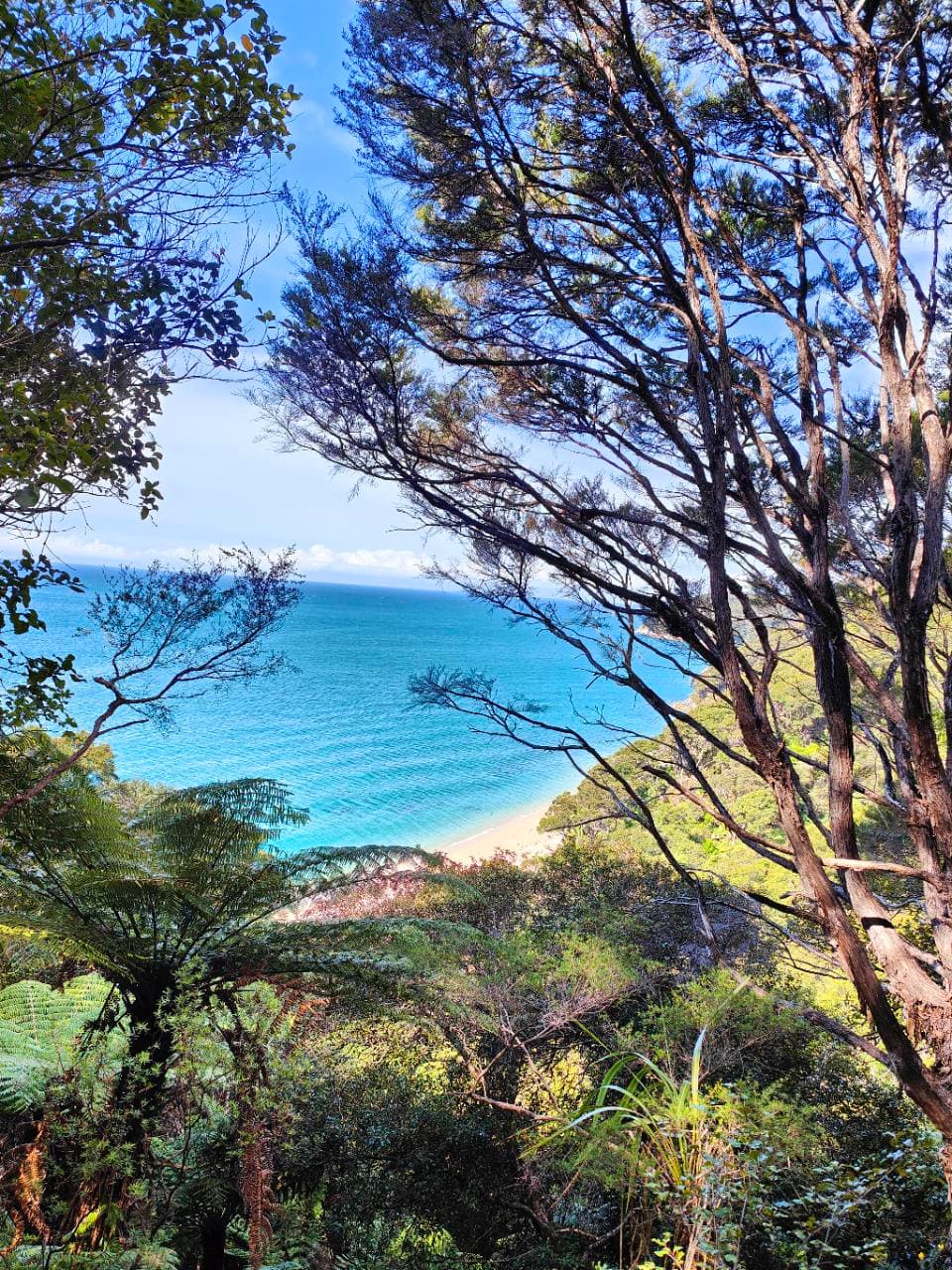
We stood there for a while.
Then the forest took us back.
After the final descent, Bark Bay began to appear below.
First the estuary.
Shallow channels curved across broad pale flats. Wetland, driftwood and forest all met inside the bay.
Farther down, the beach itself came into view.
We had started from here the day before.
On the sand I put down my pack and checked my phone.
There was time.
The bay was quiet.
Forested headlands reached out on both sides, holding the water between them. Several yachts sat offshore with scarcely any movement.
Close to the beach the water was clear enough to see every line in the sand beneath it.
I stood at the edge.
Tomorrow we would move on. I had no idea when I might stand here again.
I raised my phone towards the bay and held it there for a moment.
Then I put it back in the pack.
I took off my clothes and left my shoes on the sand.
Then I walked into the water.
At Bark Bay it rose from my ankles to my knees, then to my chest.
The water was cold.
I stopped.
Then kept going.
The bay was shallow. I walked farther before it was deep enough to swim.
I leaned forward and let the water take my weight.
For a moment there was no ground beneath me.
I swam out a little way and turned back.
Katherine was still on the beach.
She was holding the phone up.
I swam towards her.
When my feet found the sand again, I stood. On the walk back to shore the water dropped from my chest to my knees, then to my ankles.
I dried myself and got dressed.
The water taxi had not arrived.
Later, my phone held two numbers from the day:
12.02 kilometres.
15,493 steps.
Another One
That evening we ate at Park Cafe.
It was different from Hooked the night before. There was no broad tidal flat beyond the road. Timber walls, screens and scattered tables sat among the trees, as though the place had grown out of Mārahau rather than been placed there.
The young man serving us was from Christchurch.
He had not planned to stay.
Then he met a local woman.
So he stayed.
“Summer’s busy,” he said.
In winter the visitors thinned out, and the work did too.
He said this with a stack of plates in his hands.
Then he went to the next table.
Our food arrived.
Katherine took a bite.
Chewed.
Looked up at me and raised one thumb.
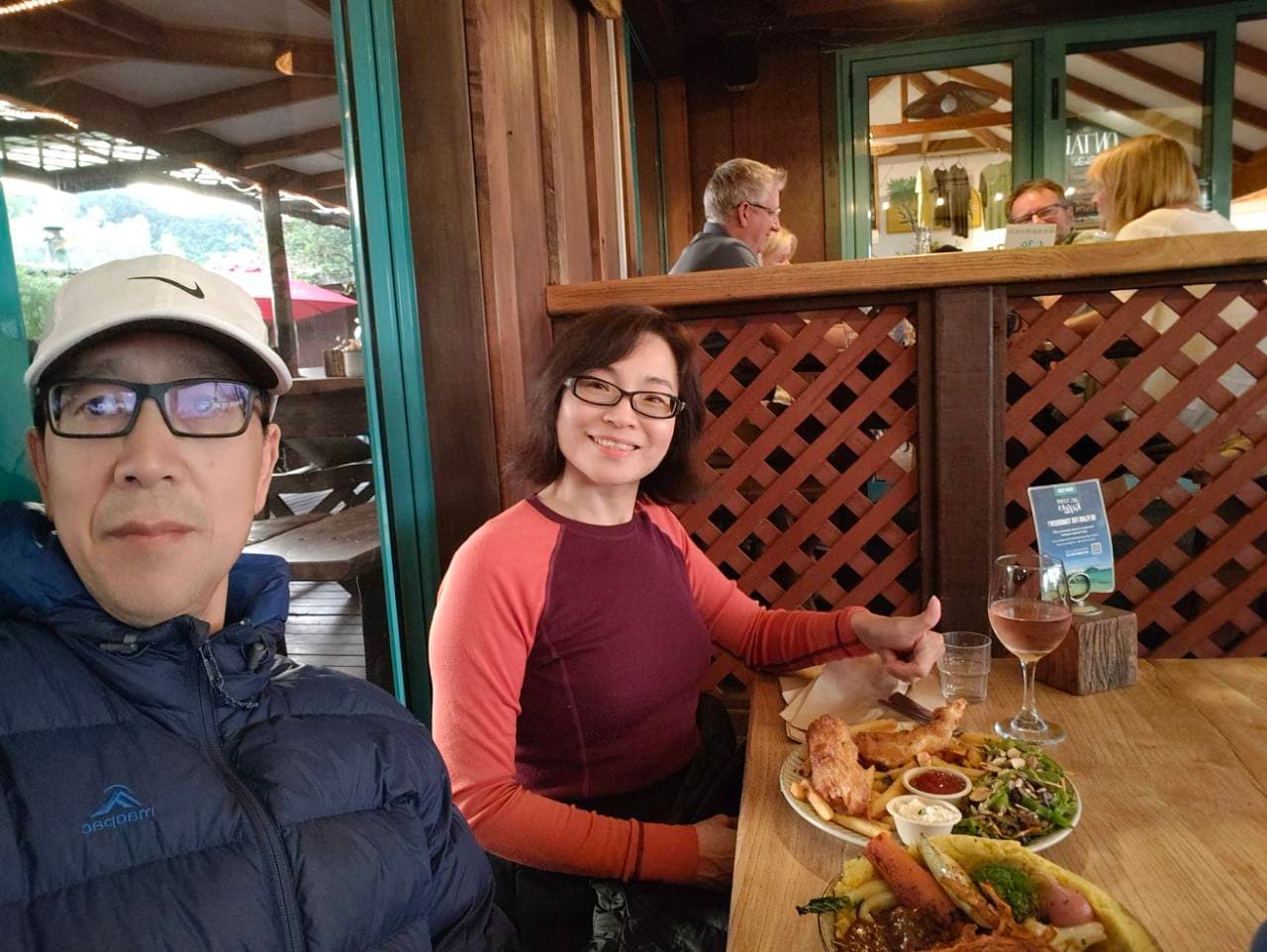
Her glass gradually emptied.
She pushed it forward.
“Another one.”
READER NOTES