
This SeriesAbel Tasman
- 01Only Two in the Photograph
- 02The Tractor Pulled the Boat into the Sea
- 03There Was a Café Behind the Trees
- 04A Bird on the BridgeCurrent
I put my fist beside the burger.
Measured them.
The fist lost.
A Few Hours Earlier
That morning we left the car outside Park Cafe in Mārahau.
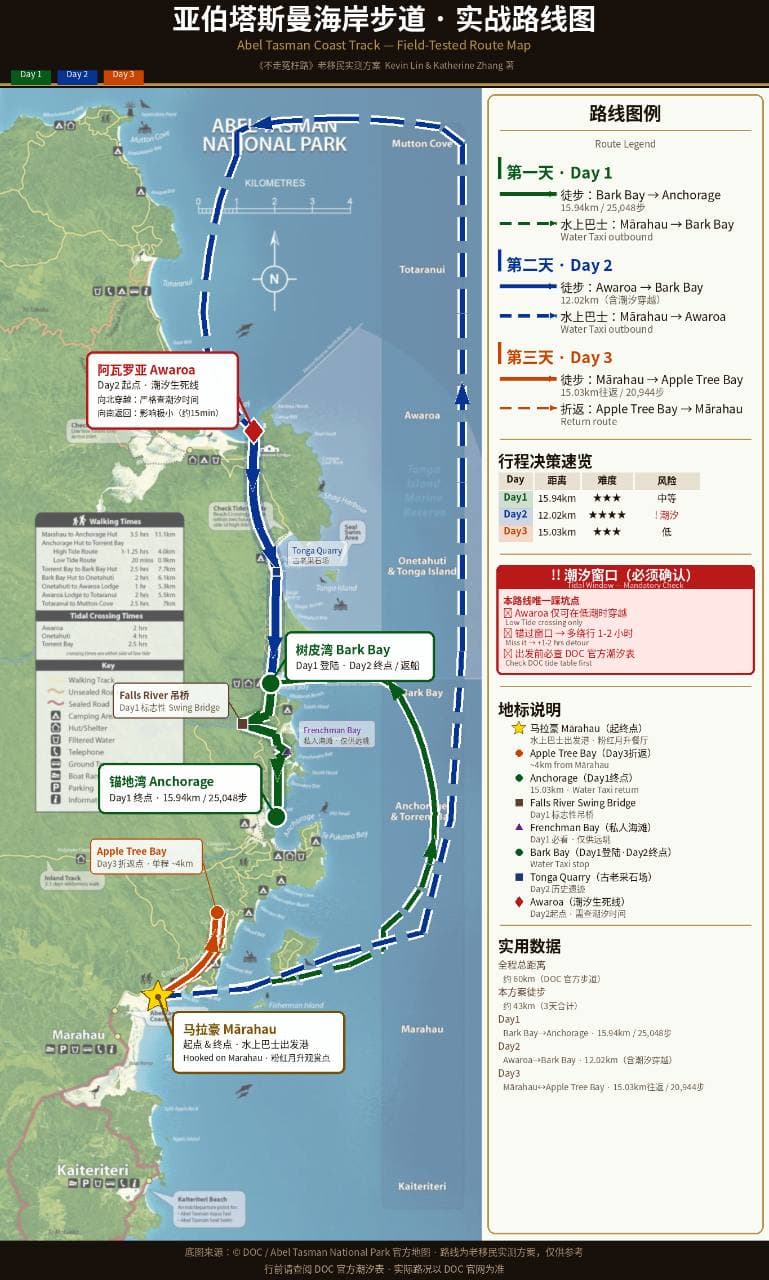
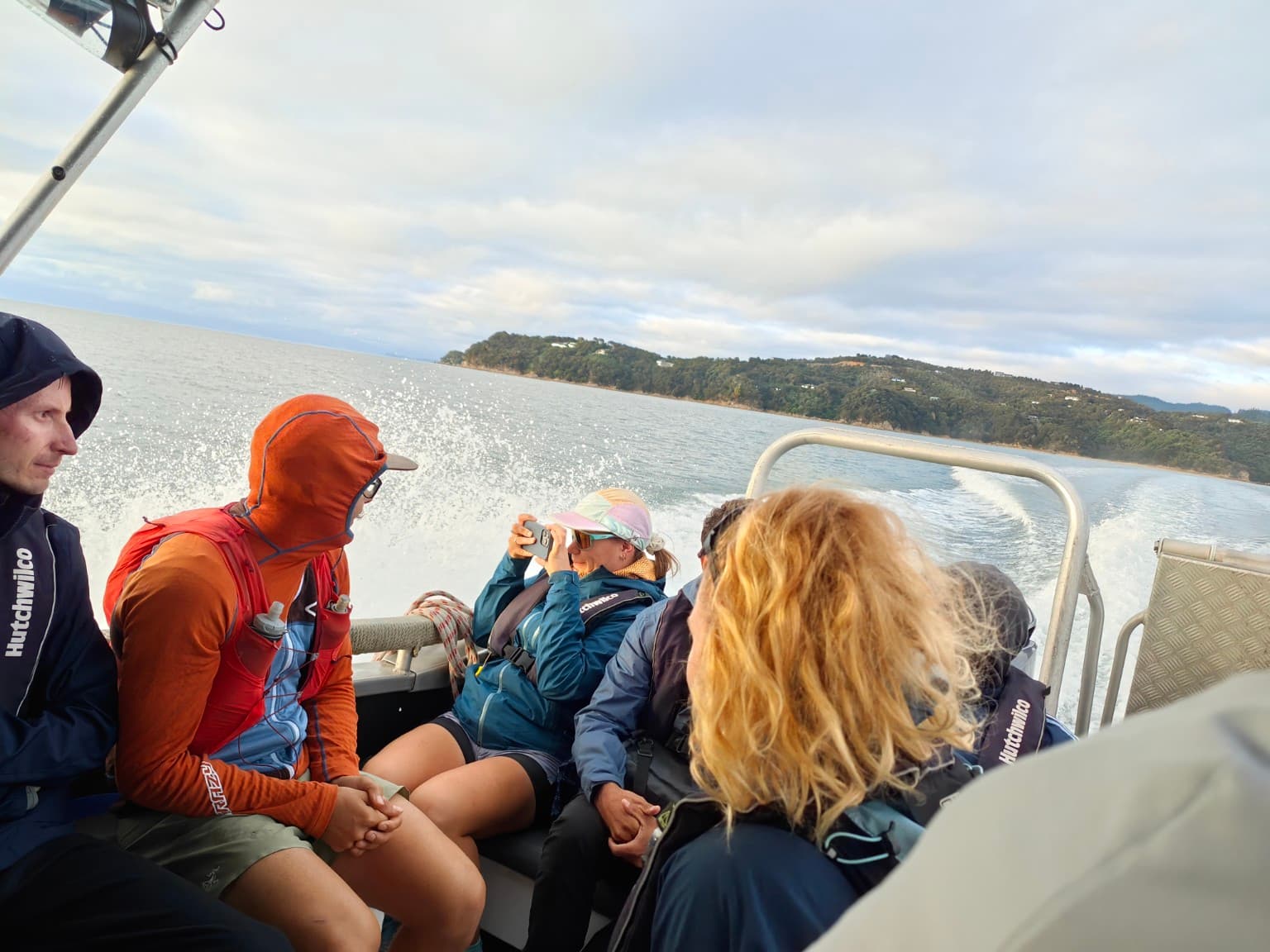
For the previous two days, a water taxi had taken us north into the park and we had walked south. This time we had a flight from Nelson that afternoon, so there was no boat. We would walk north from Mārahau, turn around when we had had enough, and come back the same way.
No skipper.
No three-thirty.
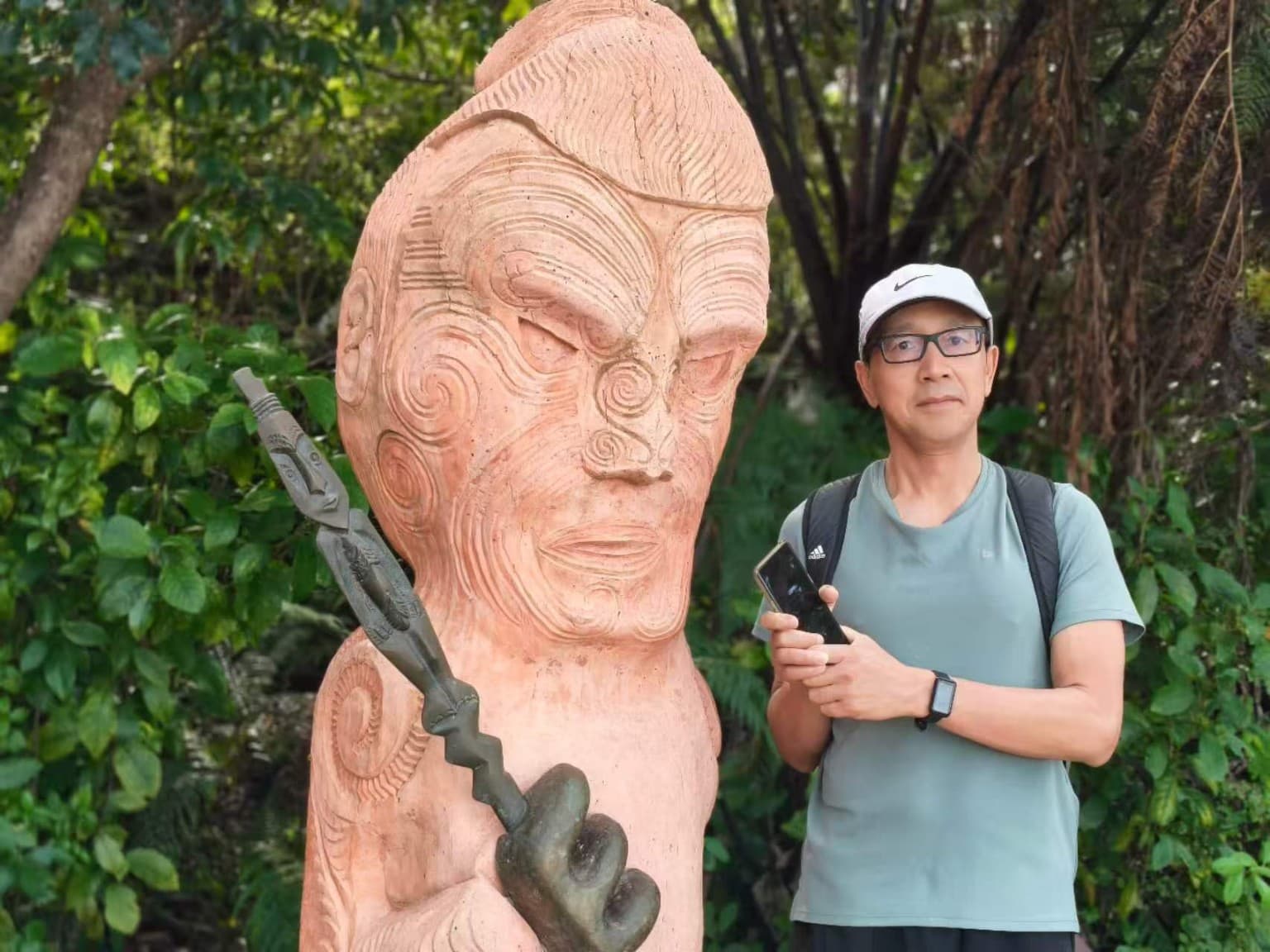
At the entrance to the track stood a Māori carving.
He was tall, the face cut deeply into the wood, one hand holding a weapon.
I stood beside him.
He had his weapon.
I held my phone against my chest.
That was mine.
Katherine took the photograph.
Beyond the carving lay the Mārahau estuary.
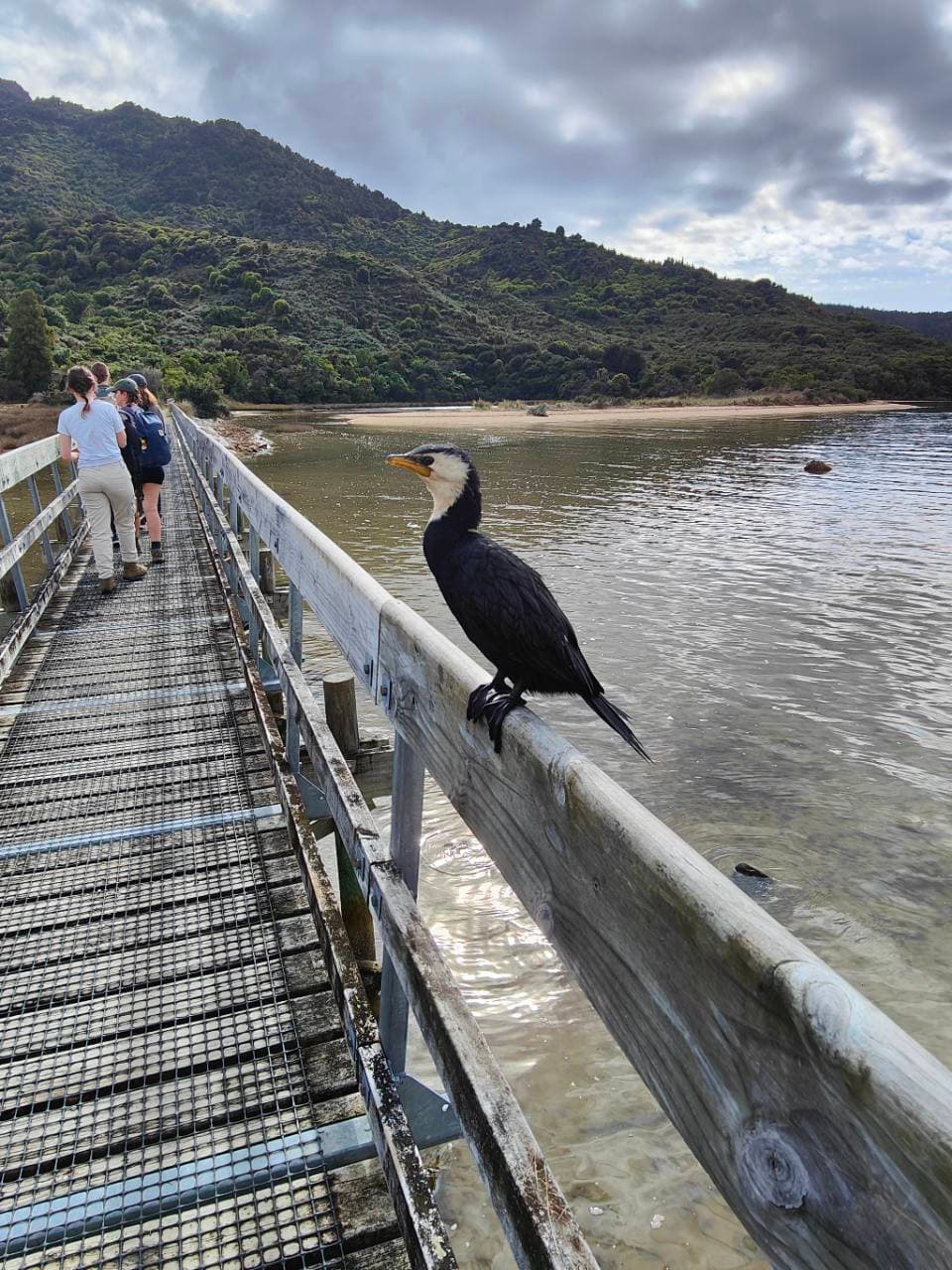
A long bridge ran out from the wetland. Metal grating underfoot. Sun-bleached timber rails on either side.
The tide was out.
Pale sand spread across the estuary, cut by narrow channels of water. Low wetland plants lay close to the edges. Farther away, everything opened again towards the sea.
Halfway across, Katherine stopped.
A black bird stood on the rail.
It opened both wings.
The feathers spread in layers into the wind.
Someone walked past.
The bird did not move.
After a while it folded its wings again, its claws still fixed to the timber.
Katherine went closer.
The bird turned its head.
Below, shallow water moved slowly across the sand.
At the far end of the bridge stood the track sign.
Porters Beach.
Tinline Bay.
Apple Tree Bay.
Katherine read it and kept walking.
One Bay, Then Another
Mārahau did not disappear at once.
Behind us were open flats, shallow channels and wetland. Ahead, the forest gradually closed around the track.
The climb was easy.
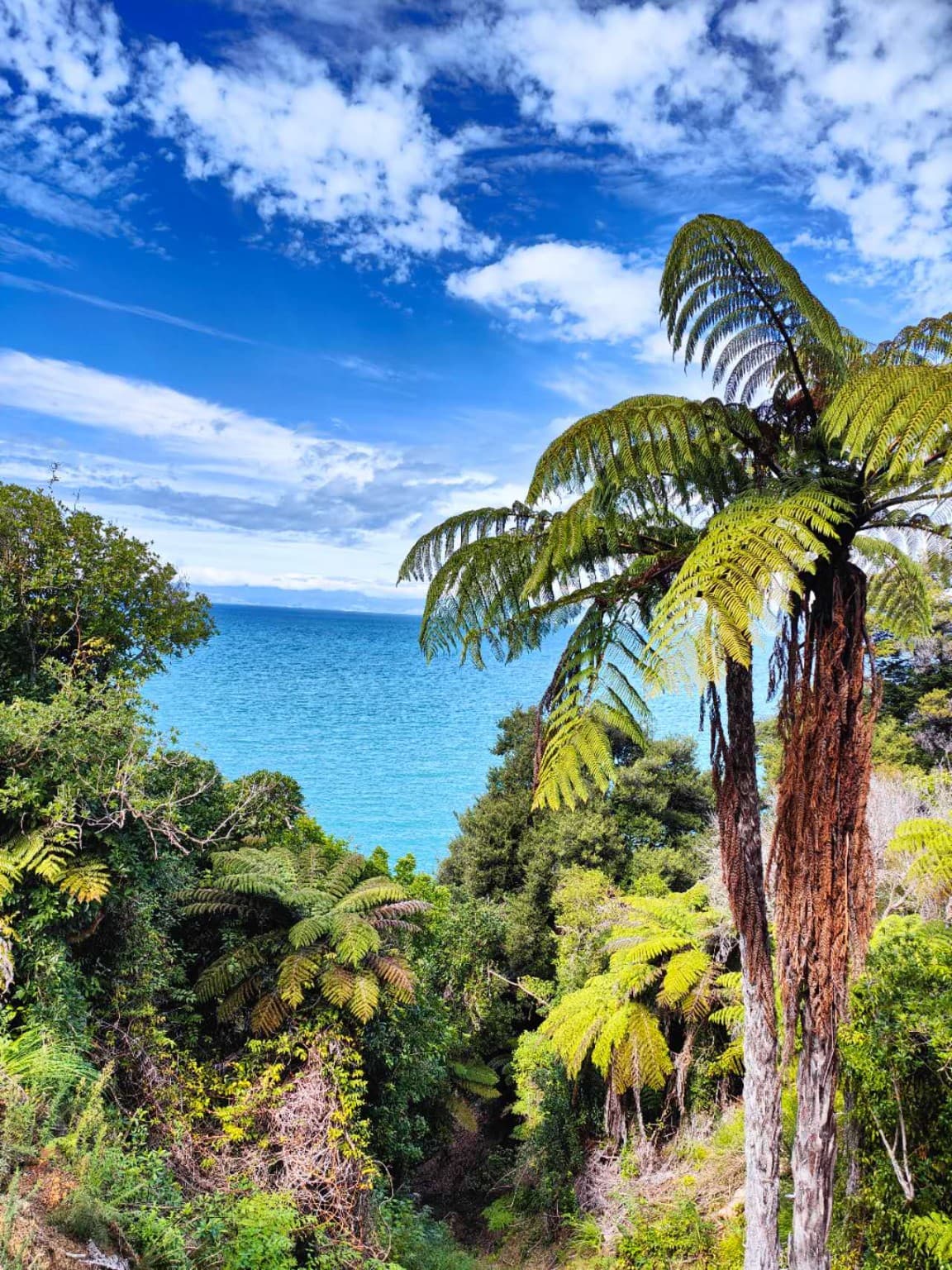
Tree ferns leaned over the slope, some high enough to arch above the path.
In places the ground changed to pale hard earth and exposed rock. Dense green remained on both sides, but ahead the trees suddenly stopped.
The sea appeared all at once.
Then the track turned back into forest and the water vanished.
Around the next headland it returned.
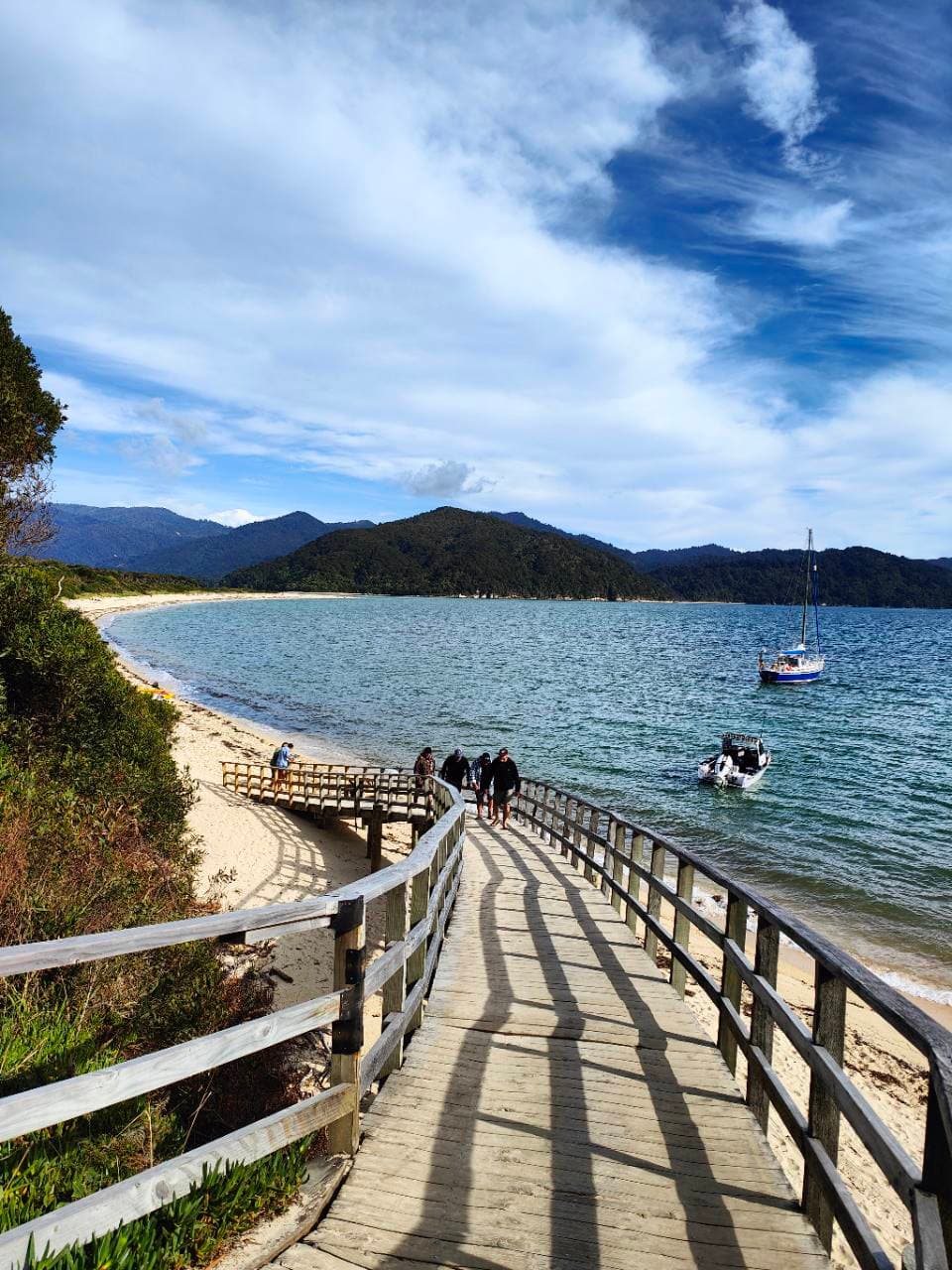
Below was a small bay. Sand mixed with round stones, broken shell and dark weed left by the tide. The waterline curled around the shore.
The trees closed again.
Another low rise.
Another bay.
Porters Beach.
Tinline Bay.
At one point the tree ferns were particularly tall.
Katherine stopped and looked up.
I had gone several steps ahead and came back.
She stood with her face tilted upwards. Long fern fronds hung above her; beyond them was a solid patch of blue sea.
When she lowered her head, we moved on.
Around the next point, the water opened wider.
Apple Tree Bay.
Sea Outside, Lagoon Inside
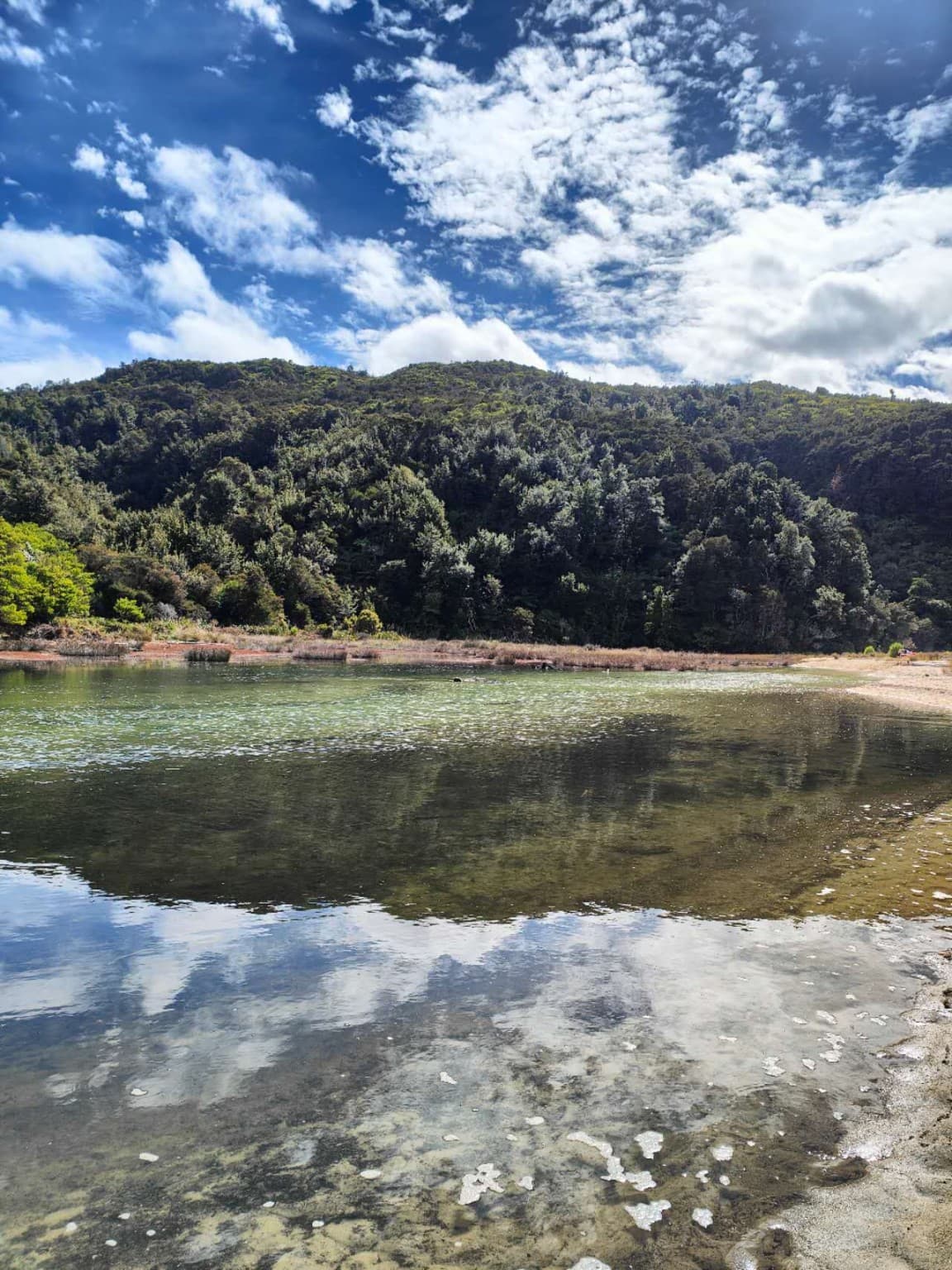
Apple Tree Bay held two kinds of water.
Outside was the sea.
Inside, a shallow lagoon.
At low tide the lagoon was almost still. Hills and cloud sat in the surface, disturbed only when a little wind crossed it. Pale sandbars and brown wetland plants divided the water into irregular shapes. Narrow channels ran between them towards the open bay.
We followed the edge.
On the seaward side, the water widened again.
Driftwood lay scattered across the beach. Some of the bleached branches had been propped together into something like a shelter without roof or walls.
Katherine stayed near the wood for a long time.
Sometimes standing.
Sometimes sitting.
At one point she leaned against a half-buried log, pushed up the brim of her hat, rested her chin in both hands and looked at the sky.
The cloud was low and thick.
Blue showed through the gaps.
I took a photograph.
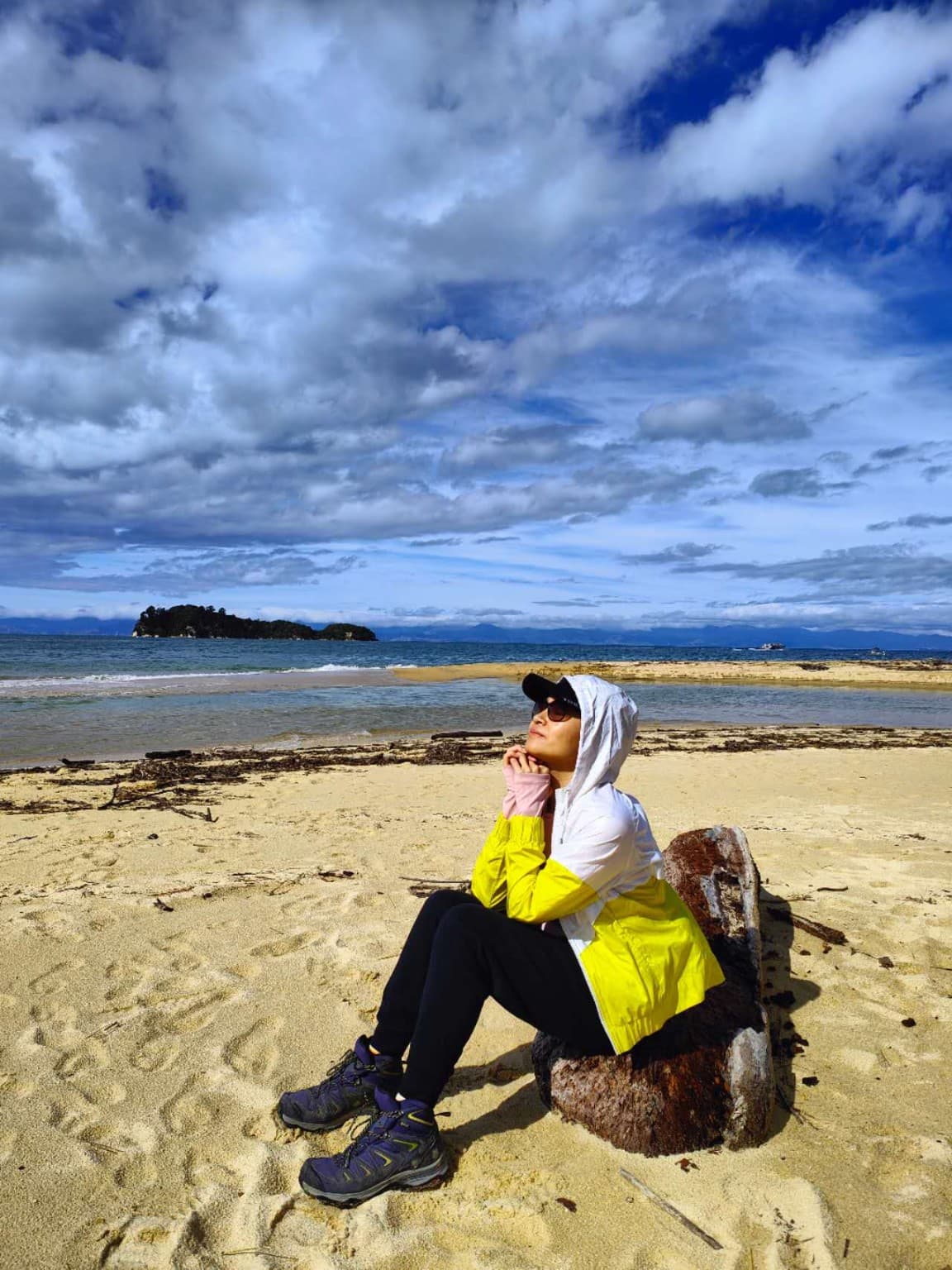
Later she stood by the larger pile of driftwood with her arms folded. Wind came off the sea and pressed the hood of her jacket against her back.
We took out some food.
There were not many people on the beach.
A little farther away, an older Kiwi man took off his shirt and left his shoes on the sand.
He walked slowly into the water.
It rose to his calves, then his waist.
He stopped.
Then went farther.
A few more steps and he leaned forward and began to swim.
Katherine watched while she ate.
The man swam out, turned slowly, and came back.
No one on the beach paid him much attention.
Small waves kept folding onto the sand.
After eating, I walked farther along the bay.
The northbound track disappeared into the trees at the far end of the beach.
I stood there for a while.
When I returned, Katherine was still sitting on the driftwood.
I packed the food away and closed the zip.
“Back?”
She pulled down the brim of her hat and stood.
We turned south.
The Bird Was Gone
The return was the same track.
The bays that had appeared one after another now slipped away behind us. The tree ferns still hung over the slope. The sea appeared through gaps on the other side.
Farther south, the Mārahau estuary began to return.
At first only a pale patch through the trees.
After another headland, more sand.
Then the channels.
Finally the long bridge.
The bird was gone.
I stopped where it had stood.
The timber rail was warm and pale in the sun.
Below, water still moved slowly through the sand left by the tide.
Beyond the bridge was the car park.
My phone showed:
15.03 kilometres.
The Fist Lost
Katherine stayed at Park Cafe.
I was still thinking about Fat Tui across the road.
For two days people had been telling me about the burgers.
When mine arrived, I stared at it.
Bread, meat, vegetables and sauce rose in layers high enough to make the first bite a practical problem.
I put my fist beside it.
Measured them.
The fist lost.
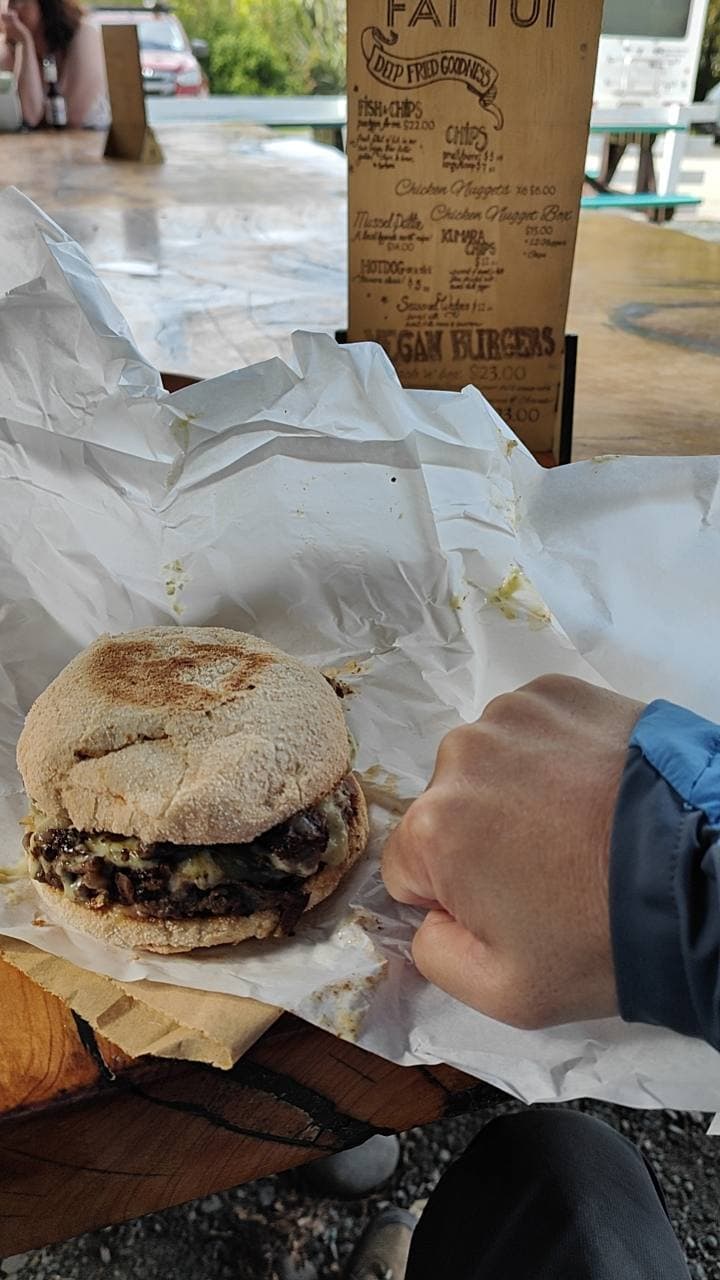
I took a photograph.
The burger deserved evidence.
Afterwards I went back to Park Cafe.
Katherine had nearly finished too.
We collected our things and drove to Nelson.
42.99 Kilometres
Before going to the airport, I checked the record from the three days one last time.
42.99 kilometres.
61,485 steps.
I switched off the phone.
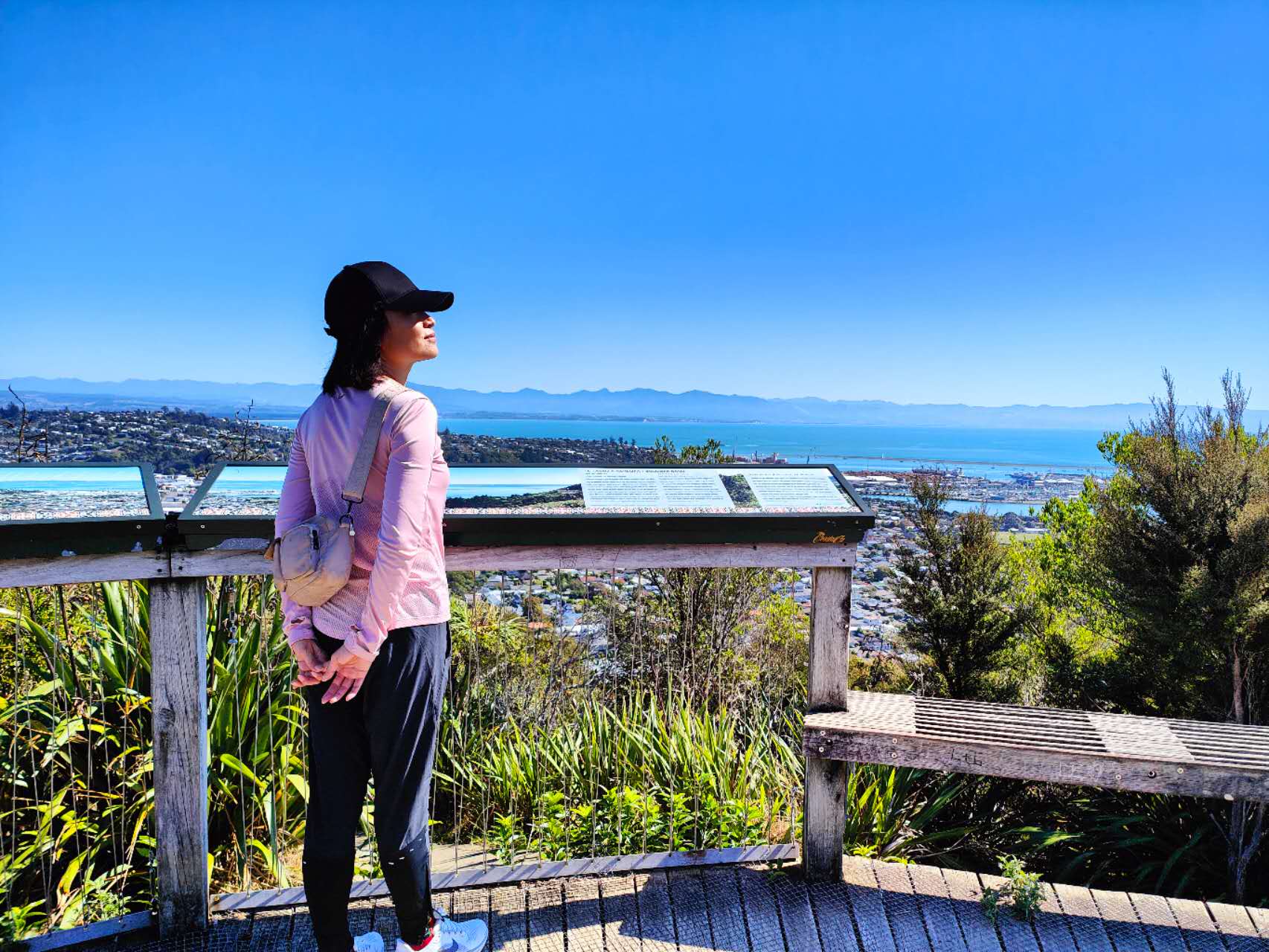
After the plane left Nelson, Tasman Bay appeared below the window again.
The coast, the forest and those small bays slipped slowly behind the wing.
READER NOTES