
MARKET CHANGES · NEW ZEALAND PROPERTY CYCLE III
New Zealand Property Cycle III: Across the Hills
Charlie looked at his phone and muttered,“Looks like we really are stuck here this time.”
When Charlie and I left Karamatura car park, neither of us thought the day was going to be a problem. The weather was good. We were heading for the highest lookout on the Ōmanawanui Track. Charlie walked ahead with his pack; I followed behind. It did not take long for the stairs to begin.
The Sandwich I Made
At first we were still talking. As the track steepened, the sentences got shorter. Eventually there was mostly breathing. The stairs were brutally steep. You would look up and see them bend around the hillside. You would grind your way to the corner, look up again—
more stairs. One local tramper actually counted this section:
1,248 steps.
Halfway up, I called out to Charlie. “How many more?”
He looked uphill. “You're asking me?”
We kept going. A while later I looked up again.
Still stairs. “Who built these?” I said. “Did they think we had spare legs?”
Charlie answered:
“We're tired just walking them. Imagine the people who built them. They had to cut the track and carry all that timber up here. That wasn't easy.”
“Be grateful.”
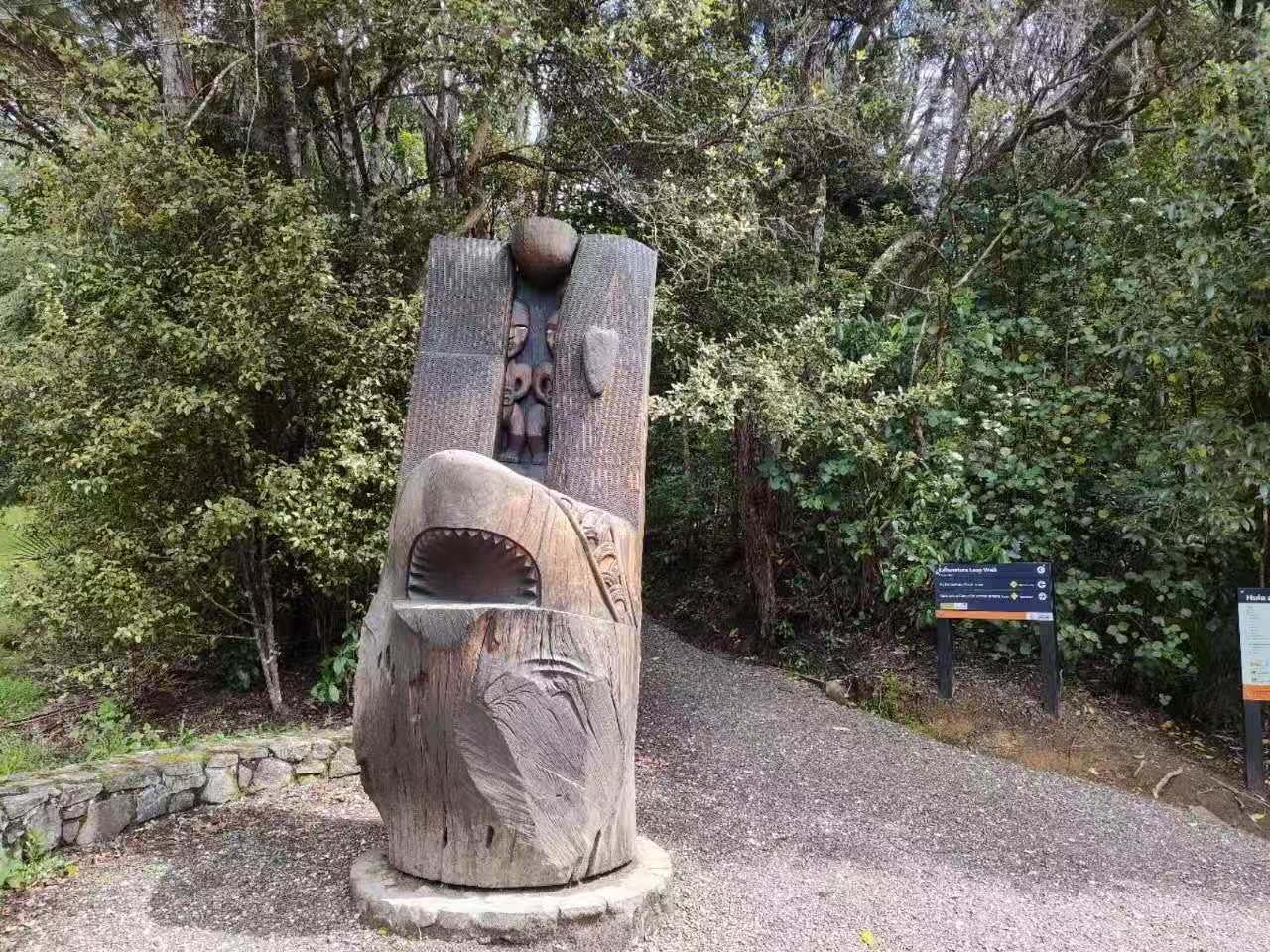
I stopped for a second. Of course, I thought. He's a construction guy. Eventually the long staircase ended and the track suddenly levelled out. There was a small timber rest area in the bush, with benches and a route board. Neither of us needed to suggest stopping. We were around Karamatura Forks, roughly 336 metres above sea level. Charlie opened his pack. Two bottles of water. An apple. A block of chocolate. A sandwich. He ate the apple, broke off half the chocolate and drank some water. He took the sandwich out, looked at it, then put it back.
“That all you're eating?”
“Better save some,” he said. “We don't know how much track is still ahead.”
I looked at him. For some reason, in that moment he seemed a little different from the man I used to know.
I pointed at the sandwich. “You made that yourself?”
He gave a little chuckle. “Made it myself.”
A pause. “Healthy.”
He zipped the pack shut. “Let's go.”
The track stayed fairly level for a while, which gave me time to look at him properly. His stomach was noticeably smaller. The round face I remembered had lengthened.
I teased him. “Your face looks longer. Has all the water drained out of it?”
He laughed. “Don't know about my face.”
A couple of steps later he added:
“There used to be plenty sloshing around in my head, though.”
I laughed. He kept walking. His stride looked steadier than I remembered.
“How are the health numbers?”
“Cholesterol's normal now.”
A few steps later:
“Liver function's good too.”
The bush was quiet. We kept moving.
Cash Is King
Higher up was Te Rau-o-te-Huia / Mount Donald McLean.
389 metres.
It was the highest elevation we would reach all day. Strangely, by then we were not breathing as hard as we had on the first staircase. The conversation came back.
“You still go to PlaceMakers?” I asked.
“Yeah.”
“What does it feel like?”
He thought for a moment. “Way fewer people.”
PlaceMakers is one of New Zealand's biggest trade-focused building-supply networks, with 67 branches and eight frame-and-truss facilities around the country. It sits inside Fletcher Building, one of New Zealand's most important listed building groups. For a long time Fletcher stretched across almost the full building chain: manufacturing materials, distributing them, developing housing and running major construction businesses. That made it a useful barometer for the New Zealand building cycle.
So Charlie's “way fewer people” did not feel like a throwaway observation.
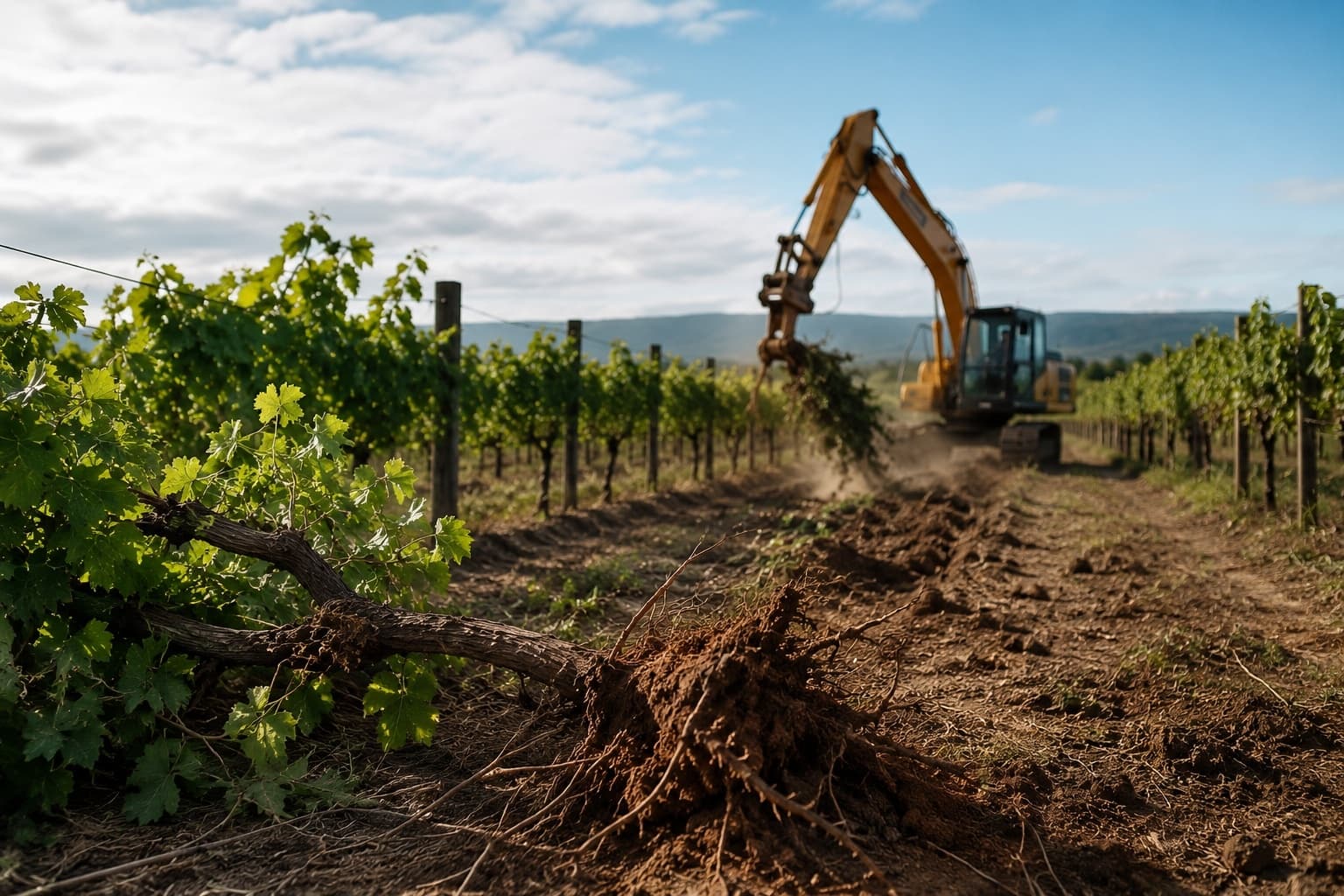
In my previous essay, *When the Vines Are Pulled Up*, I wrote about Australian vineyards being removed after years of falling consumption and excess supply. The question running through that piece was simple:
How long does an oversupplied market have to struggle before supply finally begins to retreat? PlaceMakers' own numbers were telling a similar story from another part of the economy. It had planned to keep expanding its frame-and-truss network. The proposed new facility at Felix Street in Auckland was later cancelled, with existing capacity used instead. Fletcher estimated that decision avoided about NZ$30 million of capital expenditure.
Charlie listened. “Who dares spend freely now?”
“Cash?” I said.
“Cash.”
The track started down again. What Fletcher had been doing over those years was not difficult to understand. Invest less. Sell things. Repay debt. Hold cash. At 30 June 2024, Fletcher's net debt was about NZ$1.77 billion. A year later it was NZ$999 million. By June 2026 it was down again to NZ$637 million. In May 2026, the group completed the sale of its entire Construction Division to VINCI. The land can still be there. The houses can still be there. The projects can still be there. But a property business also lives by another timetable. When does the cash come in? When does the loan mature? When is the interest due? When must the contractor be paid? When does a completed house finally turn back into cash? If those dates drift too far apart, a company can still own plenty on paper and run out of time. Sometimes cash does not buy profit.
It buys time.
I looked up at Charlie walking ahead of me. These days he did almost every job himself. He kept his head down and kept walking. We came down from Donald McLean, passed the car park and moved onto Pūriri Ridge. The track began to roll. Up one rise. Down into a hollow. Another hill on the far side.
Charlie stood there looking at it. “There's more?”
“Shouldn't be far now.”
We said that a lot that day.
Sold the Porsche at a Discount
Pūriri Ridge eventually brought us out onto Whatipū Road. There was a small car park beside the road. At the time, it meant nothing to us. We crossed over and entered the Ōmanawanui Track. Not far in, both of us were surprised. The track suddenly became a beautifully built boardwalk. The timber looked new. In places there were even handrails.
I grinned at Charlie. “Look at this boardwalk. Doesn't it look expensive?”
“Like that new Porsche you bought last year.”
He laughed. “Sold the Porsche at a discount too.”
“Got an EV now.”
He walked a few more steps. “EV's fine. Cheap to run.”
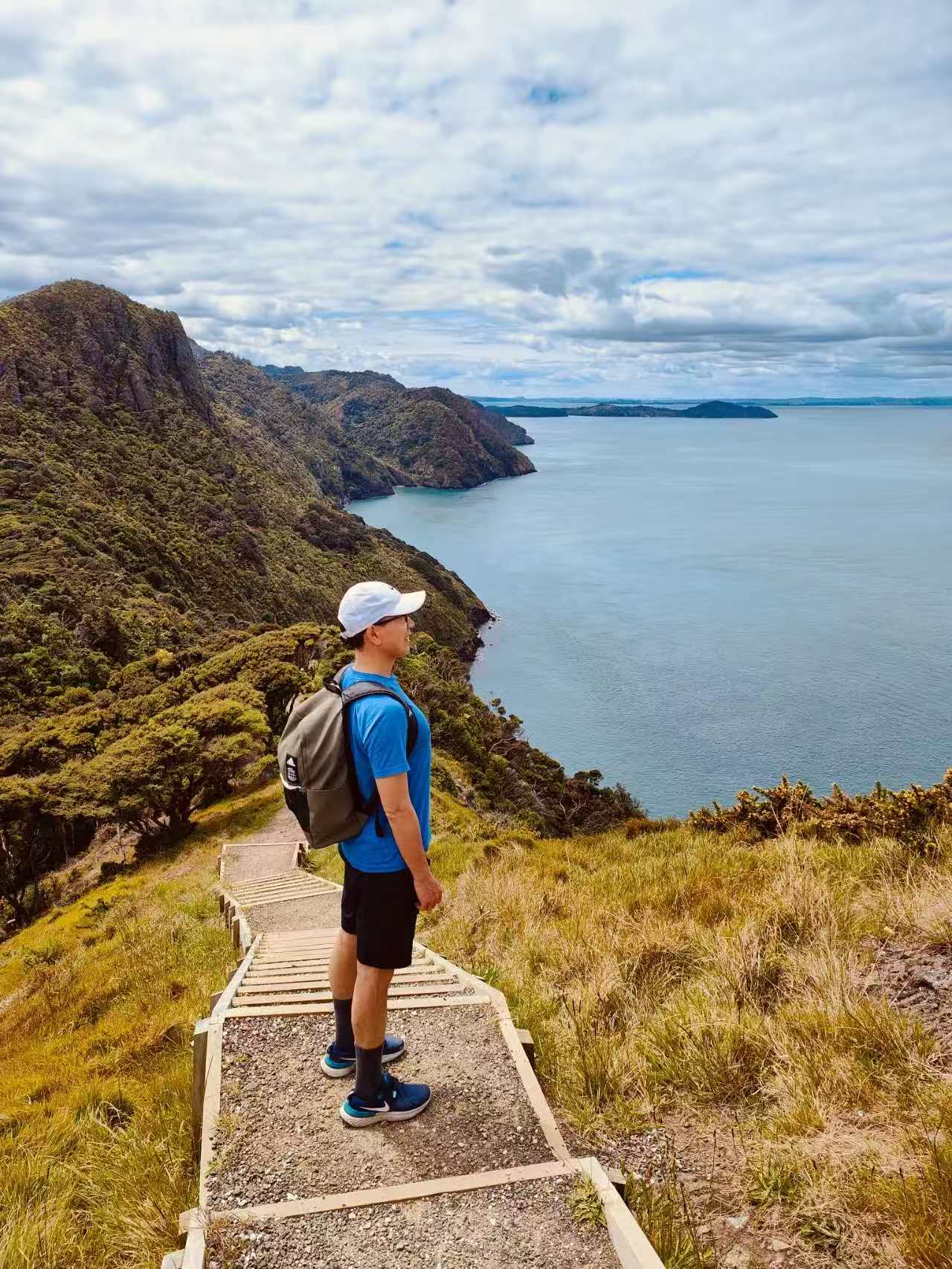
I laughed. The boardwalk continued into the bush. Before Ōmanawanui reopened, the track underwent a major upgrade. About 2.5 kilometres of box steps—roughly 2,420 individual steps—were installed, together with new boardwalk sections. Then the boardwalk ended. Stone replaced timber under our feet. The bush gradually opened and the wind strengthened. At first the sea appeared only through gaps in the trees. Then the ridge itself began to reveal its shape. Over one high point. Down. Up again. Ahead was a section of exposed rock with a chain fixed beside it. Two feet were no longer enough. I grabbed the chain and searched for a foothold.
A few moves up, I looked back. “Charlie.”
He looked up.
I shook the chain in my hand. “Does this remind you of that loan you took at eighteen per cent?”
He laughed. “Expensive,” I said.
“But without the eighteen per cent, you really wouldn't get up here.”
He said nothing. He gave me a punch. Then he grabbed the chain and climbed. Past the rock, the sea opened completely. Manukau Harbour lay below us. The ridge narrowed and ran forward toward the coast. We were tired by then, but each time we crossed one rise, the view ahead seemed bigger.
Let's have a look. A little farther. Surely we're nearly there.
Lowering Expectations
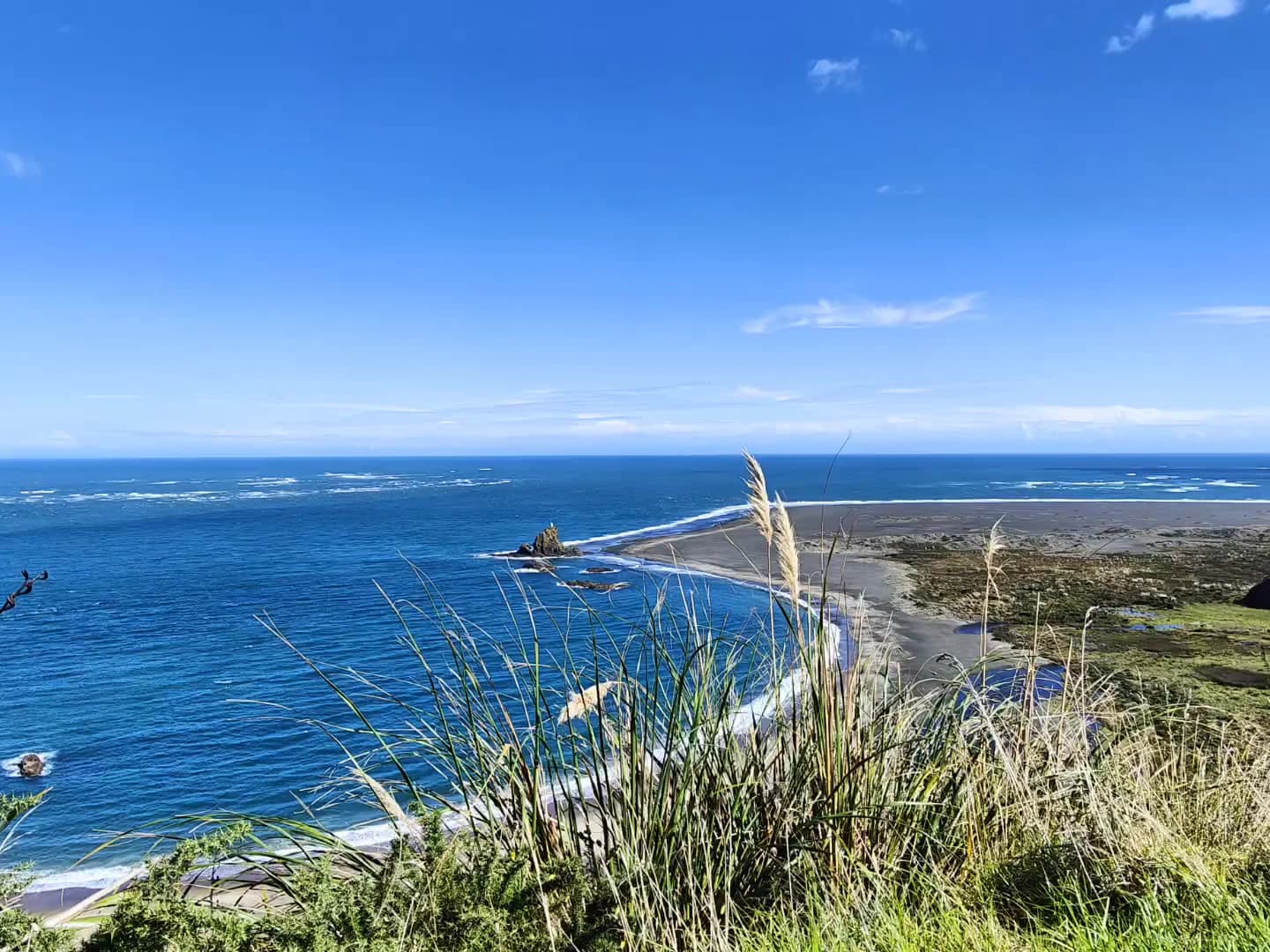
At last we reached the highest lookout on the Ōmanawanui Track.
241 metres.
Donald McLean had been 389 metres—almost 150 metres higher. Standing there, it did not feel lower. Manukau Harbour spread out beneath us. Across the water were the Manukau Heads. The ridges we had crossed receded behind us.
Charlie and I stood there for a while. “Magnificent,” he said.
“Worth it,” I said.
The wind was strong. I asked him:
“You've cut the company back to the smallest team you can. Your costs are way down. You've sold houses even at a loss. Most of the debt is finally getting paid off.”
“Do you feel like the worst is behind you?”
Charlie did not answer immediately. He looked across the water. After a while he said:
“Doesn't feel that simple.”
He stood there a little longer. “But my expectations are pretty low now.”
He reached into his pack, took out the sandwich he had been saving, peeled back the wrap and took a small bite.
“Pretty good.”
He chewed slowly. “If I've got water to drink and food to eat, if I can sleep at night and wake up the next morning and still see the sun, I reckon things are pretty good.”
I gave him a light pat on the back. Then I looked at him again. There was much more grey at his temples now. More lines around his eyes. Compared with the high-flying Wang I remembered from years ago, somehow this older, quieter Charlie looked better to me. We rested for a while. Then we turned around.
Might Be Stuck Here
The first climb returned almost immediately. We had descended it earlier. Now we had to climb it. Up. Down. Then another one. We talked less and less. For a long stretch neither of us said anything. There was only the sound of shoes on timber steps, gravel and dirt. And breathing. Another slope rose in front of us.
Charlie stopped. “Here we go again.”
I stopped too.
He caught his breath and gave a tired smile. “That familiar feeling again.”
The light was beginning to go.
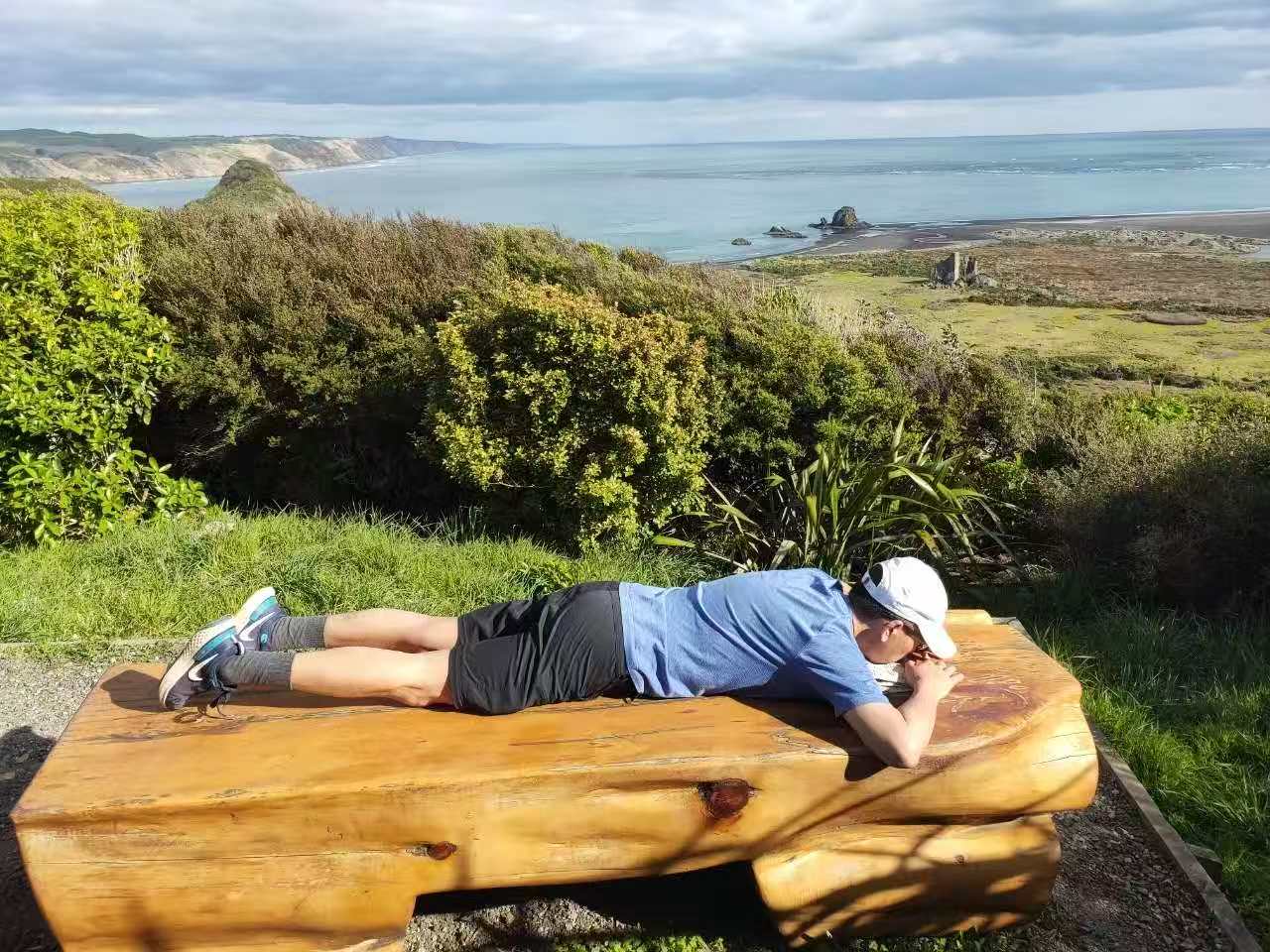
He stared at the track. “I really can't walk all the way back.”
A pause. “Doing it on our own just isn't enough.”
“I've got nothing left.”
We kept moving anyway. Slowly. When we reached the exposed rock, the chain was still there. I held on, found the footholds and worked my way down. Then we walked again. I do not know how long it took before Whatipū Road finally appeared. The same car park. A few hours earlier we had crossed the road here and walked onto that new boardwalk. Now I stood in the same place looking back toward Pūriri Ridge. Neither of us had much walking left. Before we could reach Karamatura, there were still several hills to cross—and at the end of them, those 1,248 steps. For a moment, both of us were close to breaking.
It felt hopeless. “Let's call an Uber,” I said.
I took out my phone. No signal. Charlie—who had been talking calmly about seeing the morning sun only a few hours earlier—pulled his phone out too and started pacing around the car park searching for reception, shaking his head again and again. The light kept fading. Our car was at Karamatura.
After a while, two young women came out of the track and walked toward the car park. Their car was there. I looked at them, then at Charlie. I felt awkward. There is a certain amount of pride involved when a middle-aged man walks up to two strangers and asks for a lift. By then, pride mattered less than my legs. I went over and said hello. As we talked, I learned they were from Germany. They had arrived in New Zealand the day before and rented a car that morning to go hiking.
“Our car is back at Karamatura,” I said.
“We really can't walk any farther.”
“Would you mind giving us a lift?”
They barely hesitated. Of course. We got into the car. The moment the door closed, my whole body relaxed. The car wound away along Whatipū Road. I rubbed my aching thighs with my hands. Beside me, Charlie leaned back in the seat with the faintest smile on his face. One hill after another slid backwards outside the window. They drove us all the way back to Karamatura car park.
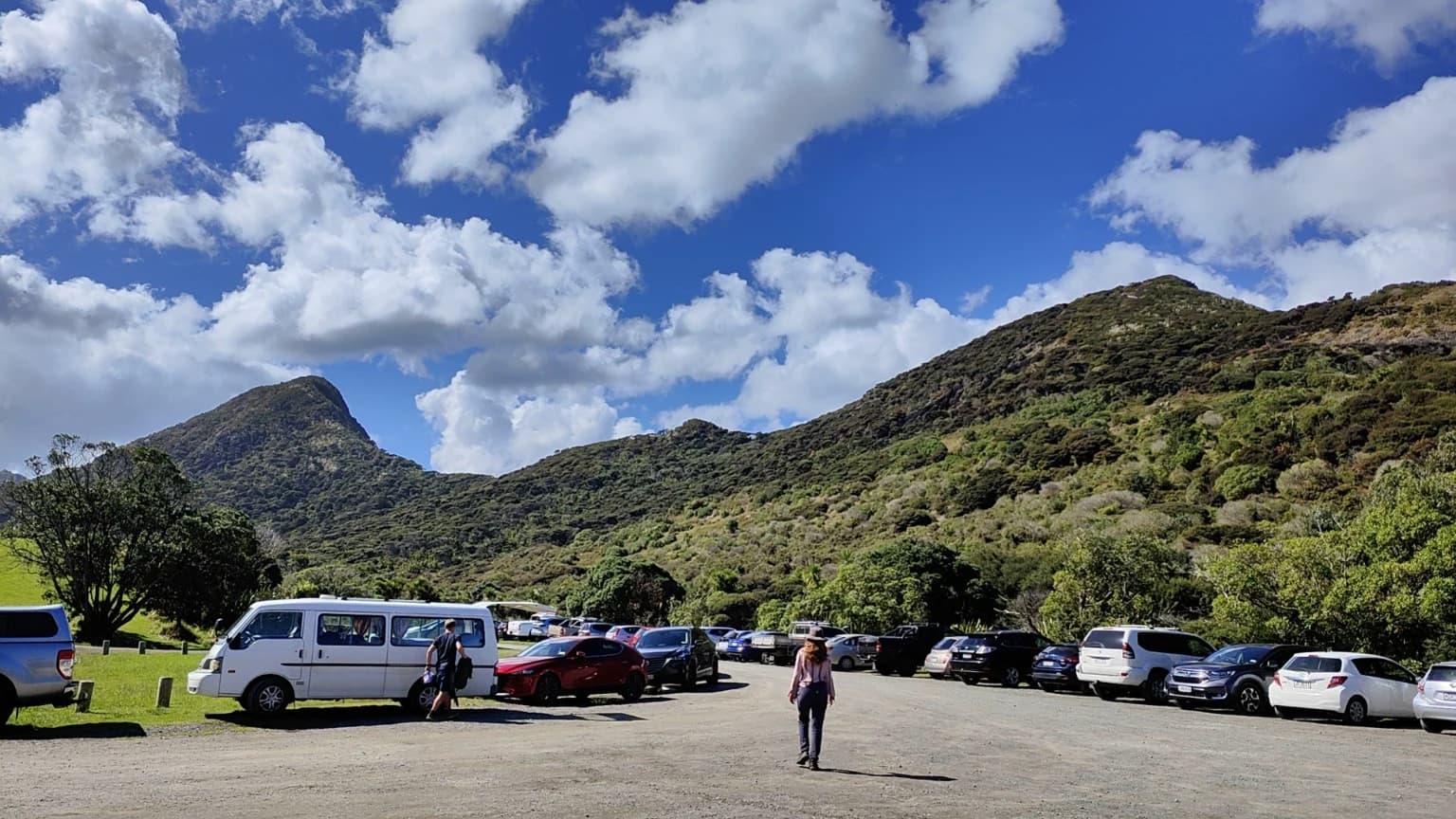
Long afterwards, Charlie and I would still sit down for tea from time to time. We would talk about property, old projects, and everything that had happened over the years.
Sooner or later, he would come back to that day. “Those two German girls were really kind.”
Sometimes, after a pause, he would say it again in another way:
“Lucky we met them that day.”
SOURCES & NOTES9 public references + fact boundaries⌄
Sources and fact boundaries
- Te Rau-o-te-Huia / Mount Donald McLean — official elevation ↗
- Ōmanawanui upgrade — Auckland Council ↗
- Ōmanawanui highest point — Plan My Walk ↗
- Karamatura stair count — Wild Things ↗
- PlaceMakers network — Fletcher Building ↗
- Fletcher Building FY25 results ↗
- Fletcher Building 2025 Annual Report ↗
- Fletcher Building FY26 results ↗
- Construction Division sale to VINCI ↗
The route profile is a narrative reconstruction, not a navigation or safety tool. Personal health, finance, dialogue and hiking details are author/subject-supplied facts.
READER NOTES